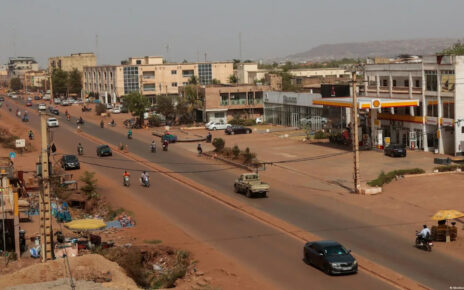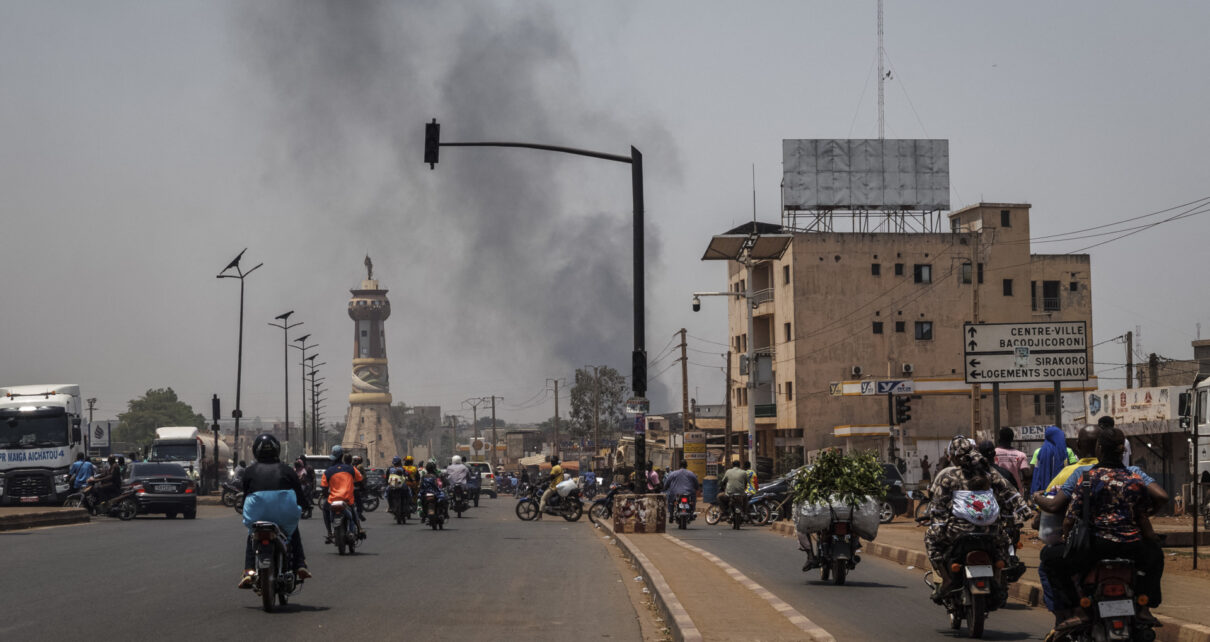
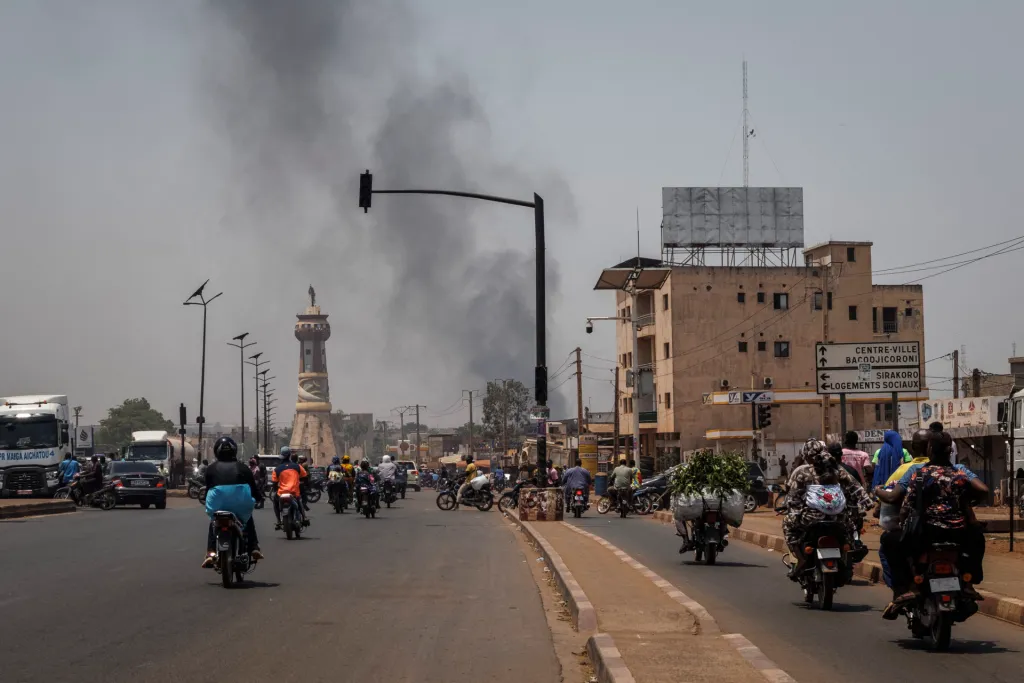
In the early hours of April 25, the silence of Kati—a strategic military garrison situated just 15 kilometers from Mali’s capital, Bamako—was shattered by heavy gunfire and explosions. This marked the beginning of a nationwide surge in violence, with the jihadist group JNIM and Tuareg separatists from the FLA launching synchronized strikes across the country. The following day, the ruling military administration confirmed that Defense Minister Sadio Camara had died from wounds received during an assault on his home. Rumors also circulated regarding the fate of Modibo Koné, the intelligence chief, suggesting he was either killed or severely injured. Despite the chaos, the junta maintained that they had the situation under control, highlighting a growing disconnect between state rhetoric and the volatile reality on the ground.
These attacks represent the most significant threat to Colonel Assimi Goïta since his 2020 coup. The military’s grip on the nation was already weakening due to a persistent JNIM blockade that began last September. By targeting over 130 fuel tankers, the group has choked off essential supplies from Côte d’Ivoire and Sénégal, leading to nationwide energy shortages and the closure of schools. While the government denied swapping over 100 prisoners for a temporary truce to allow fuel convoys through, the sheer scale of the blockade demonstrates that the insurgency’s power extends far beyond traditional combat, effectively strangling the Malian economy.
This resurgence of violence directly challenges the junta’s core argument: that abandoning Western alliances in favor of Russian military aid would bring peace. The failure to contain these offensives is likely to cause anxiety for similar military regimes in Burkina Faso and Niger, which also ousted democratically elected leaders in favor of nationalist security strategies.
A Troubling Alliance Reborn
The current situation mirrors the events of 2012, when a similar partnership between jihadists and separatists overwhelmed the Malian military in the north. At that time, Tuareg fighters returning from Libya with heavy weaponry joined forces with al-Qaeda-linked groups like Ansar Dine to seize massive territories. While that alliance eventually collapsed into internal conflict, the recent coordinated strikes by JNIM and the FLA suggest a new, tactical cooperation. Although their long-term visions for Mali differ, both groups currently benefit from making the Malian state appear helpless. For JNIM, this is part of a broader strategy of attrition, aiming to exhaust the junta’s resources until the government collapses from within.
The loss of Sadio Camara is particularly significant as he was the primary architect of Mali’s pivot toward Moscow. His efforts led to the deployment of the Wagner Group and the subsequent expulsion of French forces and United Nations peacekeepers. Following the death of Yevgeny Prigozhin, the Russian presence was reorganized under the Ministry of Defense as Africa Corps. However, this transition has seen a shift in focus from frontline combat to training and advisory roles, resulting in a sharp decline in Russian engagement in active battles. Furthermore, the ongoing conflict in Ukraine has limited the number of personnel available for deployment to the Sahel, further reducing the effectiveness of Russian support.
The Symbolic Loss of Kidal
The changing nature of the Russian mandate is best illustrated by the situation in Kidal. In late 2023, the capture of this city by Malian and Wagner forces was hailed as a major victory for the junta’s security model. However, following the April 25 attacks, Africa Corps forces reportedly negotiated a withdrawal from the city, surrendering a key strategic gain without resistance. This retreat calls into question the entire Alliance of Sahel States (AES) model. By cutting ties with ECOWAS and Western partners, Mali, Burkina Faso, and Niger have seen their security environments deteriorate rather than improve, putting their political legitimacy at risk.
Historically, insecurity in the Sahel has been used as a justification for military takeovers. Since 2012, the region has seen five such coups, including the removal of leaders in Mali and Burkina Faso who were deemed ineffective at stopping insurgencies. Assimi Goïta now faces a similar predicament. With the death of Camara, his inner circle is shrinking, and his decision to ban political parties and extend his presidency until 2030 has alienated much of the remaining political class. A failed coup attempt in August already hinted at cracks within the military, and the recent intelligence failures are likely to deepen those divisions.
The junta must now decide if the Russian security guarantee is still worth the cost, especially as the prospect of a palace coup or a lower-level mutiny becomes increasingly likely given the current state of instability.
U.S. Counterterrorism and Mineral Diplomacy
For years, Mali was central to American counterterrorism efforts in the Sahel until the coups triggered legal restrictions on aid. However, recent diplomatic moves suggest the United States may be looking for a way back in. The removal of sanctions on certain Malian officials and high-level visits to Bamako indicate a desire to “chart a new course.” Discussions have reportedly focused on surveillance drone access, intelligence sharing, and, crucially, access to Mali’s vast reserves of gold and lithium.
The recent military setbacks for the junta actually provide Washington with more leverage. With the Russian partnership looking increasingly ineffective, the United States could offer a “minerals-for-security” arrangement, similar to the deal recently signed with the Democratic Republic of the Congo. Such a template, which involves both state and private security actors, could be the vehicle for bringing Sahelian juntas back into the Western sphere of influence.
Ultimately, the offensive in Mali confirms that the current security strategy is failing. JNIM has demonstrated an ability to strike the capital at will and has expanded its capabilities to include drone technology and economic sabotage. Without a functional regional security framework and with a state that has lost its internal legitimacy, Mali remains in a precarious position that its neighbors are watching with growing concern.
Broader Regional Implications
Mali served as the gateway for Russian influence in the Sahel, and the recent failures will resonate across the continent. Other nations that have looked to Moscow for regime protection, such as the Central African Republic or Madagascar, may now reconsider their reliance on Africa Corps. The retreat from Kidal and the inability to protect high-ranking Malian officials suggest that the Russian offer of security may be more symbolic than substantive when faced with a determined insurgency. As the credibility of the junta-led model is tested, the regional landscape remains more uncertain than ever.