
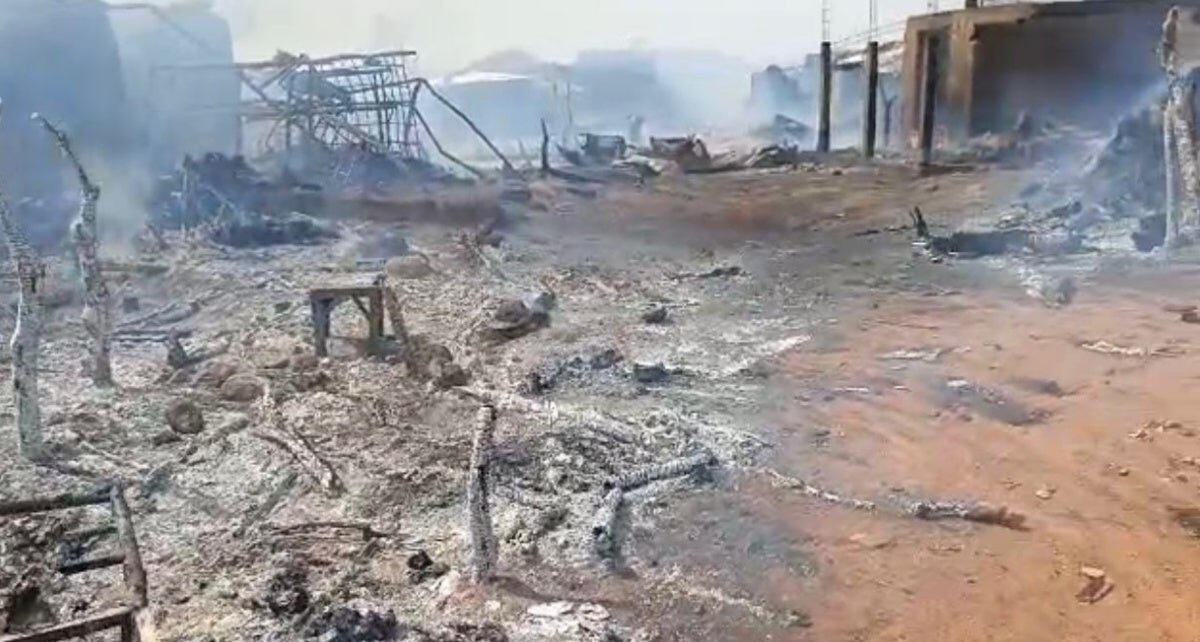
In a tragic incident that has drawn international concern, a military drone strike in Niger’s Tillabéri region reportedly killed at least 17 civilians, including four children, and injured 13 others at a busy market on January 6, 2026. The airstrike, allegedly conducted by Nigerien forces, also resulted in the deaths of three Islamist fighters, raising serious questions about compliance with international humanitarian law.
Civilian casualties in Kokoloko market strike
The attack occurred in the village of Kokoloko, located about 120 kilometers west of Niamey, the capital of Niger, and less than three kilometers from the border with Burkina Faso. Witnesses described a drone circling the area twice before dropping a munition on the crowded market around 1:30 PM, when hundreds of people—including women and children—were present.
«I saw a white drone flying overhead and then heard a whistle before a massive explosion,» recounted a 36-year-old merchant who narrowly escaped injury. «The market was packed with women selling cooked rice, meat soup, and other foods. Their children were there too, along with many other vendors.»
According to local accounts, three Islamic State in the Sahel (EIS) fighters, dressed in civilian clothing with turbans, were at the market at the time of the strike, while three others were in the village. Residents noted that EIS militants frequently visit markets in the region to purchase supplies before leaving.
Severe impact on civilians
Witnesses reported that many bodies were charred beyond recognition. «I counted 17 bodies, mostly women and children,» said a 67-year-old religious leader who returned to the market around 6 PM. «The bodies were burned beyond recognition, making identification extremely difficult.» The victims were buried in a mass grave, with women and children in one section and men in another.
Satellite imagery and fire detection data from NASA’s FIRMS system confirmed active fires in Kokoloko at 1:31 PM local time, with additional burn scars visible in high-resolution images taken days later. Residents attributed the rapid spread of the fire to the presence of fuel at the market and wooden stalls.
Questions over military drone use in Niger
While the type of drone and munition used in the strike remains unidentified, Niger’s military has reportedly acquired Turkish-made drones such as the Bayraktar TB-2, Karayel-SU, and Aksungur UCAV since 2022. These drones are equipped with advanced sensors and precision-guided munitions, raising concerns about the potential for indiscriminate attacks in densely populated areas.
Witnesses described severe structural damage and injuries consistent with high-explosive munitions, including burns and shrapnel wounds. The strike forced nearly all 1,200 residents of Kokoloko to flee to neighboring villages or across the border into Mali.
«I spent the first night with my children in a nearby village,» shared a woman who lost her 50-year-old cousin and 5-year-old nephew in the attack. «Later, we crossed into Mali with almost nothing.»
A list compiled by locals identified the civilian victims: 11 women aged 29 to 50, two men aged 32 and 55, and four children aged 5 to 10. The injured included four women aged 28 to 45, seven men aged 23 to 62, and two children aged 14 and 15.
Legal implications and calls for accountability
Under international humanitarian law, parties in armed conflict must distinguish between combatants and civilians at all times and avoid targeting civilians. Attacks using indiscriminate weapons—those that cannot be limited in their effects—are illegal. The strike on Kokoloko’s crowded market, regardless of the presence of Islamist fighters, constitutes an indiscriminate attack. If conducted with criminal intent, it may amount to a war crime.
Human rights groups have repeatedly highlighted the risks of civilian harm in Niger’s counterterrorism operations. According to Armed Conflict Location and Event Data (ACLED), the Tillabéri region recorded the highest number of civilian casualties from attacks in the central Sahel in 2025, attributed to the EIS, Niger’s military, and the Group for the Support of Islam and Muslims (GSIM).
«Foreign governments supporting Niger’s military must pressure authorities to adopt measures protecting local populations,» emphasized Ilaria Allegrozzi, Senior Sahel Researcher at Human Rights Watch. «The government must provide essential services to survivors, address their trauma, and ensure adequate compensation for victims and their families.»
This incident follows a pattern of alleged civilian casualties in Nigerien military airstrikes, including a September 2025 strike in Tillabéri that killed over 30 civilians at a weekly market and a January 2024 drone strike in Tiawa that also resulted in civilian deaths.