The shifting geopolitical landscape in the Sahel is unfolding quietly. As European forces gradually withdraw from Mali, Burkina Faso, and Niger—and Russia expands its footprint through quasi-state entities—the United States appears to be reviving its engagement in the region. However, this resurgence is more nuanced than a mere comeback, according to Emmanuel Dupuy, president of the Institute for Prospective and Security Studies in Europe (IPSE).
Washington’s strategy: patience and strategic positioning
Dupuy argues that the U.S. never truly left the Sahel; instead, it adopted a patient approach, allowing regional dynamics to evolve and the influence of other actors to wane before repositioning itself. This strategy aligns with a long-standing American tradition of pragmatic diplomacy. «Americans are pragmatic. They negotiate with partners whose views they may not share», Dupuy notes. In this transactional framework, ideological alignment takes a backseat to security and economic interests.
Coexistence with Russia: a pragmatic balance
Dupuy emphasizes that the U.S. does not view Russia as a direct threat in the Sahel. Instead, he suggests that both powers operate in a complementary manner, filling the void left by declining Western influence. «They see no confrontation with Russia. In fact, they find common ground with actors who have benefited from the vacuum created by the retreat of European partners», he explains. This indirect coexistence avoids direct confrontation, with each power leveraging the space left by the weakening of others.
The erosion of the United Nations’ credibility and Russia’s limited success in combating armed groups further open the door for U.S. involvement. Dupuy points out that Washington’s methodology relies on structured dialogue with local authorities, regardless of how they came to power. «Americans apply the same approach in Mali as they did in Afghanistan—ultimately negotiating with the Taliban», he observes.
Economic and security convergence
The U.S. strategy extends beyond direct engagement with Sahelian regimes. It also involves aligning with other partners, such as Turkey, and capitalizing on areas where China’s presence is limited. Economically, Dupuy highlights the revival of the African Growth and Opportunity Act, which grants duty-free access to the U.S. market for 30 African countries, reinforcing Washington’s economic foothold in the region.
Private military contractors: the backbone of U.S. operations
A key feature of the American approach is the use of private military contractors (PMCs), including firms like Blackwater, to carry out security operations. This outsourcing allows the U.S. to avoid direct military involvement while still protecting its interests. «The best proof is the deal they facilitated between the DRC and Rwanda—Americans are involved, but not with regular forces», Dupuy notes. This model has been tested in other conflict zones and is now being applied in the Sahel.
Morocco’s pivotal role in Washington’s Sahel strategy
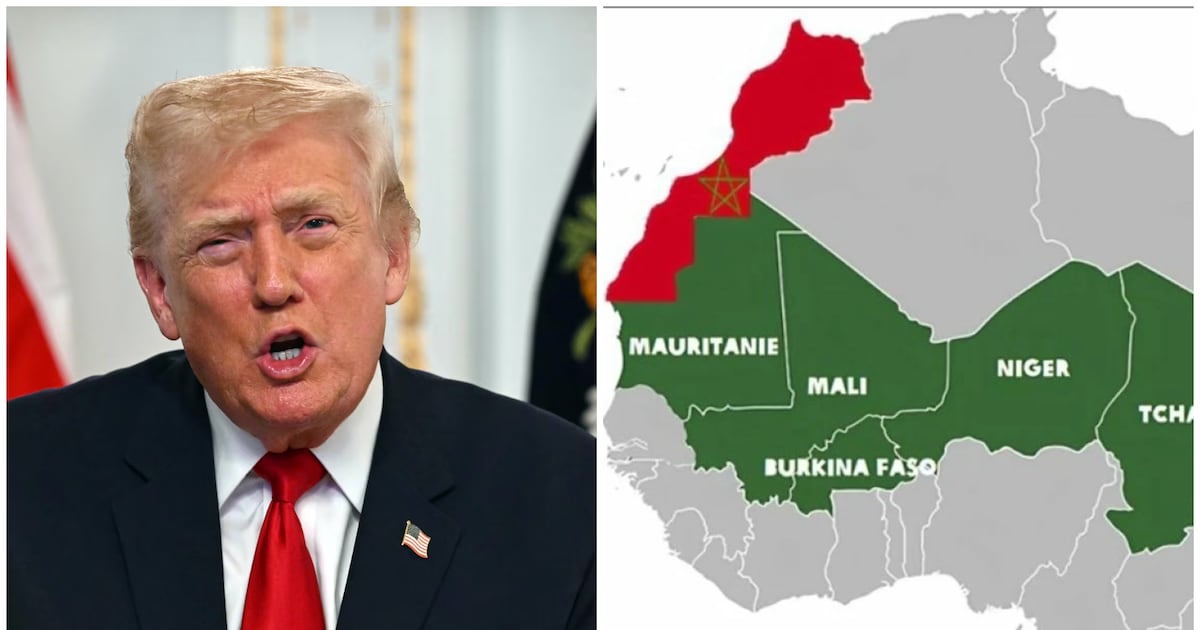
Morocco has emerged as a critical partner in this evolving landscape. Bilateral cooperation between Rabat and Washington has intensified across military, economic, and diplomatic spheres. Dupuy describes Morocco as «the ideal partner the U.S. needs», given its ability to engage with Sahelian governments—including those that came to power through coups—while maintaining a positive regional image. «Officially, the U.S. cannot intervene directly, but it can leverage Morocco’s strong relations with military-led governments in Mali, Niger, and Burkina Faso», he explains.
Algeria’s influence, by contrast, has diminished. Dupuy notes that Algeria’s ties with Mali have weakened due to its support for religious actors deemed unacceptable by Bamako. This erosion of influence further solidifies Morocco’s position as a preferred interlocutor.
Long-term economic and diplomatic opportunities
While long-term infrastructure projects—such as logistics corridors linking Burkina Faso, Niger, and Mali through Mauritania—remain on the horizon, Morocco is already leveraging other tools of influence. Since 2015, the Mohammed VI Institute for the Training of Imams has trained religious leaders from across the region, promoting a moderate Maliki-Sufi Islam as a soft-power tool. Additionally, Morocco offers economic perspectives, including connectivity and investment opportunities in banking, telecommunications, and industry, which few actors can match.
Dupuy also highlights the strategic importance of Morocco’s unique partnership with the U.S. «The special status granted to Morocco as a non-NATO ally since 2016 reflects a triangular relationship involving Africa, the Atlantic, and the Mediterranean», he says. This continuity since the 1995 Barcelona Declaration strengthens Morocco’s credibility as a stable and reliable partner.
Algeria’s declining leverage in the Sahara dispute
On the Sahara issue, Dupuy is skeptical about Algeria’s ability to shift the balance. «I don’t see how Algeria can gain an upper hand», he states. The U.S. has reaffirmed that the only basis for discussion remains the autonomy plan, while Algeria’s initiatives appear aimed at maintaining diplomatic status quo or creating temporary tensions without substantive impact. The Madrid meeting marked a turning point, shifting the focus from ideological debates to practical implementation—including local governance, economic development, maritime zones, and agricultural production.
In this evolving Sahelian chessboard, Washington is recalibrating its strategy, and Morocco is solidifying its role as a regional pivot. The interplay of extractive interests, military outsourcing, religious diplomacy, and logistical corridors is redefining the geopolitical map, where the U.S. and Morocco emerge as key players at the crossroads of the Atlantic, Mediterranean, and African continent.