US shifts Sahel strategy to trade and security partnerships
The recent visit of Nick Checker, the US State Department’s African Affairs chief, to Mali signals Washington’s re-engagement with the Sahel region. However, this isn’t a return to previous policies. Instead, the United States is implementing a strategic repositioning across three key pillars: a stronger focus on commercial diplomacy—particularly in mineral resources, a renewed security approach involving reduced permanent military presence, and a shift from direct humanitarian aid toward targeted economic and security partnerships.
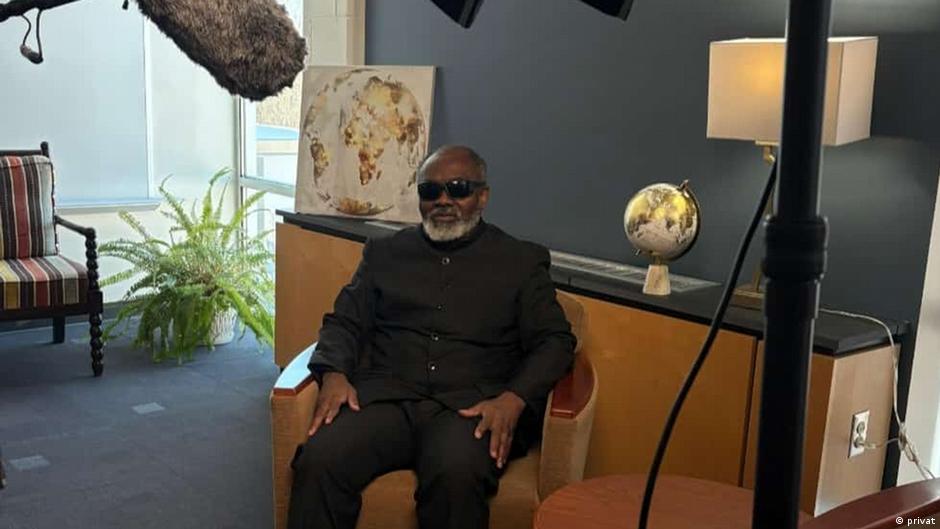
Expert analysis: Dr. Gnaka Lagoke on US-Sahel policy changes
Washington’s evolving priorities in West Africa
Q: Dr. Gnaka Lagoke, Nick Checker met with Mali’s foreign minister and transitional leader Assimi Goïta during his Bamako visit. How is US foreign policy in the Sahel changing under the Trump administration, and what are its objectives in West Africa?
When President Bazoum was ousted in Niger, we observed a stark contrast in responses. While France mobilized through diplomatic channels to restore Bazoum’s government, the United States adopted a distinct approach—choosing not to intervene militarily. This restraint continued even after Niger’s new authorities requested the closure of US military bases and the withdrawal of American forces.
In today’s geopolitical climate—marked by tensions between Russia, China, and Western powers—the US administration has emphasized two priorities: security cooperation and economic engagement. The Sahel is rich in critical minerals, making it a strategic focus for American interests. This mirrors similar patterns seen in Venezuela, Iran, and the Democratic Republic of Congo—regions where mineral resources play a central role in US foreign policy decisions.
Why Nigeria emerges as the US’s new West African partner
Q: With no permanent US military bases remaining in Niger, why has Nigeria become Washington’s preferred partner in West Africa?
Under President Donald Trump, the US justified actions in Nigeria—such as airstrikes in the north—by citing the protection of Christian communities allegedly targeted by Islamist militants. However, analysts widely agree that these interventions were driven less by humanitarian concerns and more by strategic interests—particularly access to Nigeria’s vast oil reserves and other valuable resources.
This dual focus on security and economic leverage is consistent with Trump’s broader Sahel strategy. It is likely to result in the establishment of new military facilities in the region. Notably, the US bases previously located in Niger have reportedly been relocated to Benin and Côte d’Ivoire.
What the Alliance of Sahel States could gain from engaging with the US
Q: What advantages might the Alliance of Sahel States (AES) countries gain from collaborating with the Trump administration?
The US presents itself as an alternative to the European Union and France, which have often framed AES nations as pariahs. This shift offers the Sahel states a valuable diplomatic opening. Additionally, as global power dynamics evolve between Western nations and the BRICS bloc, African countries now have greater leverage to negotiate terms that align with their national interests.
The US emphasizes respect for sovereignty—a message likely to resonate in the Sahel. However, reports suggest that certain networks—including actors from France, the US, and beyond—may still seek regime change in Mali, Burkina Faso, and Niger.
Is this a strategy of double standards? Only time will reveal the full truth.