Washington’s new approach to the Sahel’s military regimes
The United States has significantly altered its policy toward three West African nations—Burkina Faso, Mali, and Niger—following their shift from French military partnerships to alliances with Russia. These countries, now governed by military juntas, have faced persistent Islamist insurgencies while rejecting Western democratic models in favor of sovereignty-driven governance.
In a bold diplomatic move, the U.S. State Department announced plans for Nick Checker, head of African Affairs, to visit Bamako to signal Washington’s renewed commitment to strengthening ties with Mali. The visit aims to affirm U.S. respect for Malian sovereignty and explore a fresh security and economic partnership—one that deliberately avoids revisiting past political disputes.
Security cooperation takes priority over democracy concerns
The U.S. agenda notably omits long-standing demands for democratic governance or human rights improvements. This shift reflects a broader strategic recalibration under the current administration, which has deprioritized interventions in foreign governance in favor of pragmatic security alliances. The move comes despite Mohamed Bazoum, Niger’s deposed president, remaining under house arrest since the 2023 coup.
Analysts suggest this policy U-turn began with the abrupt closure of USAID operations in the region shortly after the new administration took office. Since then, Washington has increasingly focused on mineral resources, counterterrorism, and economic partnerships—moving away from traditional development and governance initiatives.
Russia’s growing influence sparks U.S. counterstrategy
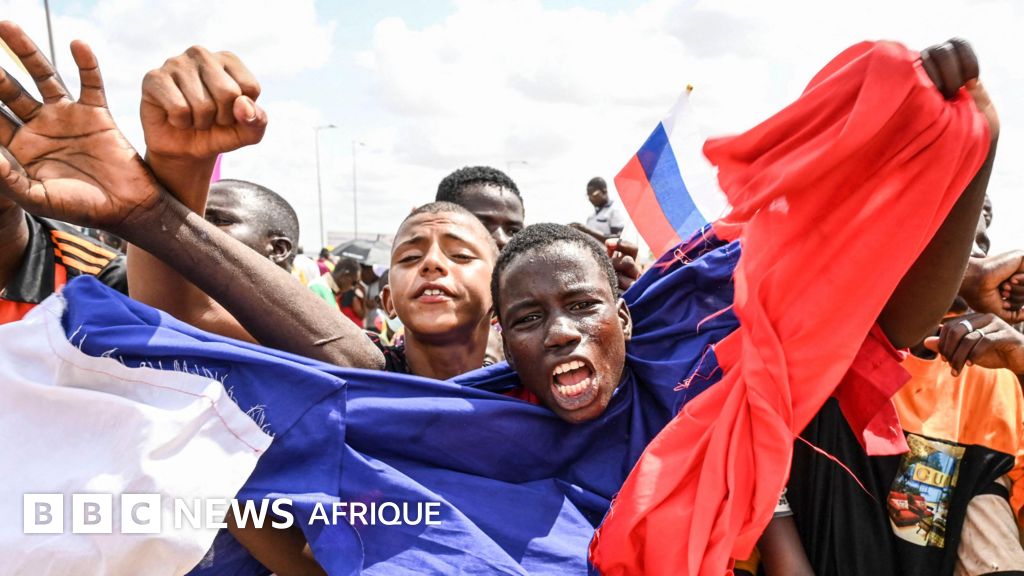
The juntas in Bamako, Ouagadougou, and Niamey have cultivated strong ties with Moscow, leveraging anti-Western and anti-colonial rhetoric to bolster domestic support. Figures like Burkina Faso’s Captain Ibrahim Traoré have positioned themselves as leaders of a continental resistance against neocolonialism, gaining widespread popularity through social media campaigns.
The Trump administration has made it clear that it does not oppose these regimes’ rejection of Western democratic models. Massad Boulos, a senior Africa advisor to the U.S. president, stated last year: “Democracy is always valued, but our policy is not to interfere in the internal affairs of other nations. Peoples must choose their own systems.”
This stance marks a stark departure from the Biden era, when officials like General Michael Langley, former head of U.S. Africa Command (AFRICOM), emphasized the importance of governance, environmental sustainability, and human rights alongside military support.
Terrorism and mineral wealth drive U.S. interests in the Sahel
Washington’s renewed engagement is driven by two critical factors: the escalating threat of Islamist militant groups and the region’s vast mineral resources. The Sahel—stretching from the Sahara’s southern edge—has become a global terrorism hotspot, accounting for nearly half of all terrorism-related fatalities worldwide in recent years.
The Islamic State in the Greater Sahara (ISGS), particularly active in the tri-border area of Mali, Burkina Faso, and Niger, has intensified attacks, including a recent strike on Niamey’s international airport. The region’s instability also threatens the extraction of critical minerals like gold, lithium, and uranium—resources vital to global supply chains and renewable energy technologies.
Mali’s military government has already nationalized uranium mines previously operated by the French firm Orano and is now exploring partnerships with Russia for their development. The U.S. seeks to counterbalance Moscow’s expanding influence while securing access to these strategic resources.
General John Brennan, AFRICOM’s deputy director, confirmed that Washington continues to provide intelligence, logistical support, and potentially arms to the three nations in their fight against jihadist groups. However, the U.S. has ruled out redeploying troops or reopening its Agadez drone base in Niger, which was shut down after the Biden administration pushed for democratic transitions.
Alliance of Sahel States (AES) redefines regional dynamics
Following their withdrawal from the Economic Community of West African States (ECOWAS) in 2024, Mali, Burkina Faso, and Niger formed the Alliance of Sahel States (AES). This bloc prioritizes mutual defense and sovereignty over adherence to democratic norms, effectively removing ECOWAS’s ability to influence their internal governance.
While the AES nations remain isolated from regional institutions, neighboring countries like Bénin, the Nigeria, Togo, Ghana, and Côte d’Ivoire are increasingly vulnerable to cross-border militant incursions. These states now face mounting pressure to collaborate with the juntas to combat terrorism, despite ideological differences.
U.S. intelligence sharing and potential arms supplies could provide a short-term boost in counterterrorism efforts. However, experts caution that military solutions alone cannot resolve the Sahel’s deep-seated socio-economic challenges, which have fueled decades of instability.