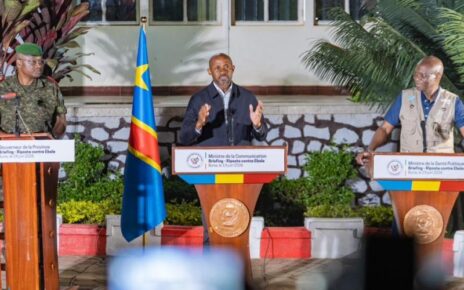
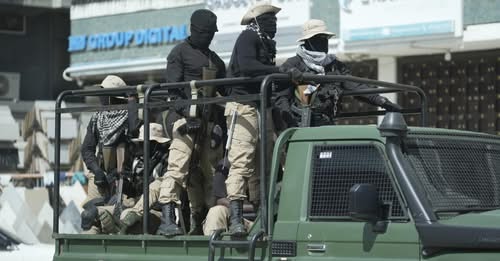
The Tanzanian government’s official commission has released a long-awaited report on the post-election unrest that erupted following the October 29, 2025 presidential vote. Six months after the violence, authorities in Dar es Salaam disclosed a death toll of 518, a figure that has been met with immediate skepticism from opposition groups and human rights organizations, who accuse the government of downplaying the crisis.
Government report under scrutiny
The findings, presented in a tense atmosphere, detail clashes between protesters and security forces as well as intercommunal violence during the late 2025 turmoil. While authorities acknowledge the severity of the tragedy for the first time, they attribute most fatalities to “uncontrolled escalations” during unauthorized demonstrations. The report also implicates certain influential figures in exacerbating tensions.
Discrepancies fuel distrust
The official death toll of 518 has sparked sharp controversy, with critics arguing that the true scale of the disaster has been deliberately obscured.
Opposition leaders have dismissed the report as grossly inadequate, insisting that the actual number of victims exceeds several thousand. They further allege that enforced disappearances—completely omitted from the official account—occurred during the crackdown.
Human rights organizations, leveraging satellite imagery and firsthand accounts, contend that the repression was not merely chaotic but a coordinated campaign. They reject the government’s portrayal of isolated incidents, labeling it an attempt to absolve responsibility.
A crisis of credibility
The divergent narratives have plunged Tanzania into a deepening credibility crisis. By releasing a conservative death toll, the government appears to walk a tightrope: acknowledging some culpability to placate international observers while avoiding accusations of systematic human rights violations that could trigger legal consequences.
A local civil society representative, speaking anonymously, condemned the report as “a diplomatic fig leaf rather than a pursuit of truth.”
Can reconciliation be achieved?
The publication of the report has done little to quell demands for an impartial, international investigation. Analysts warn that without transparency on the true number of victims and the orchestrators behind the violence, the wounds of 2025 will linger, further polarizing an already fractured nation.
As Tanzania grapples with this legacy of division, the absence of a shared understanding of the past threatens to undermine any path toward healing.