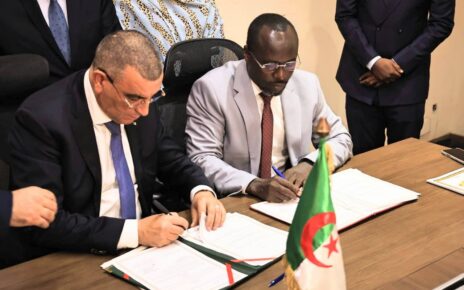
OUAGADOUGOU, November 22, 2025 – The Government of Burkina Faso and the World Bank have formalized a credit agreement, providing an additional 100.4 million dollars. This funding is dedicated to bolstering the Human Capital Protection Project, specifically ensuring the uninterrupted delivery of essential social services across Burkina Faso.
These new resources are earmarked to solidify the provision of free healthcare for women and children, enhance routine immunization programs, facilitate the execution of national examinations, and support teacher training initiatives. These interventions are critical for safeguarding human capital and extending protection to the nation’s most vulnerable communities.
Since its initial endorsement in September 2024, the project has demonstrated substantial achievements. Within the health sector, it has enabled over 16 million complimentary consultations for women and children under five years old, alongside the vaccination of 1.13 million children. Furthermore, the reimbursement rate for expenses related to free healthcare services has seen an improvement, climbing from 75% in 2023 to 82% by the close of 2024.
In the education sector, the project has played a pivotal role in organizing nine national examinations, achieving an impressive 98% participation rate. It has also contributed to the certification of 99.8% of teachers and facilitated the distribution of 69,000 educational kits.
“The undeniable contribution of human capital to a country’s development is well-established. This additional financing will undoubtedly intensify the Government’s efforts to preserve and enhance this capital, which is fundamental for Burkina Faso’s economic growth and social advancement,” stated Hamoud Abdel Wedoud Kamil, the World Bank’s Resident Representative for Burkina Faso.
The Human Capital Protection Project, backed by the International Development Association (IDA), aligns seamlessly with the World Bank’s regional strategy for West and Central Africa, which focuses on strengthening key institutions for service delivery between 2021 and 2025. It also harmonizes with Burkina Faso’s Country Partnership Framework.
“This supplementary funding is crucial for consolidating the progress made in the education and health sectors, which have been significantly impacted by the security crisis. It will ensure that populations, including internally displaced persons, continue to access improved basic social services,” explained Ousmane Deme, Senior Public Sector Specialist, and Daniel Pajank, Senior Economist, both project leads at the World Bank.