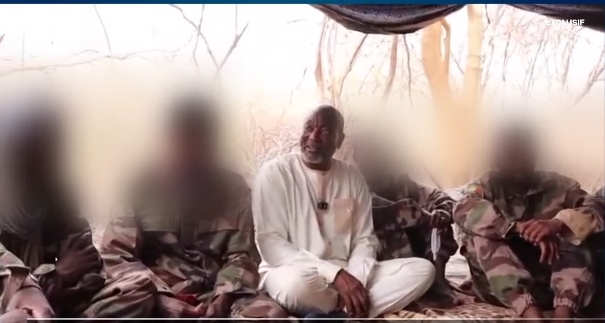
The recent release of 17 hostages in Mali, brokered by exiled opposition leader Oumar Mariko alongside fighters from the Jama’a Nusrat ul-Islam wa al-Muslimin (JNIM), has sent shockwaves through the country’s fragile political landscape. While the humanitarian triumph is undeniable, the circumstances surrounding the operation have ignited a fierce debate about the true extent of Bamako’s control over its own territory.
Within hours, a single photograph—showing Mariko standing beside the freed captives—spread across Malian social media platforms. The image underscores a stark contradiction: an opposition figure, officially sidelined by the ruling authorities, appears to wield more influence in critical security matters than the state itself. For families reunited with their loved ones, relief is palpable; for governance analysts, the episode serves as a glaring indictment of institutional failure.
The erosion of state authority
Central to the controversy is the question of how a political dissident, living abroad, could orchestrate a negotiation that eluded Mali’s security apparatus. The involvement of non-state actors in such a high-stakes operation exposes a troubling reality: in vast swathes of the country, the monopoly on violence and dialogue has slipped from the hands of elected officials into those of informal intermediaries. Observers argue this erosion of sovereignty is not merely a symptom of weakness but a harbinger of deeper systemic collapse, where the absence of the state creates vacuums quickly filled by armed groups.
Terrorists as de facto authorities
For the JNIM, the hostage release was no humanitarian gesture—it was a calculated public relations maneuver designed to achieve two key objectives. First, the group seeks to recast its image as a pragmatic actor willing to engage in dialogue, portraying itself as a legitimate negotiating partner rather than an indiscriminate threat. Second, by stepping into the roles traditionally held by local officials—dispensing justice, enforcing security, and even granting clemency—the JNIM positions itself as the only functional authority in regions where the Malian government has lost its grip.
As one analyst noted, “Sovereignty is not declared in speeches from Bamako; it is proven by the state’s ability to safeguard its people without relying on intermediaries.”
The hidden costs of shadow diplomacy
While the emotional toll of prolonged captivity has ended for the 17 freed individuals, the long-term implications of such private negotiations are deeply concerning. Experts warn of two significant risks:
- Fueling insurgency: Ransom payments, though unofficial and often denied by authorities, provide direct financial support to militant groups, enabling them to sustain and escalate their campaigns against state forces.
- Legitimizing extremists: Engaging with terrorist leaders for favors implicitly acknowledges their control over territory and populations, granting them a veneer of legitimacy that undermines the government’s authority.
Two faces of Mali: the urban illusion and rural reality
The divide between Mali’s official narrative and its lived reality has never been clearer. In the capital, Bamako, government rhetoric continues to emphasize military progress and the imminent recapture of rebel-held zones. Yet beyond the city limits, in the country’s rural heartlands, a different story unfolds. Here, communities grapple with daily survival in an environment where armed factions—rather than state institutions—dictate the rules of coexistence. For many, survival often means pragmatic collaboration with those who hold power on the ground.
The path to restoring state legitimacy
This episode is more than a humanitarian success; it is a wake-up call. By allowing private actors and opposition figures to handle national security matters, Mali risks entrenching a fragmented and unstable future. The challenge for Bamako is no longer just a military one—it is a fundamental question of governance. Restoring the state’s credibility will require more than speeches or battlefield victories; it demands a return to the foundational principle of sovereignty: the unchallenged authority of the state to protect and govern its people.