Germany returns ancestral remains to Cameroon in historic repatriation
A Cameroonian delegation, including leaders from the Maka’a communities, academics, and local mayors, has been in Germany since July 13, 2026, to finalize the return of ancestral remains.
Historic moment: Germany’s return of Maka’a ancestral remains
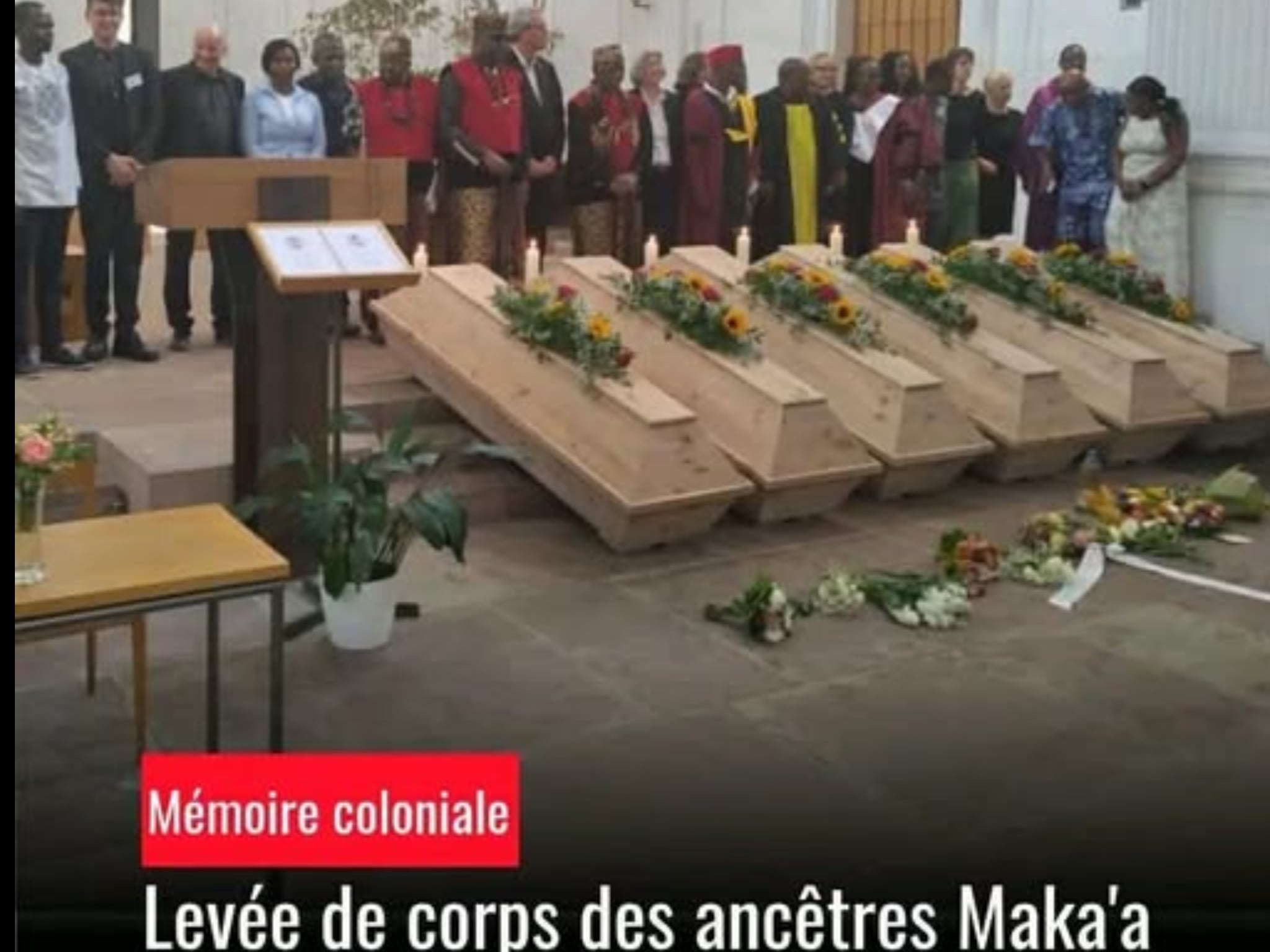
A Cameroonian delegation, including representatives from the Maka’a communities, academics, and local mayors, has been in Germany since July 13, 2026, to oversee the repatriation of ancestral remains taken from the Haut-Nyong region (Eastern Cameroon) during German colonial rule (1884–1916).
This restitution, coordinated with German authorities, marks a significant step in addressing colonial-era injustices. The ceremony to retrieve the remains took place on July 16, 2026, in Freiburg, Germany, before their eventual return to Cameroon. The Maka’a communities will give these ancestors a dignified burial, adhering to their cultural traditions.
The remains—primarily heads and skeletal fragments of Maka’a dignitaries and ancestors—were held in the anatomy department of the University of Freiburg and other museums under the pretext of colonial-era scientific research.
Justice for ancestral communities
For Maka’a traditional leaders like Bertrand Effoudou, the absence of these remains has long been a curse, preventing the closure of ancestral mourning. Their return is seen as a spiritual justice imperative for the community.
After years of negotiations led by Maka’a representatives and supported by Cameroonian ministries and the German Embassy in Yaoundé, the logistics for the Freiburg mission were finalized. Germany still holds at least 300 formally identified Cameroonian human remains, as well as over 40,000 cultural artifacts looted during colonization, according to research from the University of Dschang and the Technical University of Berlin.