Why Niger’s military partnerships are failing the population
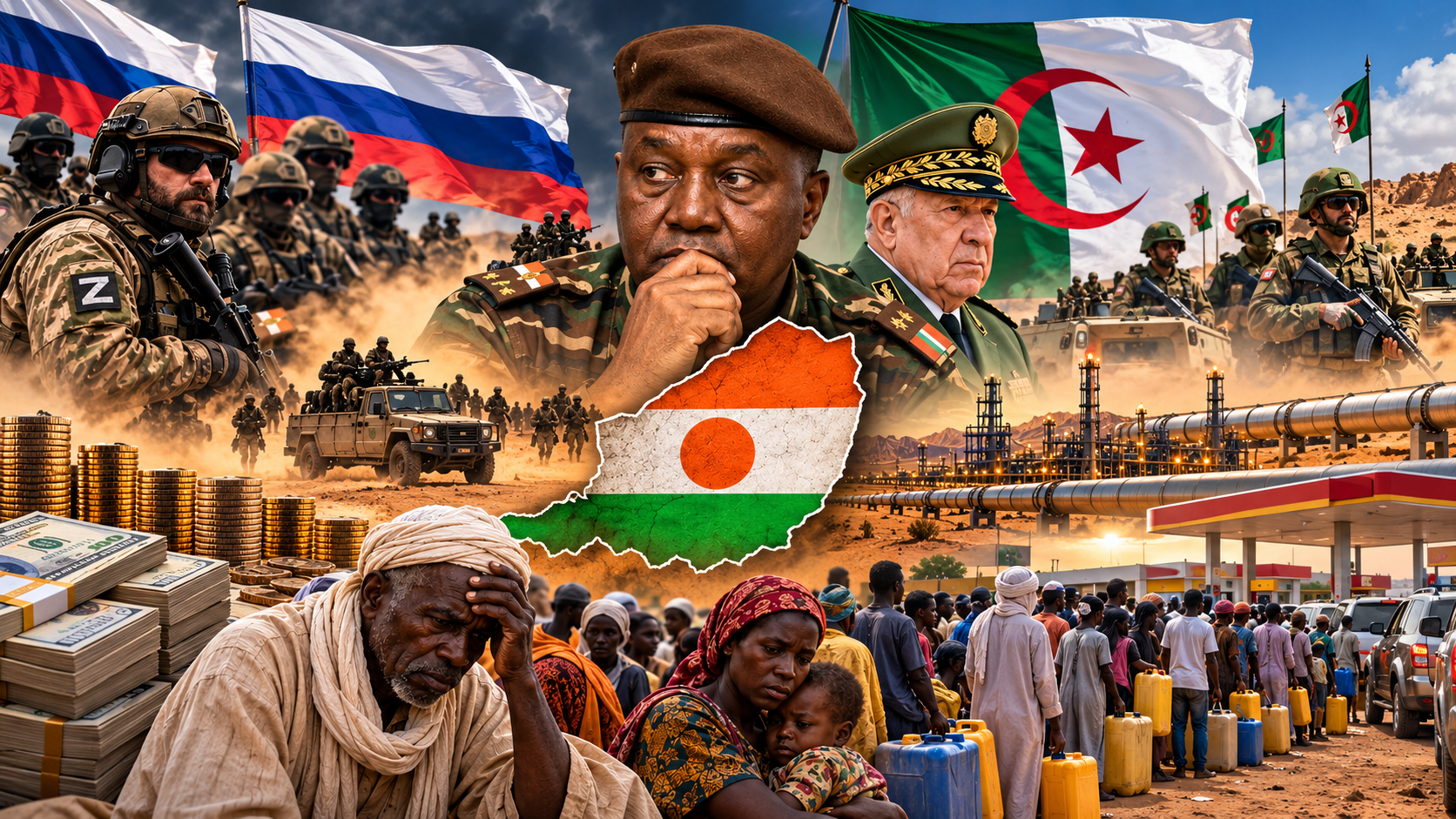
The regime of General Abdourahamane Tiani, which came to power after the July 2023 coup, has relied heavily on foreign military support to address the country’s escalating security crisis. With Russian mercenaries including those linked to Africa Corps now a central pillar of Niamey’s defense strategy, the question remains: why are these partnerships not delivering tangible results? Despite significant financial investments, the population continues to face persistent insecurity, while the government seeks additional assistance, this time from neighboring Algeria.
Mounting costs, unclear outcomes
The presence of Russian military personnel in Niger has been justified as a key component of the country’s security apparatus. However, concrete outcomes are hard to assess. Reports suggest that each mercenary costs up to $10,000 per month, though the exact figures remain unverified due to the absence of publicly available contracts. Even if these expenses are confirmed, what measurable improvements have they brought to the security landscape?
For a nation already grappling with economic hardship, the financial burden of these arrangements is staggering. The Nigerien government has yet to clarify whether these funds are being allocated at the expense of critical social services such as healthcare, education, or infrastructure development. Without transparency, citizens are left in the dark about the true cost of security and its effectiveness.
Algeria’s intervention: A strategic shift or last-resort measure?
On October 25, 2026, Algeria’s Parliament took a decisive step by approving the deployment of units from the Algerian National Popular Army (ANP) to Niger. This move represents a significant departure from Algeria’s traditionally cautious approach to foreign military interventions, signaling a deeper engagement in the Sahel region.
While Algerian authorities cite the protection of bilateral interests and common regional threats as motivations, the specific terms of this cooperation remain vague. Will the mission focus solely on border security and critical infrastructure, or will it involve a broader military presence? How will operational responsibilities be divided between Algerian and Nigerien forces? These questions are not trivial they go to the heart of whether this partnership will truly address Niger’s most pressing security challenges or merely serve Algeria’s strategic and economic interests.
Energy security: The unspoken driver?
Beyond counterterrorism concerns, Algeria’s interests in Niger extend to its energy sector. Prominent projects such as oil installations and the Trans-Saharan Gas Pipeline (TSGP) are vital to both nations’ economies. Securing these assets could align with Algeria’s goals of energy diversification while also benefiting Niger’s economic development.
Yet, this dual agenda raises further questions. Is Algeria’s intervention primarily a response to mutual security threats, or is it driven by the need to safeguard its investments? For the Nigerien government, the challenge lies in ensuring that this cooperation does not overshadow domestic priorities or shift financial burdens onto an already strained public budget.
Who bears the financial burden?
One of the most pressing concerns is the potential cost of Algeria’s military engagement. Will Niamey finance these operations, or will Algeria cover the expenses? Critical details such as logistical support, troop deployment, and operational logistics remain undisclosed. Without clarity on financial arrangements, citizens cannot gauge the true impact of this military partnership on the national economy.
Already stretched thin by rising security costs, Niger’s government faces a critical dilemma. If these expenditures continue without a corresponding improvement in security, the population may ultimately bear the consequences through reduced public services or increased national debt. Transparency in these negotiations is not optional; it is a necessity for accountability.
Sovereignty vs. effectiveness: Can Tiani’s strategy deliver?
The Nigerien regime has long framed its legitimacy on the pillars of sovereignty and resistance to former colonial powers. Yet, the growing dependence on foreign military partnerships whether with Russia or Algeria paints a different picture. While international cooperation is not inherently contradictory to sovereignty, the lack of measurable results and financial transparency undermines this claim.
A sovereign state must do more than reject certain alliances or sign new security pacts it must demonstrate that these partnerships work in the interest of its citizens. If the Russian mercenaries have failed to stabilize the country, and if Algeria’s involvement introduces new complexities, what alternative strategies is the Tiani regime prepared to implement?
The ultimate test: Security for the people
The approval of Algerian military assistance marks a potential turning point in the Sahel’s security landscape. However, its success will be measured not by diplomatic announcements or the presence of foreign troops, but by tangible improvements in the daily lives of Nigeriens.
Will roadways become safer for traders and families? Will rural communities face fewer attacks? Will infrastructure projects proceed without diverting resources from essential services? These are the benchmarks by which Niger’s military partnerships must be judged.
The government of Niger must rise to the occasion. The country cannot afford to outsource its security indefinitely while its people endure the consequences of unmet promises. If foreign partnerships are to play a role in restoring stability, they must be accompanied by clear objectives, accountable spending, and a commitment to transparency. Otherwise, the cycle of insecurity and financial strain will only deepen, leaving the population once again to pay the price.
By AMINA SALEY — Journalist