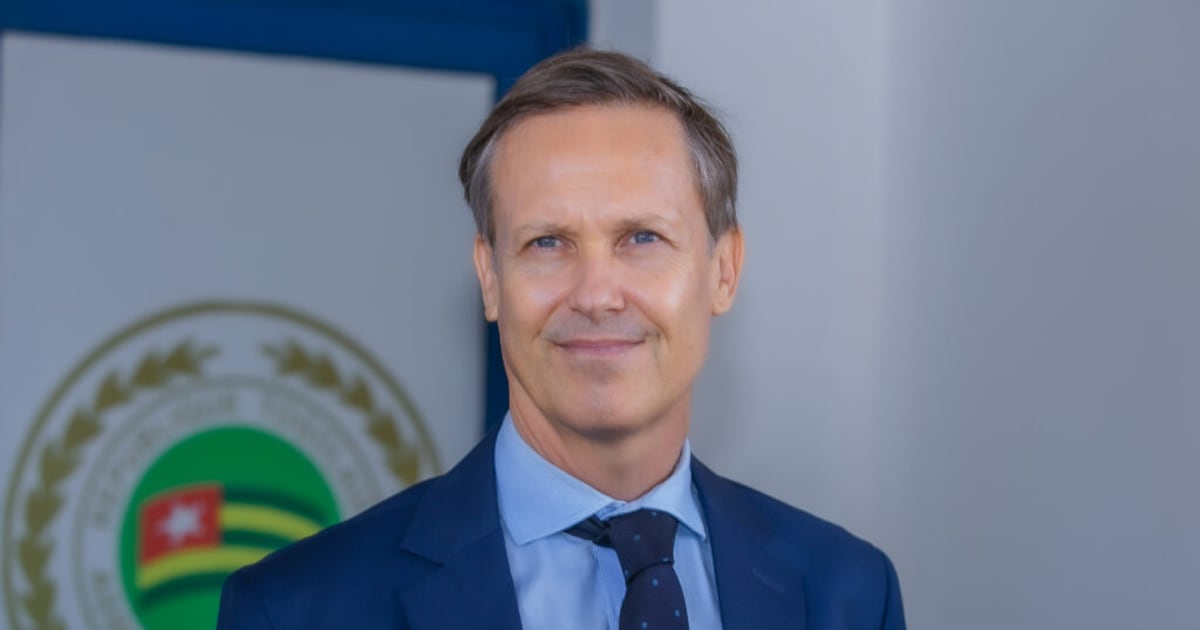
The European Union (EU) has reaffirmed its commitment to strengthening its partnership with Togo amid escalating international tensions. Speaking in Lomé during the celebration of Europe Day on May 9, EU Ambassador to Togo, Gwilym Ceri Jones, highlighted both the achievements of European integration and the pressing geopolitical and security challenges facing the world today.
Europe’s pledge to Togo: stability, development, and shared resilience
Against a backdrop of rising armed conflicts, economic uncertainties, and shifting global alliances, the EU diplomat underscored Europe’s role as a trusted and reliable partner for African nations—especially Togo. “In these turbulent and volatile times, the EU stands as a solid and dependable partner committed to cooperation rooted in international law,” he emphasized.
He pointed to tangible outcomes of EU-Togo collaboration, including development aid programs and initiatives supporting economic and social progress. Among the most significant results: over 1.3 million Togolese now have access to electricity through EU-funded electrification projects, more than 2.5 million people benefit from improved waste collection and treatment systems, and the rehabilitation of the RN2 highway—connecting Lomé to Aného and onward to the Benin border—is well underway.
Energy transition and infrastructure: pillars of EU-Togo cooperation
The EU has also pledged to support a planned 18% increase in Togo’s electricity production through renewable energy sources, signaling a shared commitment to sustainable, low-carbon development. Meanwhile, the ongoing upgrade of the RN2 corridor is not merely an infrastructure project—it serves as a vital economic artery linking Togo to regional trade routes, ensuring both local prosperity and European market access.
Togo’s dual role: refugee host and regional mediator
Ambassador Jones also praised Togo for hosting 60,000 refugees in its northern regions and for its active role as a mediator in the Sahel and Great Lakes regions. He commended the country’s defense and security forces for their vigilance in countering terrorism, reinforcing Togo’s image as a stabilizing force in West Africa.
By positioning Togo as a key partner, the EU is drawing a clear line between its approach and that of other global powers vying for influence in Africa. With neighboring Sahel countries facing escalating instability and growing skepticism toward Western involvement, Brussels appears to be securing a final strategic foothold in a country that acts as both a shield and a diplomatic bridgehead. The timing is no coincidence: as instability spreads southward, Togo serves as Europe’s last line of defense before the crisis reaches the Gulf of Guinea.
The EU’s recognition of Togo’s role goes beyond rhetoric. The numbers tell a story of mutual dependence—electrification for 1.3 million people and waste management for 2.5 million are not just humanitarian gestures, but tools for social pacification in a country where access to basic services can determine political stability. Meanwhile, the promise of an 18% boost in renewable energy production reflects not only environmental responsibility but also a strategic investment in a partner nation’s long-term resilience.
Above all, the heart of this partnership lies in security. By acknowledging Togo’s hosting of 60,000 refugees and its mediation efforts, the EU is effectively outsourcing part of its regional security strategy. While Togo may not be on the front lines of jihadist conflict, it absorbs migratory and diplomatic pressure, offering Europe a critical buffer against instability. The tribute paid to Togolese defense forces is more than praise—it is a recognition of their indispensable role. This is no ordinary cooperation: it is a calculated geopolitical alignment that positions Togo at the center of Europe’s containment policy in the face of Sahelian turmoil.