armed conflict in Mali: touareg demands hold the key to lasting peace
The security landscape in Mali has taken a dramatic turn for the worse in recent months, with coordinated attacks striking multiple cities and claiming the life of the Defense Minister, Sadio Camara, along with several Malian soldiers. This escalation follows years of rising violence against state institutions and military forces across the country.
Drawing from over a decade of research on insecurity and political dynamics in West Africa and the Sahel, our analysis points to a core driver of the recent surge in violence: the unaddressed grievances of the Tuareg communities. These nomadic Berber groups, primarily settled in northern Mali, have long voiced concerns over political autonomy, cultural recognition, resource control, and perceived state neglect.
root causes of the conflict
Three interconnected factors lie at the heart of the current crisis:
- Political marginalization: The Tuareg population has been systematically excluded from governance structures in Mali, despite their historical presence in the north. Successive governments have repeatedly suppressed demands for regional autonomy through military force rather than dialogue.
- Militarized responses: Counterinsurgency operations in northern regions have often resulted in significant civilian casualties and displacement. These heavy-handed tactics have fueled resentment and provided fertile ground for recruitment by armed groups.
- Economic inequality: The northern regions of Mali—rich in gold deposits, salt mines, and strategic trade routes—remain economically marginalized. Revenue and development investments continue to flow disproportionately to the southern regions, exacerbating regional disparities.
historical context and escalation
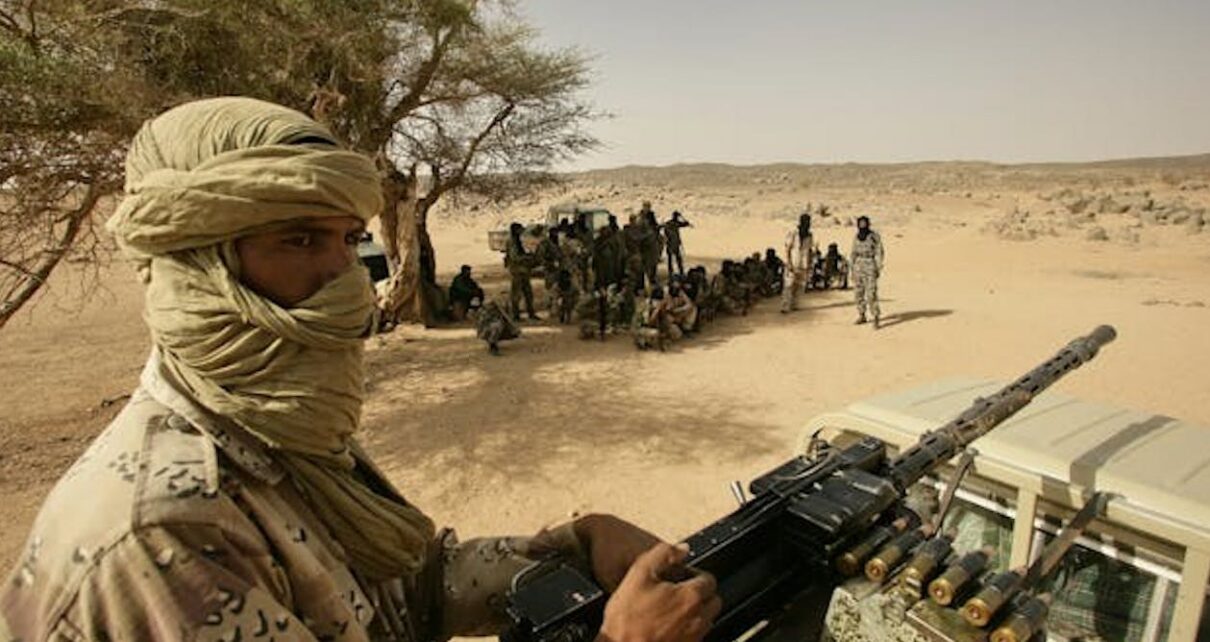
In April 2026, the Group for the Support of Islam and Muslims (JNIM) joined forces with the Tuareg separatist Liberation Front of Azawad (FLA) to launch coordinated attacks across the country. This follows a pattern seen in 2012, when Tuareg rebels and Al-Qaeda-affiliated militants launched a sweeping offensive against the state, culminating in the short-lived declaration of the independent state of Azawad.
The National Movement for the Liberation of Azawad (MNLA), a Tuareg-dominated separatist group founded in 2011, initially gained control of northern cities like Gao, Tombouctou, and Kidal. However, lacking sufficient military strength, the MNLA formed alliances with Islamist factions such as Ansar Dine, Al-Qaeda in the Islamic Maghreb (AQIM), and the Movement for Oneness and Jihad in West Africa (MUJAO). These alliances quickly collapsed, and Islamist groups seized control of key cities. French military intervention in 2013 helped the Malian government reclaim much of the lost territory, pushing AQIM and its allies into remote desert and mountain strongholds where they adopted guerrilla tactics.
The withdrawal of French forces in 2022 removed a critical counterterrorism pressure point, creating a security vacuum that Islamist groups have exploited to expand their operations and influence. This has led to increased recruitment, territorial control, and a resurgence of violence.
missed opportunities and structural failures
The current military regime under Assimi Goïta has failed to address the core grievances of the Tuareg population. Decades of centralization and southern dominance have marginalized northern communities, reinforcing historical grievances dating back to independence in 1960. Climate change—exacerbated by drought, desertification, and erratic weather patterns—has further devastated the pastoral livelihoods of the Tuareg, compounding their sense of abandonment.
Antiterrorism operations in northern and central Mali have also contributed to the crisis. Reports indicate widespread civilian harm, forced displacements, and collective punishments, including arbitrary arrests and massacres. These actions have not only eroded trust in the state but have also been exploited by Islamist groups to bolster their recruitment and territorial control.
pathways to peace: lessons from neighboring nations
To break the cycle of violence, Mali must prioritize addressing the structural inequalities and long-standing grievances of the Tuareg communities. A promising model can be found in neighboring Niger, where President Mahamadou Issoufou implemented a series of reforms upon taking office in 2011:
Institutional integration: Tuareg leaders and former rebels were incorporated into state institutions, providing political representation and fostering inclusion.
Regional decentralization: Authority and budgetary control were devolved to regional governments, empowering local communities and improving governance.
Disarmament and reintegration: Comprehensive programs were launched to disarm, demobilize, and reintegrate former combatants into civilian life.
Targeted development: Investments were directed toward pastoralism, education, water access, infrastructure, and rural connectivity—areas critical to Tuareg livelihoods and security.
By adopting a similar approach, Mali can begin to heal the divisions that have fueled decades of conflict. Addressing Tuareg grievances is not just a matter of justice—it is a strategic imperative for restoring national unity and achieving lasting peace.