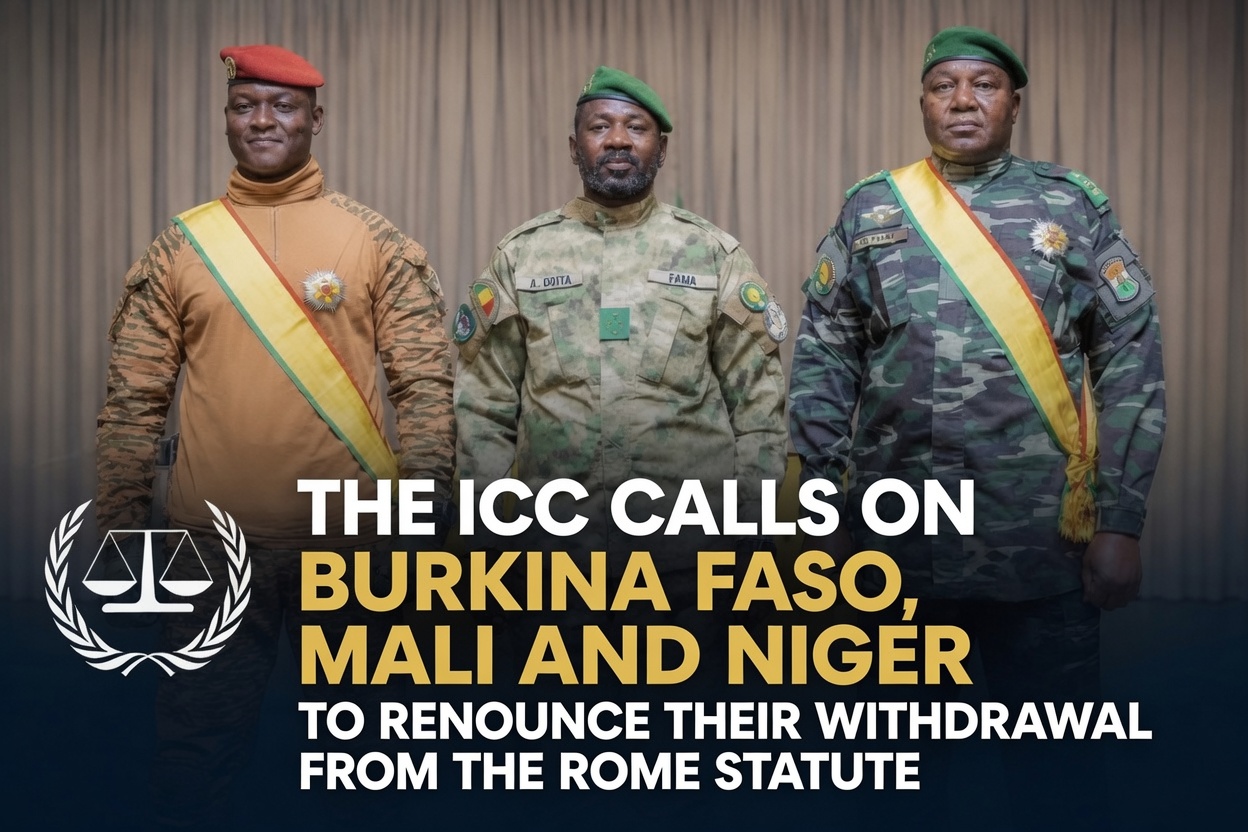
The International Criminal Court (ICC) has issued a formal appeal to Burkina Faso, Mali, and Niger, urging them to reconsider their withdrawal from the Rome Statute, the foundational treaty of the global judicial institution. This plea comes at a critical juncture, as political and diplomatic shifts reshape the Alliance of Sahel States (AES).
Why the ICC insists on continued membership
For the ICC, the three nations’ continued adherence to the Rome Statute is non-negotiable in sustaining the fight against impunity. The Court emphasizes its mandate to hold accountable individuals suspected of war crimes, crimes against humanity, genocide, and, in specific cases, acts of aggression—particularly when domestic legal systems fail to act decisively. Without their participation, the ICC warns of gaps in international justice that could embolden perpetrators of grave crimes.
Global concerns over withdrawal
The decision by Burkina Faso, Mali, and Niger has sparked widespread concern among international observers. Many argue that such a move could undermine international judicial cooperation, making it significantly harder to investigate heinous crimes in a region plagued by armed conflict and widespread violence against civilians. The ICC’s role in ensuring accountability has long been seen as a cornerstone of justice in such contexts.
Nations defend sovereignty amid tensions
In response, authorities in the three countries have reaffirmed their commitment to national sovereignty, asserting that their judicial systems should take precedence in handling crimes committed within their borders. They have repeatedly criticized what they describe as a selective or politically influenced international justice system, questioning its impartiality in addressing grave violations.
A clash between sovereignty and global justice
The debate extends beyond legal technicalities, exposing a fundamental tension between state sovereignty and the need for a robust international justice system capable of prosecuting the most severe crimes when domestic avenues prove inadequate. The ICC’s appeal underscores the high stakes involved for Burkina Faso, Mali, and Niger, with implications for their diplomatic relations, judicial cooperation, and commitment to combating impunity.
The coming months will reveal whether the three nations heed the call to remain within the Rome Statute framework—or whether they proceed with their withdrawal, reshaping the landscape of international justice in the Sahel.