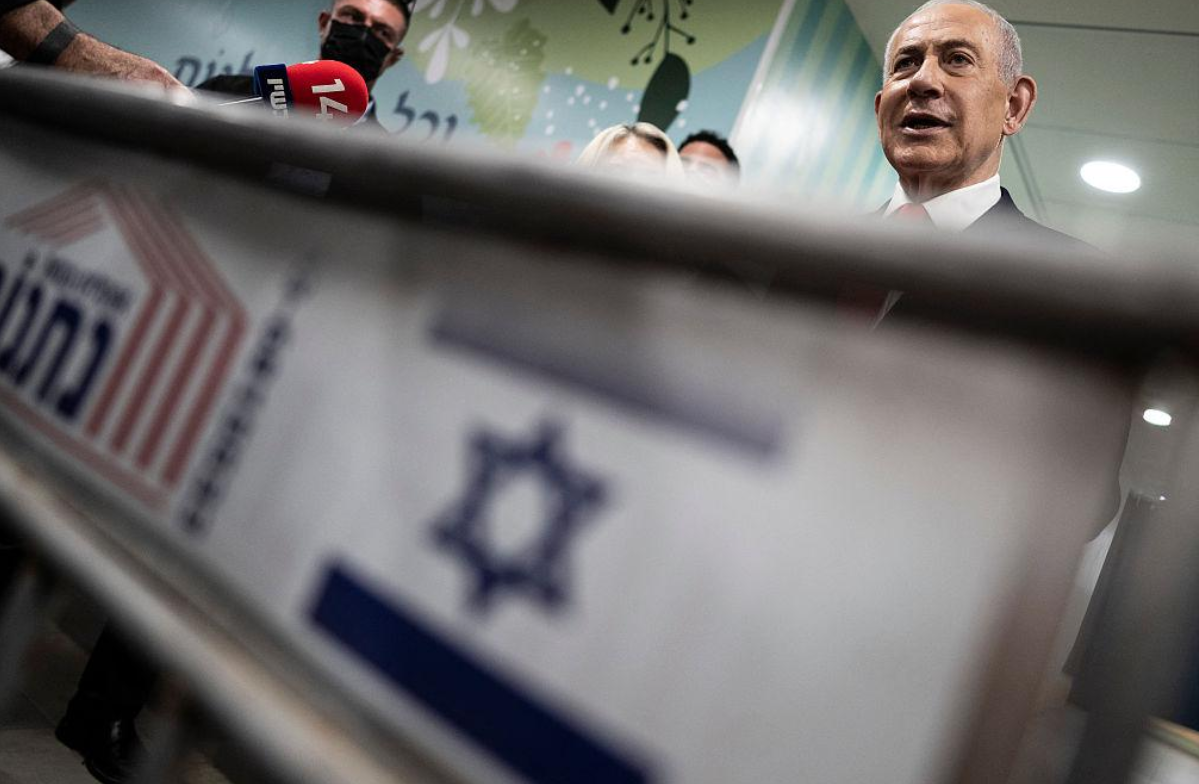
With 53 of the Knesset’s 120 seats, Benjamin Netanyahu’s bloc stands atop Israel’s 2026 legislative vote—but without the outright majority needed to command the next government. An opposition coalition holding 48 seats and a historic 19-seat bloc of Arab parties now share the parliamentary stage, creating a deadlock that could extend well beyond Jerusalem’s walls—into Gaza, Lebanon, and the corridors of power in Tehran.
Why a narrow victory could spell a weak premiership
Netanyahu’s Likud party still tops the poll with 27 seats, yet this result falls 8 short of the 61-seat supermajority required to form a stable cabinet. His previous coalition commanded 68 seats; this time, the arithmetic has shifted dramatically, reflecting broader fatigue after years of war, protests, and policy disputes.
The Arab parties—including the Joint List and Ra’am—have never held so much leverage. While their parliamentary weight could, in theory, tip the scales toward an opposition majority, ideological fissures among Zionist factions make any alliance politically fraught. Coalitions of national unity, minority governments, or even another snap vote remain on the table.
Could arab parties break the impasse?
For the first time, 19 Arab parliamentarians hold the balance of power. Their support could push an opposition alliance past 61 seats, but several coalition partners have long ruled out governing alongside Arab parties. The result is a high-stakes negotiation where the price of backing Netanyahu—or blocking him—carries immense domestic and regional stakes.
Gaza’s fragile truce in the crosshairs of coalition talks
Israel’s next government will inherit a Gaza Strip still scarred by conflict, its reconstruction stalled and its society fractured. The territory’s governance, Israel’s security calculus, and the fate of any future Palestinian statehood are all on the table as Netanyahu and his rivals weigh their priorities.
If Netanyahu clings to power with his traditional allies, continuity in hardline security policy is likely: far-right and religious blocs remain unyielding on Hamas, territorial concessions, and military deterrence. Yet an opposition-led coalition might introduce cautious diplomatic shifts—though fundamental policy reversals appear unlikely given deep divisions even within the anti-Netanyahu camp.
For Palestinians, today’s vote offers no immediate relief. Outcomes for Gaza and the West Bank will hinge on whichever alliances ultimately shape Israel’s next cabinet and its red lines.
Iran, Hezbollah, and the risk of spiraling regional crises
The ballot box outcome is already reverberating beyond Israel’s borders. Iran’s nuclear ambitions, its ballistic arsenal, and its regional proxy network remain top-tier threats that command broad consensus among Israeli lawmakers—even as political fragmentation complicates strategic decision-making.
Lebanon’s volatile equation with Hezbollah looms just as large. Any escalation risks humanitarian fallout across two nations, while Syria’s shifting frontlines continue to demand Israeli vigilance. In short, Jerusalem’s next moves will be parsed minute-by-minute from Washington to Riyadh.
Washington’s balancing act with an uncertain ally
The United States has long anchored Israel’s military, intelligence, and diplomatic posture. Yet Gaza’s humanitarian toll and differing threat perceptions could strain even this bedrock partnership. A government unable—or unwilling—to articulate a coherent policy may find itself at odds with its closest ally, complicating joint efforts to de-escalate regional flashpoints.
Arab capitals watch, wait, and hedge their bets
Riyadh’s Abraham Accords ambitions hinge on regional stability and Palestinian rights. Cairo and Amman also weigh the prospect of normalisation against the political feasibility of any Israeli government. A fractured Knesset may slow diplomatic momentum, but it does not foreclose new channels—provided the next coalition can deliver tangible steps toward peace.
Saudi Arabia’s calculus remains especially delicate: deeper ties with Israel remain a strategic goal, yet any perceived capitulation on Palestinian statehood could undermine domestic legitimacy and regional credibility.
Three paths forward—and none without peril
Netanyahu’s mandate is clear but perilously incomplete. He can either stitch together a patchwork coalition, cede the premiership to an opposition alliance, or face a fresh election if talks collapse. Each route carries distinct risks for Israel’s security, economy, and international standing.
Domestically, the vote laid bare a society split over governance, religion, and national identity. The Arab parties’ gains signal shifting demographics and demands, forcing mainstream parties to reconsider their platforms—or risk irrelevance.
Regionally, the stakes could not be higher. Gaza’s recovery, the Iran nuclear file, and Lebanon’s fragile peace process all hinge on the durability—and direction—of Israel’s next government. In a Middle East where every Knesset vote can echo across continents, this fractured victory may well mark the beginning of a new era of uncertainty.