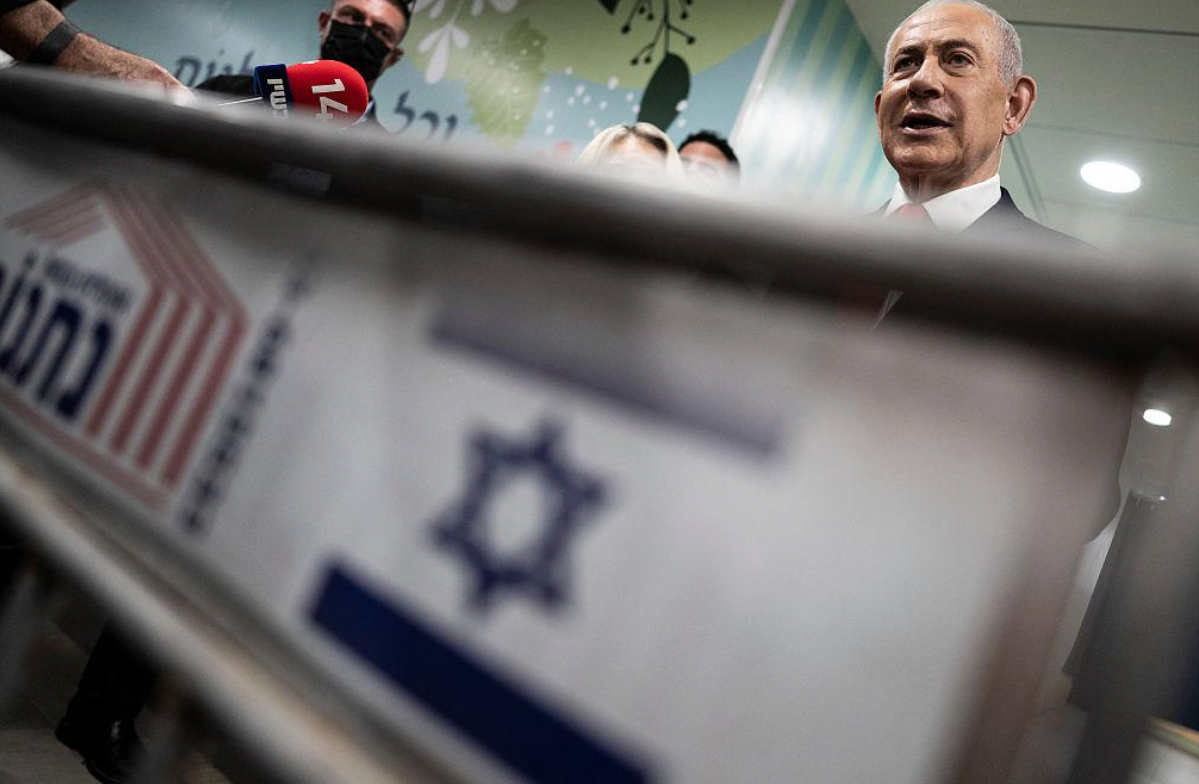
Israel’s October 27, 2026, parliamentary elections have delivered a decisive victory to Prime Minister Benjamin Netanyahu—but one that falls short of securing the majority needed to govern. With his bloc securing 53 seats in the 120-member Knesset, Netanyahu faces an opposition coalition holding 48 seats, alongside an unprecedented 19 seats held by Arab parties. The outcome leaves Israel poised at a political crossroads, with implications that extend far beyond its borders—from Gaza and Iran to Lebanon and diplomatic ties with Arab capitals.
Can Netanyahu build a workable coalition—or will Israel head to new elections?
Despite securing the most seats, Netanyahu’s Likud party—with 27 parliamentary members—lacks the 61-seat threshold required for a majority. This fragmented result represents a stark shift from the previous Knesset, where his coalition held 68 seats. The new balance reflects deep political divisions across Israel: sustained public opposition, wartime governance fatigue, and shifting voter priorities have reshaped the legislative landscape.
The Arab-majority parties, including the Joint List and Ra’am, now hold historic influence. Their support could tip the scales in favor of the opposition, though coalition agreements remain elusive due to ideological resistance from several Zionist factions. Alternative paths loom: a national unity government, a minority coalition, or—if negotiations collapse—another round of elections. Each option carries significant risk in a deeply polarized society.
Gaza’s reconstruction and security: will Israel’s next government break from the past?
Policy continuity under Netanyahu or room for change?
The humanitarian and political crisis in Gaza remains a defining challenge for Israel’s future government. Reconstruction efforts, security guarantees, and Palestinian governance structures will all demand urgent attention. If Netanyahu retains power through traditional allies—nationalist and religious parties—policy continuity is likely. These factions advocate for a firm stance on security, Palestinian state recognition, and Hamas containment.
An opposition-led coalition, however, could introduce shifts in diplomacy and international engagement. Yet change may be incremental. Deep divisions persist even within opposition ranks over core issues: the fate of Hamas, West Bank policy, and the viability of a two-state solution. Palestinians are right to expect no immediate relief, as outcomes will hinge on the fragile alliances shaping the next executive.
Regional stability at risk amid political uncertainty
The absence of a clear majority raises concerns over Israel’s ability to project strategic consistency—especially in its complex relationships with Gaza and the West Bank. Without a unified government, coordinated decision-making on critical issues like ceasefire enforcement, aid delivery, and long-term peace frameworks could falter, prolonging instability and humanitarian suffering.
Israel’s foreign policy in the balance: Iran, Lebanon, and beyond
The shadow of Iran and the challenge of deterrence
Israel’s stance toward Iran remains a flashpoint with regional and global consequences. Tehran’s nuclear ambitions, ballistic missile programs, and support for armed groups continue to threaten Israeli security. While Israel’s political class largely agrees on the gravity of this threat, a fractured Knesset could complicate swift, unified responses to escalations—whether in Syria, Lebanon, or the Persian Gulf.
A weakened government may struggle to maintain a coherent deterrence strategy, increasing the risk of miscalculation or prolonged conflict. This is especially urgent given recent cross-border tensions and proxy confrontations that have kept the region on edge for years.
Lebanon and the Hezbollah dilemma
The future of Israel’s relationship with Lebanon—and particularly with Hezbollah—will test the new government’s diplomatic and military resolve. Any military escalation could trigger severe humanitarian crises, economic fallout, and further destabilization of an already fragile state.
The risk of miscommunication or unintended escalation grows when Israel’s leadership is distracted by domestic infighting. With Iran-backed actors maintaining a strong presence in southern Lebanon, the stakes could not be higher.
Diplomatic fallout: what does Washington—and the Arab world—expect?
U.S.-Israel relations under scrutiny
The United States has long been Israel’s most critical strategic ally. Yet shared interests—defense cooperation, intelligence sharing, and regional stability—are increasingly tested by divergent approaches to Gaza, military operations, and the pursuit of long-term peace. A government unable to unite behind a clear policy may strain this alliance, affecting everything from arms sales to diplomatic coordination.
Arab normalization and the Palestinian question
For Gulf nations like Saudi Arabia, the UAE, and others, normalization with Israel remains a strategic goal—but one conditioned by progress on Palestinian statehood and regional security. A Netanyahu-led coalition may struggle to meet Arab expectations, especially if it relies on far-right partners opposed to concessions. Conversely, a more pragmatic government could unlock new diplomatic avenues, though meaningful breakthroughs would require difficult compromises on both sides.
Egypt and Jordan, both directly affected by Gaza and Palestinian issues, will watch closely. Their stability and regional influence depend, in part, on Israel’s next moves—and whether they reflect a willingness to engage in meaningful dialogue or double down on hardline positions.
The bigger picture: a nation at a crossroads
Israel’s 2026 elections were not just about who leads—they were about what Israel stands for. The rise of Arab parties, the erosion of Netanyahu’s traditional base, and the absence of a clear majority reflect a society deeply divided over national identity, security, and peace. Three potential paths emerge: a fragile coalition under Netanyahu, a fragile opposition alliance, or another election cycle.
The consequences extend well beyond Israel’s borders. The next government’s composition will shape Gaza’s future, the trajectory of Israeli-Palestinian relations, the balance of power with Iran, and the pace of normalization with Arab states. Most critically, it will determine whether Israel can navigate its internal divisions to project stability—or whether political paralysis will deepen instability across the Middle East.
One thing is certain: despite winning the most seats, Benjamin Netanyahu does not have the mandate to govern alone. And in a region where decisions in Jerusalem reverberate globally, that may be the most consequential result of all.