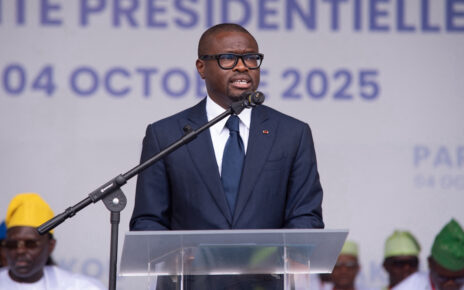
In a significant political development, the Ivorian government confirmed the disbandment of the Independent Electoral Commission (CEI) during its Council of Ministers meeting on Wednesday, May 6. This pronouncement signals the conclusion of a pivotal institution that has been central to Côte d’Ivoire’s democratic framework since 2001, ushering in a period of ambiguity regarding the structure of forthcoming elections.
Government spokesperson and Minister Amadou Coulibaly articulated the rationale behind this decisive action. Official statements indicate that this dissolution is not an ultimate goal, but rather a strategic instrument designed to re-establish the bond of trust between the electorate and the electoral administration. « The overarching aim is to durably ensure the organization of peaceful elections », the minister asserted following the Council meeting. While specific details concerning the CEI’s replacement remain undisclosed, the government appears intent on proactively addressing the recurring tensions that typically accompany electoral cycles in Côte d’Ivoire.
The Rationale for Dissolution: Balancing Legitimacy and Efficacy
The authorities have put forward several key arguments for dismantling the CEI, which are also echoed by segments of political analysis:
- Erosion of Public Trust: Established in 2001 amidst a post-crisis environment, the CEI had, over the years, evolved into a focal point for various political discontents. Its foundational structure was increasingly considered outdated in relation to the nation’s contemporary circumstances.
- Impartiality Under Scrutiny: A primary critique from its detractors centered on its composition. Frequently perceived as overly “political” rather than sufficiently “technical,” the institution struggled to project an image of absolute impartiality.
- Demand for Structural Overhaul: Rather than implementing yet another series of technical adjustments, the government chose a “clean slate” approach, aiming to construct a new body that would align with international benchmarks for transparency.
A History Riddled with Challenges
The inherent vulnerabilities of the institution were evident in the cyclical crises it endured. From the 2010 presidential election to more recent local polls, the CEI consistently faced:
- Systematic Appeals to International Bodies: Notably, the African Court on Human and Peoples’ Rights (CADHP) had previously highlighted an imbalance in stakeholder representation within the commission.
- Frequent Boycotts: On numerous occasions, several opposition parties declined to participate in the commission or send representatives, thereby undermining the legitimacy of its rulings.
- Civil Society Advocacy: Human rights organizations had long called for a complete “depoliticization” of the electoral body.
The Uncharted Territory of the ‘Day After’
Despite the stated commitment to “ensure peace,” this announcement creates a significant institutional vacuum. Currently, no details have emerged regarding:
- The Transitional Mechanism: Who will be responsible for managing electoral rolls during the interim period?
- The Structure of the New Body: Will it be a purely technical commission, a model inspired by Northern European nations, or an administrative entity under the purview of the Ministry of Interior?
As these crucial clarifications are awaited, the Ivorian political landscape remains on high alert. While the dissolution of the CEI represents a symbolic triumph for its critics, the ultimate success of this initiative will hinge entirely on the character and composition of the body appointed to succeed it.