The highly anticipated Grand Tortue Ahmeyim (GTA) gas project, operated by the American firm Kosmos Energy and straddling the maritime border between Senegal and Mauritania, is once again in the spotlight. The Texas-based company has released new details regarding the ramp-up of this significant cross-border field, which saw its first phase commence commercial production in early 2025. This development is being closely monitored in Dakar, where Prime Minister Ousmane Sonko has made the effective management of extractive resources a defining policy of his administration.
A foundational cross-border initiative for Dakar and Nouakchott
Launched after several years of intricate negotiations between the two capital cities, GTA exploits a gas reservoir situated precisely on the shared maritime frontier. The agreed-upon revenue split is a rare 50/50 parity between Senegal and Mauritania, an uncommon arrangement within West Africa’s extractive industry. Kosmos Energy spearheads the development alongside bp, the long-standing permit operator, while the national companies Petrosen and the Société Mauritanienne des Hydrocarbures (SMH) represent the state’s interests.
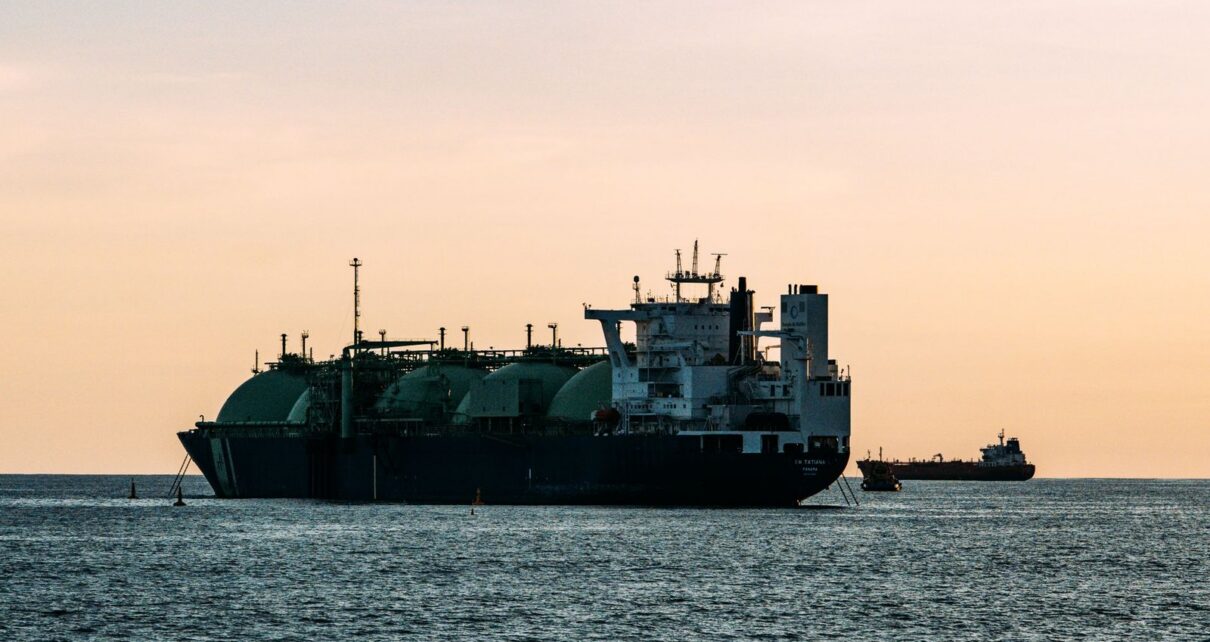
The initial phase of the project relies on a floating liquefied natural gas (FLNG) unit designed to process gas for export to international markets. The targeted initial capacity is approximately 2.3 million tonnes of liquefied natural gas per annum. Kosmos indicates that production is steadily advancing towards its nominal plateau, following the technical commissioning completed last year and the subsequent dispatch of initial cargo shipments.
Kosmos Energy navigates senegalese political expectations
Since the Bassirou Diomaye Faye – Ousmane Sonko duo assumed power in March 2024, the project’s trajectory has been under intense scrutiny in Dakar. The Senegalese head of government has firmly expressed his intention to renegotiate or audit contracts inherited from the previous regime, which are perceived as imbalanced and detrimental to the state. This stance has introduced a period of uncertainty for international operators, with Kosmos and bp at the forefront.
The recent communication from the American group aims specifically to provide reassurance regarding the operational timeline. Kosmos emphasizes the stability of its partnership with authorities in both countries and the continuation of technical discussions concerning subsequent phases. Nevertheless, the company has reportedly scaled back certain ambitions, with several financial analysts noting a discrepancy between initial objectives and the actual volumes produced during the early months of operation.
Crucially, the successful ramp-up of the GTA field is a prerequisite for significant budgetary revenues for both nations. On the Senegalese side, projections anticipate several hundred billion CFA francs in annual income once full capacity is achieved. These funds are earmarked to bolster the Intergenerational Fund and the national budget, two pivotal mechanisms within Dakar’s natural resource management framework.
Phase 2, local content, and energy sovereignty
Beyond the initial phase, attention is now shifting towards the project’s expansion. GTA’s Phase 2, long discussed to potentially boost capacity to around 3 million tonnes annually, remains contingent on an agreement among industrial partners and governments. Kosmos has indicated that studies are ongoing, though without a firm calendar commitment at this juncture. The prevailing international LNG prices and the operator’s stated deleveraging strategy also factor into the equation.
For both Dakar and Nouakchott, the issue of local content remains a sensitive point. The Senegalese government has articulated its desire to see more national enterprises integrated into the value chain, from industrial subcontracting to logistical services. Ousmane Sonko has also raised the possibility of directing a portion of the gas production towards domestic supply, particularly to power thermal plants and reduce the country’s energy import bill.
However, the authorities’ room for maneuver is constrained by existing contracts and the imperative to maintain the attractiveness of the MSGBC sedimentary basin. Several adjacent blocks are still undergoing exploration, and the approach adopted towards Kosmos and bp will serve as a crucial signal to potential investors. The credibility of Senegal’s gas ambitions is being forged as much in the FLNG’s engine room as it is in the ministerial offices of Dakar, a key development for West Africa’s energy landscape.