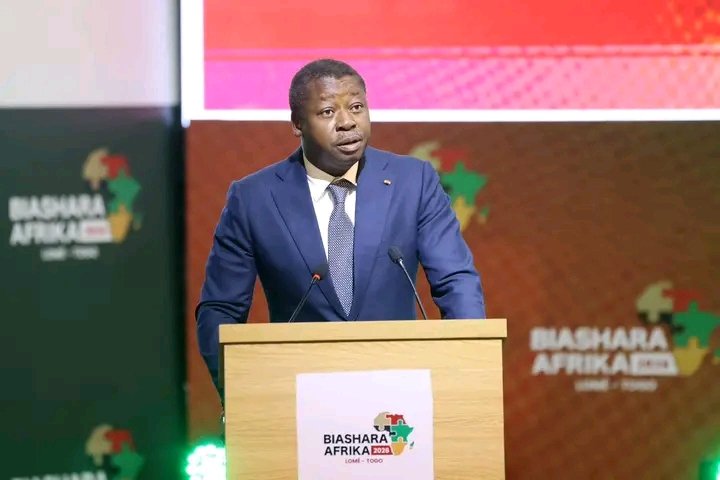
Lomé is currently hosting the third edition of the Biashara Africa forum, a landmark event dedicated to commerce, investment, and economic partnerships across the continent. Since its launch on May 18, 2026, the forum has brought together heads of state, ministers, investors, and private sector leaders to discuss strategies for accelerating Africa’s economic integration.
At the opening ceremony, Faure Essozimna Gnassingbé, President of the Togolese Council, emphasized the urgent need for the African continent to move beyond political ambitions and translate them into measurable economic outcomes. Addressing delegates from across Africa, he declared, “The era of vision must now give way to an era of results.”
tribute to mahamadou issoufou and the push for zlecaf implementation
In his speech, Gnassingbé paid tribute to the late Mahamadou Issoufou, a key advocate of the African Continental Free Trade Area (AfCFTA) and a champion of regional economic integration. The Togolese leader underscored that while the AfCFTA represents a historic milestone, its success hinges on concrete actions—such as efficient infrastructure, streamlined logistics corridors, modernized payment systems, and simplified cross-border trade.
He highlighted persistent challenges like non-tariff barriers, border delays, and exorbitant logistics costs, which continue to hinder intra-African trade. Biashara Africa must, in his view, serve as more than a discussion platform—it should be a launchpad for actionable solutions and strategic partnerships.
zlecaf as a tool for continental economic sovereignty
Gnassingbé framed the AfCFTA not just as a trade agreement but as a critical instrument for Africa’s economic sovereignty. In a global landscape marked by geopolitical tensions, rising protectionism, and shifting supply chains, he argued that no single African nation can defend its interests effectively in isolation. The AfCFTA, he asserted, is the continent’s best opportunity to enhance local production, bolster industrial capacity, and strengthen its bargaining power on the global stage.
The President of the Togolese Council also stressed the need for Africa to cultivate its own industrial champions—large, Africa-owned enterprises capable of competing regionally and globally. He lamented the continent’s over-reliance on exporting raw materials while importing high-value processed goods, calling for a shift toward value-added production and intra-African trade.
empowering africa’s youth, women, and smes
In his closing remarks, Gnassingbé turned his attention to Africa’s youth, women entrepreneurs, and small and medium-sized enterprises (SMEs), calling them the backbone of sustainable economic integration. He warned that the AfCFTA’s success would remain elusive if its benefits were confined to elites or large corporations.
“True integration means creating opportunities for all Africans,” he stated. “It must translate into jobs, entrepreneurship, and access to regional markets—especially for those who have long been sidelined.”
Togo’s role in shaping africa’s economic future
As the host of Biashara Africa 2026, Togo is positioning itself as a key player in the continent’s economic transformation. Leveraging its strategic location, robust logistics infrastructure, and regional connectivity, the country is poised to play a pivotal role in fostering the AfCFTA’s operationalization.
The Togolese leader closed by expressing optimism that this year’s forum would catalyze new partnerships and inject fresh momentum into Africa’s economic integration efforts. Biashara Africa, he believes, must be a catalyst for a new chapter in the continent’s economic narrative.