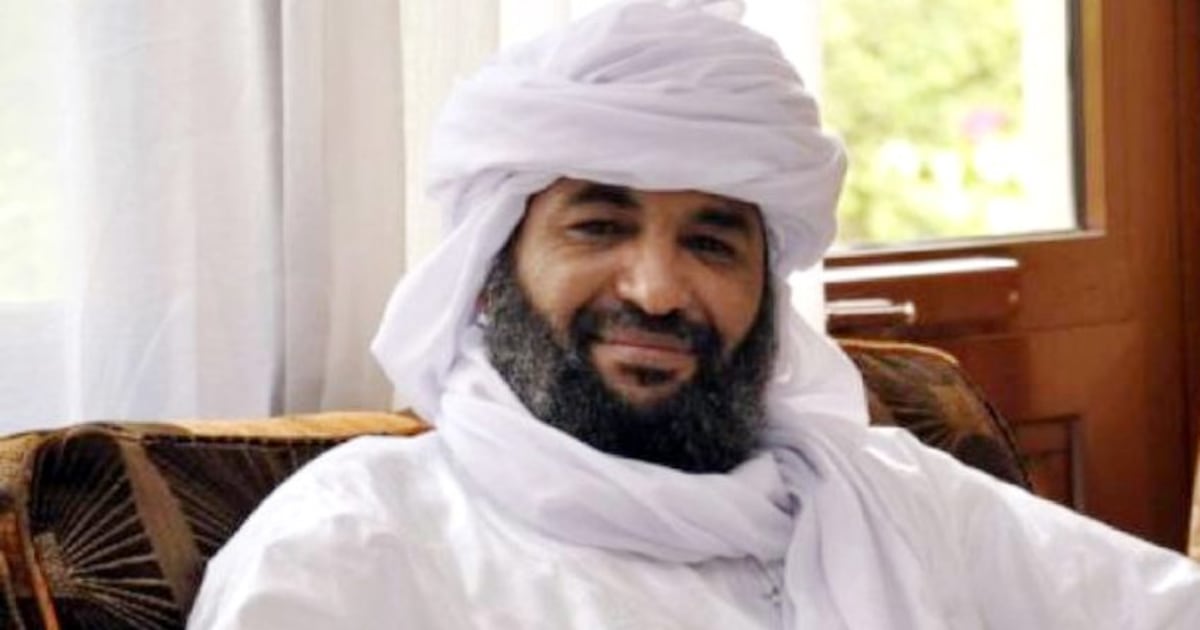
Iyad Ag Ghaly, the formidable head of the Group for the Support of Islam and Muslims (JNIM) since its inception in 2017, once served as a Tuareg rebel leader and a Malian diplomat.
He stands as the most sought-after individual across the Sahel region, facing United Nations sanctions, designated a ‘terrorist’ by the United States, and subject to an International Criminal Court (ICC) arrest warrant for alleged war crimes and crimes against humanity.
Mali is currently grappling with a severe security crisis, intensified by a series of coordinated assaults on April 25 and 26. These attacks were executed by JNIM jihadists in collaboration with the predominantly Tuareg Azawad Liberation Front (FLA) rebellion.
These unprecedented, large-scale operations targeted crucial strategic positions held by the ruling junta in Bamako across multiple regions. Tragically, the attacks claimed the life of Sadio Camara, Mali’s 47-year-old Defense Minister and a key figure in the junta, who perished in a suicide bombing.
In response, the government, through a communiqué broadcast on national television on Thursday, declared significant financial rewards for information leading to the capture of six other high-ranking figures. Among them are Amadou Kouffa, another prominent JNIM leader, with a bounty of 2.2 million euros, alongside FLA commanders Alghabass Ag Intalla and Bilal Ag Cherif.
The Ministry of Security and Civil Protection affirmed its commitment to counter-terrorism and national security preservation, stating it “offers a financial reward to any individual providing reliable, pertinent, and actionable information enabling the arrest or neutralization of the aforementioned individuals.”
The communiqué further emphasized that “these individuals are actively sought by relevant authorities for their alleged involvement in the planning, organization, and execution of terrorist acts that have compromised the safety of people and property throughout the national territory.”
Since 2012, Mali has endured a profound and ongoing security crisis, fueled by persistent violence from JNIM, the Islamic State (IS) group, and various community-based criminal organizations.