Mali’s junta puts price on heads of JNIM and FLA leaders after deadly attacks
The Malian government has escalated its counterterrorism efforts by announcing substantial financial rewards for key figures in militant groups responsible for recent deadly assaults across the country. The move comes amid a sharp deterioration in security, with coordinated jihadist offensives targeting state infrastructure and military positions.
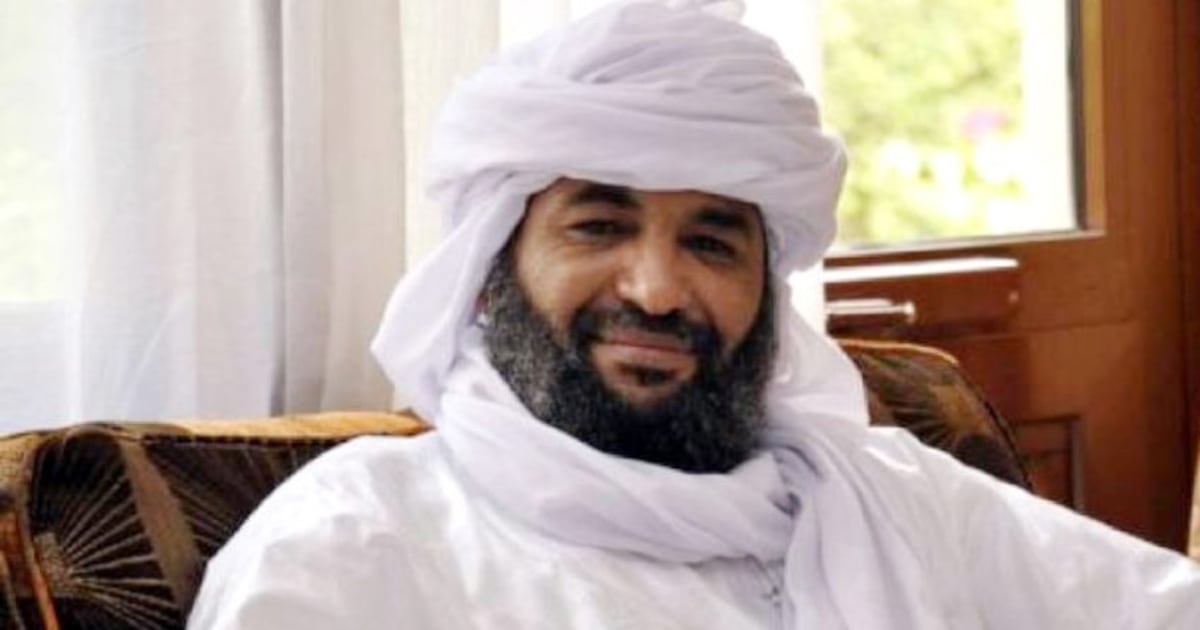
Among those now sought by authorities is Iyad Ag Ghaly, a former Tuareg rebel and diplomat who heads the Group for the Support of Islam and Muslims (JNIM), formed in 2017. Ag Ghaly stands as the most high-profile fugitive in the Sahel, facing United Nations sanctions, a U.S. terrorism designation, and an International Criminal Court arrest warrant for alleged war crimes and crimes against humanity.
The latest wave of violence unfolded on April 25 and 26, when JNIM forces, in alliance with the predominantly Tuareg Front for the Liberation of Azawad (FLA), launched large-scale attacks on multiple regions. These strikes targeted strategic sites controlled by the Bamako-based junta, including a suicide bombing that claimed the life of Defense Minister Sadio Camara, a 47-year-old central figure in the transitional government.
The government’s announcement, broadcast on national television, outlined bounties for six additional individuals accused of orchestrating or participating in the assaults. The rewards range from 500,000 to 2.2 million euros. Notable among the targeted leaders are:
- Amadou Kouffa, a senior JNIM commander, with a bounty of 2.2 million euros;
- Alghabass Ag Intalla, a FLA commander, and Bilal Ag Cherif, another FLA leader, each carrying a 1.1 million euro reward.
The Ministry of Security and Civil Protection declared in its statement that the bounties aim to encourage the submission of credible intelligence leading to the capture or neutralization of these individuals. Authorities emphasized that the targets are suspected of masterminding or executing attacks that have endangered civilian lives and property nationwide.
The announcement reflects Mali’s ongoing struggle to curb escalating insecurity, driven by JNIM, the Islamic State, and various communal armed factions since the conflict erupted in 2012. Despite international interventions and domestic counterterrorism measures, militant groups continue to exploit weak governance and porous borders to launch devastating offensives.