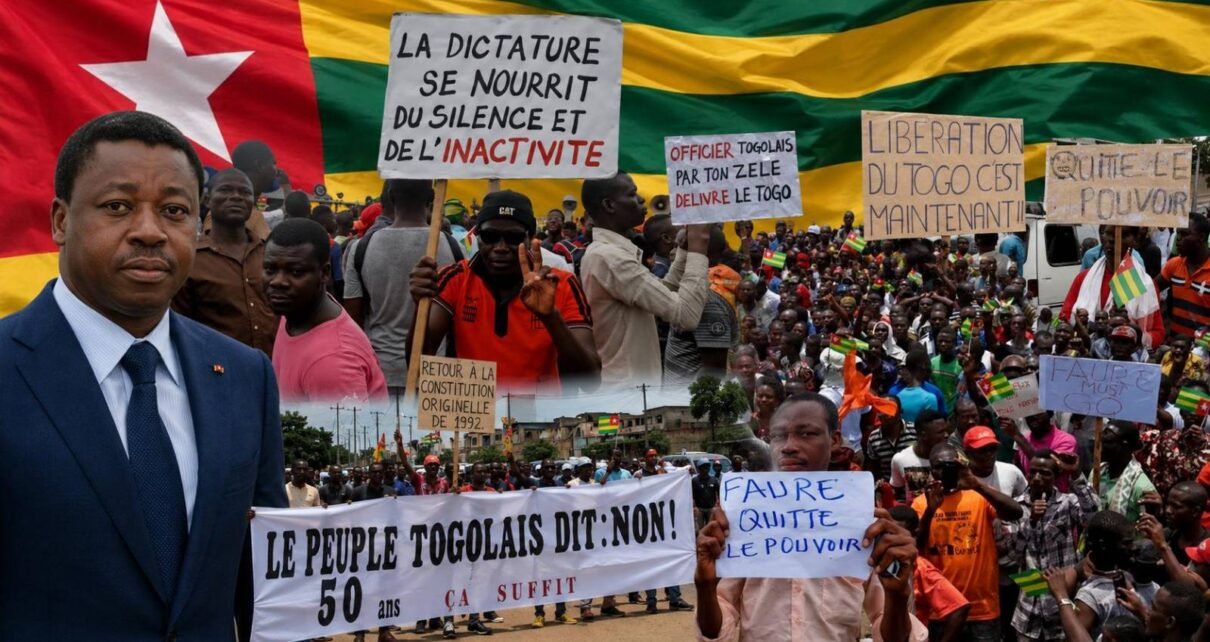
Togo is currently navigating one of the most distinct periods in its political history. As the administration led by Faure Gnassingbé concludes its institutional transformation into a parliamentary Fifth Republic, a palpable weariness appears to settle within the corridors of power. Amidst a rapidly evolving regional diplomatic landscape and a youth populace facing significant challenges, the underlying fissures have never been more pronounced. This analysis delves into a pivotal moment where the silence of ECOWAS could signify a turning point many have long anticipated.
A adaptable regime reaching its limits
Since 2005, the prevailing system has sustained itself through a strategy of ‘perpetual evasion’. Alternating between roles as a mediator in regional crises (such as in Mali and Niger) and a proponent of security stability against terrorist threats in the North, Faure Gnassingbé has cultivated an image as an ‘indispensable elder statesman’ within the international community.
However, beneath this facade of a regional negotiator lies an unyielding domestic reality:
- Institutional entrenchment: The transition to a parliamentary system, formalized between 2024 and 2025, has effectively reduced the presidency to a largely ceremonial role. The true executive authority is now vested in a ‘President of the Council of Ministers,’ a position seemingly devoid of genuine term limitations.
- Societal strain: Despite the macroeconomic growth indicators frequently highlighted in Lomé, the average household’s financial stability remains precarious. The persistent high rates of youth unemployment and underemployment represent latent crises that rhetoric centered on entrepreneurship can no longer adequately address.
The eroded myth of the ‘ECOWAS Gendarme’
For an extended period, the fear-based argument was: ‘Should the regime falter, ECOWAS will intervene to restore constitutional order.’ By 2026, this perceived threat has diminished into a mere ‘paper tiger’.
The post-coup ECOWAS era (following events in Mali, Burkina Faso, and Niger) reveals an organization grappling with its own weakening influence and seeking to re-establish legitimacy. It has learned, at considerable cost, that blindly opposing popular aspirations within a member state is a direct path to its own fragmentation.
The assessment is unequivocal: if the Togolese populace, through a unified and sovereign surge, were to collectively reclaim control of their nation, ECOWAS — already criticized for its ‘two-tiered approach’ — would likely remain a passive observer. Its response would be confined to appeals for a ‘peaceful transition’. The regime’s diplomatic immunity now hangs by the thinnest of threads.
The youth’s responsibility: now or never
The current juncture is opportune because the regime no longer possesses the indefinite capacity to suppress a demographic that constitutes 70% of the population. However, assuming responsibility does not equate to advocating for anarchy. Instead, it necessitates a fundamental paradigm shift:
- Ceasing to be instruments of their own subjugation: Young individuals within the administration, law enforcement agencies, and the ruling party’s inner circles must recognize that the very system they uphold is the one jeopardizing the future of their own children.
- Forging an alternative: Transformative change will not materialize from a singular, providential figure but from robust civic organization. The youth must actively engage in intellectual discourse and demand rigorous accountability regarding the management of national resources, including phosphates, the Port of Lomé, and critical infrastructure projects.
- Conquering apprehension: The regime exploits the memory of past repressions to stifle action. Yet, history consistently demonstrates that the most rigid systems are also the most vulnerable once they lose the foundational consent of the governed.
A rendezvous with destiny
Faure Gnassingbé has redrafted the constitutional framework to secure what appears to be an indefinite tenure. Nevertheless, no constitution, regardless of its clever construction, can withstand the collective will of a people who have shed their fear. Togo is not a private estate; it is a shared national heritage.
Passivity is no longer a viable strategy for survival; it is complicity in decline. To the young people of Togo, the moment when the world will regard you with respect is not a decade away. It is present now, residing in your collective ability to declare, with one voice: ‘The era for change has arrived.’