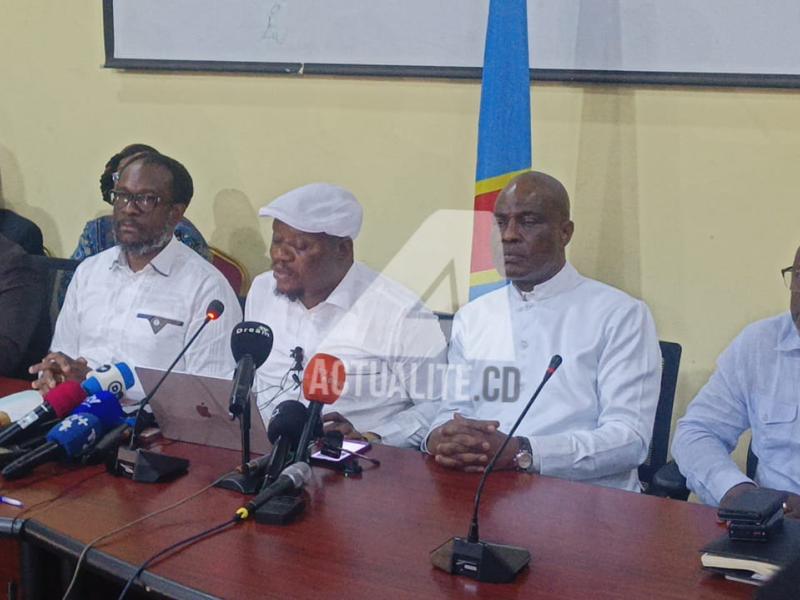
C64 postpones July 22 march and sets ultimatum for inclusive dialogue
The Coalition Article 64 for the defense of constitutional order (C64) has announced the postponement of its planned peaceful march scheduled for Wednesday, July 22 in front of the Palais de la Nation in Kinshasa. The decision comes as the coalition responds to calls from religious leaders for a peaceful resolution through dialogue.
The coalition, led by prominent opposition figures including Martin Fayulu (ECiDé), Jean-Marc Kabund (A.Ch), Moïse Katumbi (Ensemble), Augustin Matata (LGD) and Delly Sesanga (Envol), issued a statement on Monday, July 20, emphasizing its commitment to constitutional order while acknowledging the need for constructive engagement.
Conditions for dialogue and ultimatum set
The C64 has outlined clear conditions for the resumption of national dialogue, which it considers essential to address pressing national challenges. These include:
- Official convocation of an inclusive national dialogue within the next 25 days (by August 15, 2026), with a focus on critical issues such as external aggression in the East, governance crises, economic hardships, and the need for reforms to restore peace and territorial unity.
- Implementation of confidence-building measures to reassure all stakeholders and reduce political tensions.
- Immediate cessation of any actions that could undermine constitutional order, including potential constitutional amendments or referendum processes.
The coalition warns that failure to meet these conditions by the deadline could result in a renewed wave of peaceful citizen actions. In the meantime, C64 structures across the country and in the diaspora remain on high alert and mobilization status.
Government’s role under scrutiny
The C64 places responsibility squarely on the shoulders of President Félix Tshisekedi and his administration to facilitate a genuine and inclusive dialogue process. The coalition reiterates its firm opposition to any attempts to circumvent constitutional provisions, particularly those limiting presidential mandates to two terms, as enshrined in Articles 70 and 220 of the Constitution.
While expressing appreciation for the religious leaders’ mediation efforts, the coalition remains vigilant against provocations and emphasizes that dialogue must lead to tangible outcomes rather than political maneuvering.
Next steps and implications
The decision to postpone the march reflects a strategic shift toward diplomatic engagement, but the coalition has made it clear that this is a temporary measure. The coming weeks will be critical in determining whether the government will meet the outlined demands or face renewed public mobilization.
Analysts suggest that this development could significantly shape the political landscape in the Democratic Republic of Congo (DRC) in the lead-up to potential constitutional debates and upcoming electoral cycles.