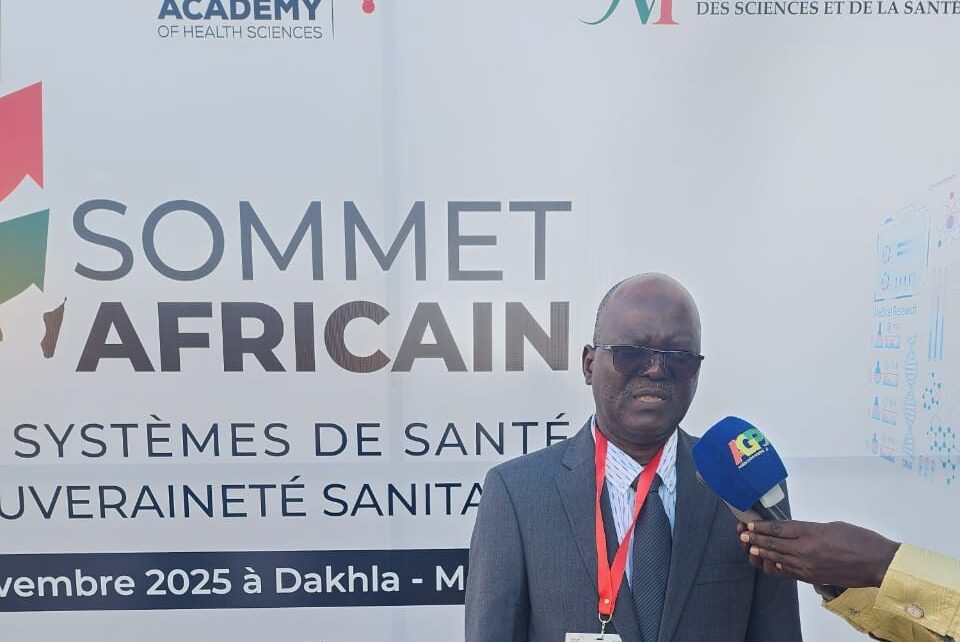
Colonel Major Garba Hakimi, Niger’s Minister of Health and Public Hygiene, declared on Saturday, November 29, in Dakhla, Morocco, that Niger is firmly committed to achieving health sovereignty. This statement was made during an interview with ANP, following the conclusion of the inaugural African Summit on Health Systems and Health Sovereignty, a two-day event in the Moroccan province where he participated.
The pursuit of health sovereignty is a core objective for Niger’s highest authorities, led by General Abdourahmane Tiani, President of the Republic and Head of State, alongside the Prime Minister and Minister of Economy and Finance. These leaders are dedicating significant efforts and resources to enhancing the nation’s health sector, as highlighted by the government official.
Significant progress has been made, with numerous health infrastructures being developed across the country in recent years. This includes the construction of new hospitals and integrated health centers. The minister emphasized that these facilities are crucial for bolstering primary healthcare services at the community level, noting that a resilient health system cannot exist without fundamental infrastructure capable of delivering essential primary care.
Minister Hakimi further explained that this commitment extends to acquiring advanced medical equipment and making substantial investments nationwide. The goal is to empower medical professionals and technicians to provide accurate diagnoses and effective treatment for illnesses, particularly in curative care. He added, “Beyond equipment, training is paramount. It’s not enough to have advanced tools; we need qualified personnel to operate them. This is why our agents are undergoing specialized and continuous training programs.”
As part of these strategic initiatives by the Nigerien authorities, the health sector receives substantial financial allocations. These are complemented by free healthcare provisions for certain vulnerable populations and a 50% reduction in treatment costs at public health facilities, as detailed by the Minister of Health and Public Hygiene.
He underscored that free services for specific procedures, such as childbirth and care for children under five, coupled with infrastructure development at all levels, improve healthcare access for everyone. “This renewed momentum will propel us towards universal health coverage, a goal championed by various authorities. I believe Niger is on this path, and God willing, we will achieve it,” he affirmed.
Commenting on the outcomes of the Dakhla Summit, Minister Hakimi noted that over 48 hours, African experts thoroughly reviewed the continent’s health systems. While recognizing progress, they primarily identified numerous challenges, including the inherent fragility of African health systems, issues of governance, and inadequate funding.
For the Nigerien representative, merely identifying challenges is insufficient; the critical task is to devise effective strategies to build a more robust, resilient, and high-performing health system capable of achieving the overarching goal of health sovereignty. He stressed, “These are the prerequisites for truly advancing towards health sovereignty.”
The minister continued, “This summit was a tremendous success because it allowed us to acknowledge and embrace the vision of His Majesty the King of Morocco for a health-sovereign Africa. As part of this vision, we participated this morning (Saturday, November 29) in the inauguration of the headquarters of the African Academy of Health Sciences.”
He elaborated that Morocco is deeply invested in this endeavor, with the construction of university hospitals, universities, and other health facilities, including a comprehensive complex in Dakhla that they toured. “Because, as you know, human resources are vital for health sovereignty; you cannot have a strong, robust, and efficient health system without quality human resources,” observed Colonel Major Garba Hakimi. He further suggested, “I believe His Majesty the King’s vision should be embraced by other heads of state to truly enable Africa to progress.”
The Minister of Health and Public Hygiene recalled past initiatives by heads of state advocating for allocating 15% of national budgets to the health sector. This funding is essential not only for acquiring necessary equipment but also for developing sufficient human resources and constructing a solid health system that leads to the desired health sovereignty. “We should not rely on aid from others, whether from the West or partners, to achieve sovereignty. It is attainable; we just need to make the effort,” asserted Colonel Major Garba Hakimi.
He also observed that beyond traditional budgetary allocations, an increasing number of countries are recognizing the necessity of innovative financing mechanisms. This blend of funding approaches will contribute to establishing a strong and sustainable health system.
The minister expressed optimism regarding the Dakhla Declaration’s roadmap, which is structured around five key pillars: Epidemiology; Human Capital/Training; Research and Innovation; Financing/Governance; and Infrastructure and Equitable Access. “I believe that by focusing on these five axes, we can achieve the much-desired health sovereignty. It is certainly feasible. The main thing is to commit to the work,” he concluded.
The 1st African Summit on Health Systems and Health Sovereignty brought together approximately 200 African experts in Dakhla from November 28 to 29, 2025, to deliberate on health sovereignty, a project strongly supported by the King of Morocco.