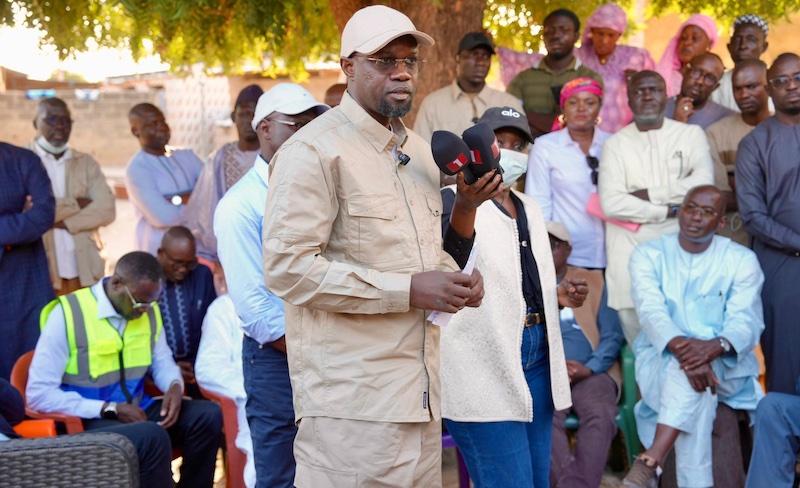
During a recent Council of Ministers meeting, Prime Minister Ousmane Sonko focused his address on the crucial preparations for Senegal’s 2026-2027 rainy season agricultural campaign. While commending the vital contributions of national bodies such as the Institut sénégalais de recherches agricoles (ISRA) and the Industries Chimiques du Sénégal (ICS) in producing certified seeds and fertilizers, the head of government offered an unvarnished assessment of the sector. He pinpointed persistent, significant structural weaknesses that continue to impede the Executive’s ambitious food sovereignty objectives.
Addressing critical challenges: seed self-sufficiency, agricultural credit, and storage infrastructure
Among the pressing issues highlighted by the Prime Minister were the ongoing deficit in seed self-sufficiency, inconsistencies in quality observed during the previous campaign, deficiencies within the producer targeting system, and significant hurdles to accessing agricultural credit. Sonko also drew attention to the inadequate maintenance of farming equipment and the glaring lack of sufficient storage infrastructure across Senegal.
To combat distribution inequalities and eliminate the diversion of agricultural inputs, he mandated an accelerated digitalization of the sector. This initiative will leverage the proven successes achieved in pilot regions like Tivaouane and Nioro. Furthermore, while awaiting a comprehensive overhaul of subsidies, state agencies are tasked with rigorously ensuring cost transparency and the effective availability of essential inputs throughout the entire national territory.