Benin’s new leader steps into a pivotal role with ambitious goals
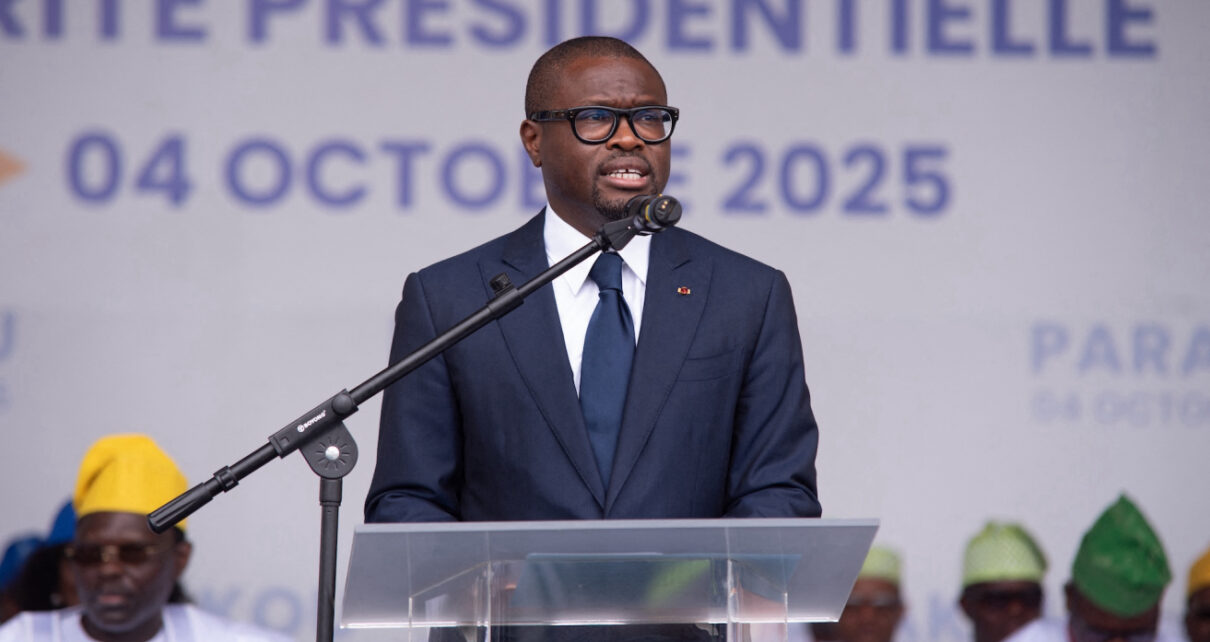
Romuald Wadagni has been inaugurated as Benin’s president following a decisive victory in the April 12 election, securing 94.27% of the vote against challenger Paul Hounkpè, who conceded gracefully and urged national unity. The Constitutional Court certified a 63.57% voter turnout, a significant increase from the 50.17% recorded in 2021.
This election marks Benin’s fifth democratic transition since the 1990 National Conference, reinforcing the country’s reputation for institutional stability—especially at a time when neighboring nations grapple with political instability due to term extensions. President Patrice Talon’s unwavering commitment to the two-term constitutional limit has bolstered confidence in Benin’s democratic resilience.
Election integrity and isolated concerns
The vote proceeded smoothly, though isolated irregularities—including allegations of ballot stuffing—were reported in specific areas. Authorities have launched investigations, but the Electoral Commission, Constitutional Court, and international observers confirmed that these incidents did not undermine the election’s credibility. The Court invalidated 34,596 votes nationwide due to procedural violations.
Hounkpè’s party, Forces Cauris pour un Bénin émergent, has struggled in recent elections, earning just 11.37% of the vote in 2021 and even lower percentages in subsequent local and legislative contests. His defeat was widely anticipated, given the party’s declining influence.
A decade of economic transformation
Wadagni, a former Finance Minister with over ten years of service, is credited with spearheading Benin’s economic turnaround. During his tenure, annual GDP growth surged from 1.8% in 2015 to nearly 8% by 2025, positioning the country as one of West Africa’s fastest-growing economies.
Yet, despite this progress, over 40% of Beninese citizens still live below the poverty line. Wadagni’s administration now faces the critical task of translating economic growth into tangible improvements in living standards. His 2026–2033 development plan prioritizes three key areas: inclusive social welfare, economic diversification, and national cohesion.
Political reforms and opposition challenges
Benin’s political landscape has undergone sweeping changes since 2016, including constitutional amendments that reshaped electoral participation. A 15% sponsorship requirement—introduced in the 2024 electoral code revision—has effectively sidelined major opposition parties, such as Les Démocrates, from recent elections. Without reforms, opposition representation could remain absent until 2040.
The opposition is further weakened by internal divisions, including the March 2026 resignation of former President Boni Yayi from Les Démocrates, which triggered a leadership crisis and mass defections. The 2025 Constitution introduced a Republican Responsibility Pact, allowing dialogue between the government and opposition under Senate oversight. However, concerns persist that such mechanisms could be misused to stifle dissent rather than foster genuine collaboration.
Security threats and regional cooperation
The December 7 coup attempt served as a stark reminder of Benin’s vulnerability to instability. Wadagni’s administration must address security challenges in the north, where terrorist groups exploit porous borders, particularly in the W-Arly-Pendjari transboundary zone. While relations with Nigeria have improved, tensions with Burkina Faso and Niger remain fragile.
Wadagni has signaled a conciliatory approach toward regional partners, emphasizing that Benin cannot tackle multi-faceted threats alone. Restoring cooperation will require political will from Niamey and Ouagadougou, as unchecked insecurity in border areas continues to benefit militant groups.
Governance hurdles ahead
The new president inherits a political system dominated by presidential allies, with the Senate—established in November 2025—holding significant legislative powers, including the ability to request second readings of bills. Speculation persists over whether Talon may assume a leadership role in the Senate, potentially creating a dual executive structure.
To mitigate risks, Wadagni must prioritize inclusive governance, restore public trust through transparency, and engage in meaningful dialogue with civil society. His success hinges on balancing economic imperatives with democratic principles, ensuring that Benin’s democratic gains are not eroded by institutional friction or security vacuums.