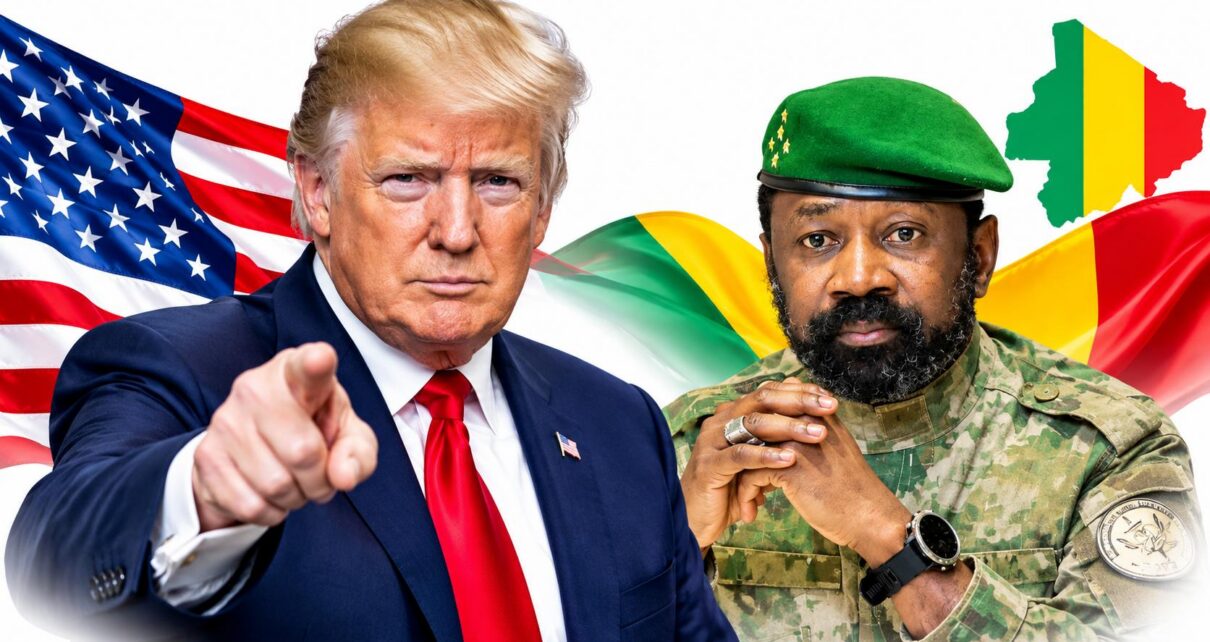
The capitals of the Alliance of Sahel States (AES) have loudly proclaimed an ideological break with traditional Western powers, the United States and France foremost among them. Yet the pragmatic survival of diplomatic and economic channels with Washington has caught many observers off guard. The explanation lies in the backrooms of American financial diplomacy: a $410 million (roughly €370 million) pool of funding released by the US administration to outsource migration management to third countries.
The scramble for hard currency amid financial isolation
Since transition governments took power in Mali, Niger and Burkina Faso, access to traditional lenders such as the European Union and the World Bank has come under severe strain. Past financial sanctions have drained public coffers.
In this climate of economic asphyxiation, the US program promising a total of $410 million to countries in Africa and Latin America to host or process migrants expelled from the United States acts as a genuine lifeline for AES treasuries. For governments weighed down by massive military spending and scarce foreign exchange, the temptation to capture a share of this funding outweighs anti-Western ideological considerations.
A lucrative diplomatic subcontract: the regional precedent
Migrant transfer agreements financed with tens of millions of dollars — already involving several African countries including Cameroon, the DRC and Eswatini — show that Washington wields a particularly persuasive checkbook diplomacy.
For AES capitals, the arrangement offers a threefold strategic advantage:
- A direct budget opportunity: securing direct or indirect financing through specialized agencies to fund logistics and infrastructure equipment.
- A diplomatic bargaining chip: by positioning themselves as indispensable partners on global security and migration control, these regimes confirm their financial dependency on the international stage in their dealings with Washington.
“Sovereignty” versus monetary pragmatism
The AES’s official narrative rests on reclaimed sovereignty and a break with foreign interference. Yet the stance adopted toward Washington’s proposals exposes the limits of a strict independence line.
While American and European presence is expelled from the Sahel in the name of national dignity, the doors remain wide open for bilateral talks with Washington over contracts worth hundreds of millions of dollars. This double standard proves that “monetary pragmatism” prevails once the sums involved reach a critical threshold. The pull of the $410 million US migration outsourcing program demonstrates that economic realism remains the primary barrier to alliances in the Sahel. Far from slogans of total rupture, the maintenance of pragmatic proximity between the AES and Washington confirms that the pursuit of financial liquidity remains the true arbiter of geopolitical realignments in the region.