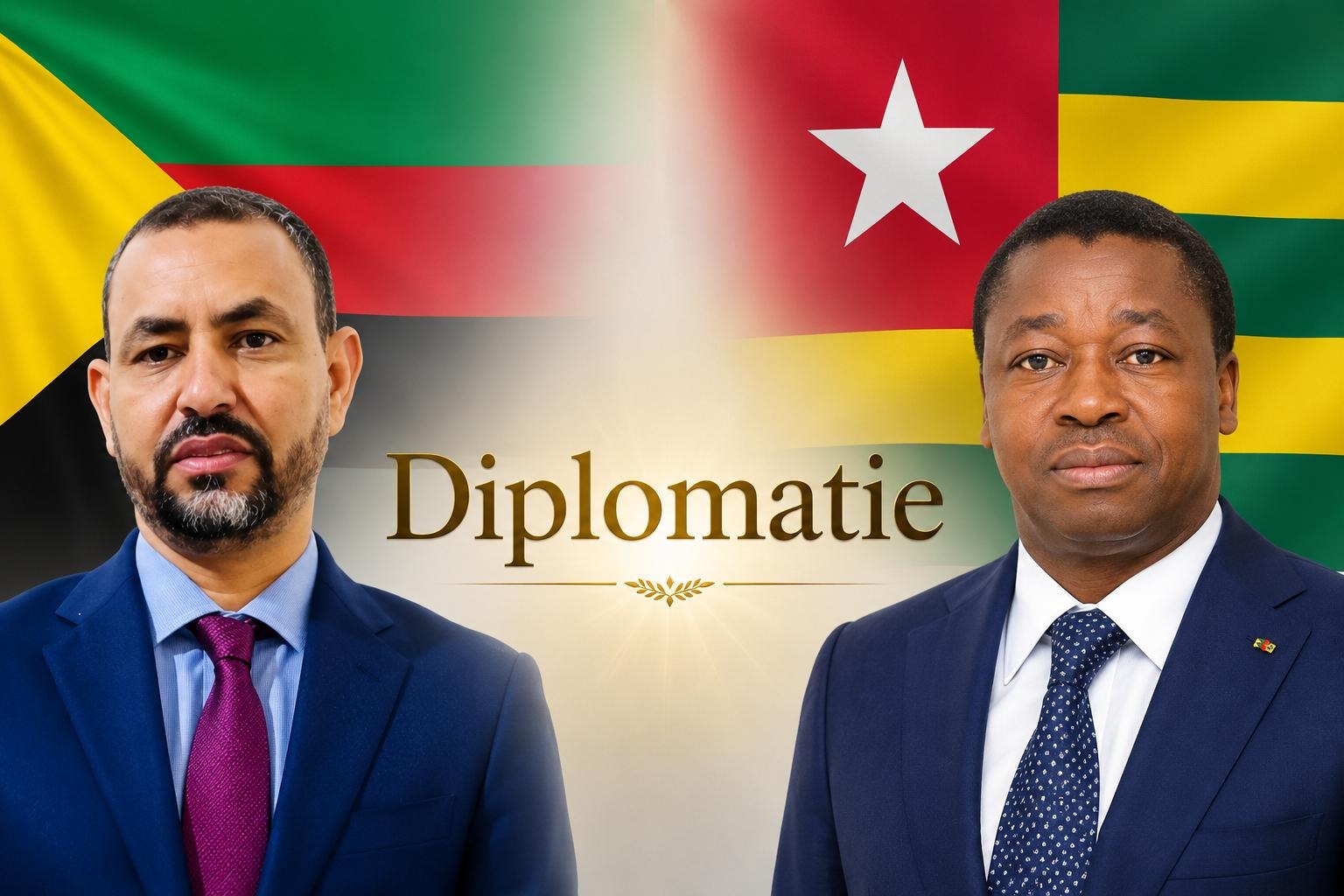
The corridors of West African diplomacy are buzzing with anticipation. The Togolese authorities are poised to take a decisive step forward: an official recognition of the Front de Libération de l’Azawad (FLA). This move comes as the rebel movement prepares to embark on a high-stakes diplomatic tour across regional capitals, with President Faure Gnassingbé positioning himself as an unconventional mediator.
While neighboring states tighten their positions, Lomé is carving out a distinct path. The FLA, which rejects Bamako’s authority over northern Mali, is seeking to break its international isolation. Its choice of Lomé as a strategic launchpad for its regional charm offensive is no coincidence. The movement’s envoys are scouting for sympathetic ears to voice their claims of autonomy or sovereignty.
Lomé as a diplomatic pivot in West Africa’s shifting landscape
The FLA’s upcoming tour of West African capitals marks a turning point for the movement, which has long operated in the shadows of regional politics. By welcoming this delegation and considering formal recognition, Togo is positioning itself at the heart of a geopolitical realignment. This decision underscores Lomé’s growing role as a hub for dialogue in a fractured subregion.
Faure Gnassingbé’s unorthodox diplomatic doctrine
For seasoned observers of Togolese politics, this development aligns with a long-standing, if controversial, diplomatic strategy. President Gnassingbé has consistently pursued an approach rooted in openness to dissenting voices, even when they challenge regional norms.
While many leaders in the region prioritize rigid institutional stances, the Togolese president has cultivated an alternative path. He champions the idea of engaging with those sidelined by the international community, positioning Togo as a neutral yet bold intermediary. The potential recognition of the FLA fits seamlessly into this framework, reinforcing Lomé’s reputation as a capital willing to defy conventional diplomatic boundaries.
From AES to FLA: Lomé’s consistent support for breakaway forces
The Togolese capital’s pragmatic—or opportunistic—stance has been most evident in recent Sahel crises. When military coups reshaped the political landscape in Mali, Burkina Faso, and Niger, the Economic Community of West African States (ECOWAS) responded with harsh sanctions and isolation policies.
Togo took a different route. Lomé swiftly emerged as the diplomatic home for the putschists of the Alliance des États du Sahel (AES), with Gnassingbé positioning himself as a key interlocutor for Bamako’s colonels and Niamey’s generals. This move strained Togo’s relations with ECOWAS, but it solidified Lomé’s image as a capital willing to challenge the status quo. Now, by considering recognition of the FLA—an armed group challenging Bamako’s rule—Lomé is applying the same playbook, albeit with a new set of actors.
Regional repercussions of Togo’s gamble
This imminent recognition is likely to strain bilateral ties across West Africa. For Mali’s transitional government, Lomé’s potential endorsement of the FLA represents not just interference but a direct challenge to its sovereignty. Meanwhile, ECOWAS, already weakened by the defection of Sahel states, may view this initiative as another rupture in the bloc’s solidarity.
The Togolese move highlights a broader shift: the erosion of traditional regional norms. Borders and non-interference principles are giving way to a more fluid geopolitical reality, where alliances are formed and broken based on pragmatic calculations rather than ideological purity.
As Lomé prepares to recognize the FLA at the start of its regional tour, the Togolese capital is staking its claim as West Africa’s diplomatic laboratory. Gnassingbé’s strategy—anticipating fractures, engaging with the excluded, and positioning Togo as a fearless mediator—could either elevate Lomé’s influence or isolate it further in an increasingly divided region.