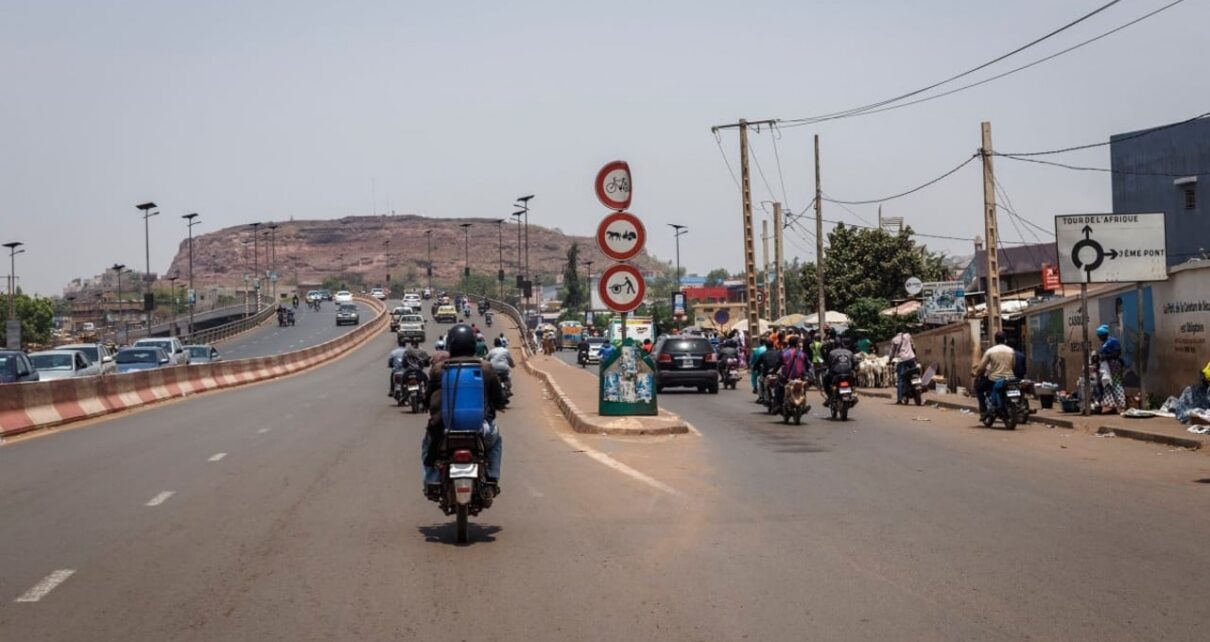
A dozen transport companies have halted all routes in and out of Bamako, West Africa’s Mali, as jihadist groups tighten their stranglehold on the capital through coordinated road blockades and vehicle burnings.
why transport companies are grounding their fleets
Transport firms cite security concerns as the primary reason for suspending operations. “We’ve temporarily suspended services to protect passengers and avoid further losses,” explained a local agency manager. The company reportedly lost six buses on the Ségou route during jihadist attacks on April 27. While over ten transport companies have publicly announced their shutdown, others have quietly halted operations to avoid government pressure to continue running.
Most major highways leading to Bamako now sit abandoned by commercial traffic. Though scheduled services have ceased, some minibuses continue sneaking into the capital via secondary routes, risking both safety and legal repercussions.
Bamako’s growing crisis under siege
The blockade has triggered severe shortages across Bamako’s already struggling infrastructure:
- Fuel scarcity: Gas stations have formed long queues as diesel becomes nearly impossible to source. Authorities claim recent fuel deliveries from Côte d’Ivoire have eased some pressure, but supplies remain precarious.
- Electricity blackouts: Residents report up to 72 hours without power during peak demand periods. The national power utility (EDM) attributes disruptions to “terrorist sabotage” of critical transmission lines.
- Water supply disruptions: Scheduled power cuts have forced water treatment plants to scale back operations, leaving multiple districts with irregular potable water access.
Jihadist forces, including the Group for the Support of Islam and Muslims (JNIM)—an Al-Qaeda affiliate—and the Tuareg-dominated Azwad Liberation Front, launched coordinated attacks on April 25-26 against strategic military positions. These offensives preceded the blockade, which now cuts off Bamako from vital overland trade routes.
economic fallout spreads across Mali
The transport shutdown exacerbates Mali’s economic fragility. As a landlocked nation, Mali relies heavily on road imports, particularly from neighboring Côte d’Ivoire. Blocked supply lines threaten food security and commercial stability, with ripple effects hitting both urban centers and rural communities.