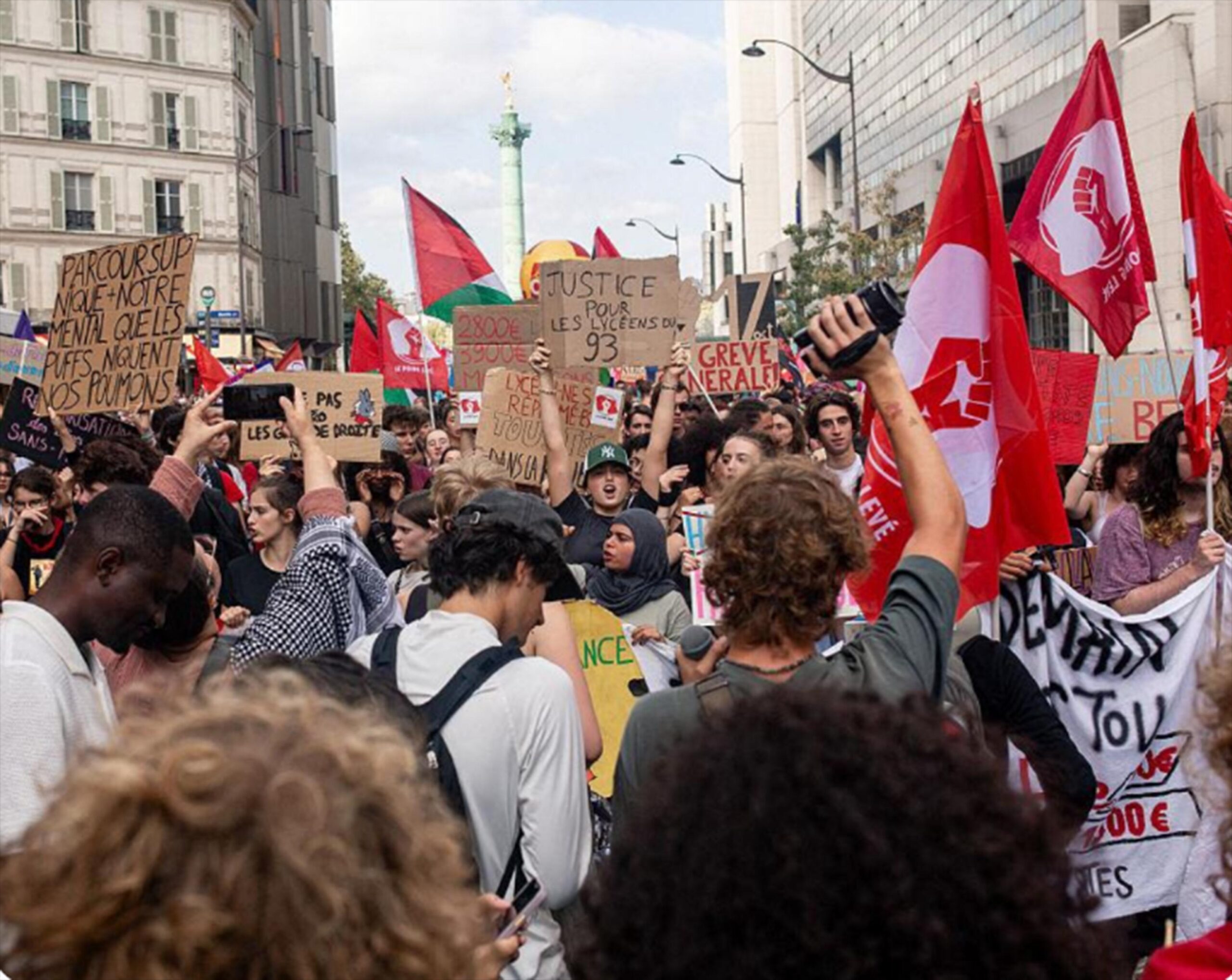
As the 2027 presidential election looms on the horizon, France faces a pivotal question: can its education system withstand the pressure of mounting social unrest and generational disillusionment? A wave of youth-led protests has erupted across the country, with schools and universities at the epicenter of the crisis. The timing couldn’t be more critical, as policymakers scramble to address the demands of a generation questioning the very foundations of the Republic’s promises.
From classroom grievances to nationwide unrest
The spark ignited in September, when high school students took to the streets to denounce crumbling infrastructure, overcrowded classrooms, and the relentless pressure of academic expectations. But their grievances run deeper than logistics—they reflect a profound distrust in a system that no longer seems equipped to deliver on its promises of equality and opportunity.
The movement, which began with isolated blockades, has since ballooned into a broader social uprising. Students, teachers, and even parents have joined the protests, their voices amplifying demands for systemic reform. By mid-October, the fifth wave of demonstrations revealed stark contrasts in participation figures: organizers claimed nearly half a million marchers, while authorities reported fewer than 170,000. Beyond the numbers, the divide underscores a growing rift between those who govern and those who feel abandoned by the system.
The education gap: a ticking time bomb
This isn’t just about money—it’s about justice. The protests have laid bare glaring disparities in France’s education landscape. In some neighborhoods, schools are crumbling, teachers are perpetually absent, and students are crammed into overloaded schedules with little individualized support. In others, the problem is one of neglect: underfunded programs, outdated materials, and a lack of resources that push students toward second-tier opportunities.
Official data, though slow to emerge, confirms what many already know: the most pressing issues cited by protesters include erratic schedules, dilapidated buildings, and the failure to replace absent teachers promptly. These challenges disproportionately affect students from disadvantaged backgrounds, further entrenching social divides. The government’s response—a pledge to increase education funding and improve teacher coverage—has done little to quell the anger.
Can the next election deliver justice for students?
The 2027 presidential race is already shaping up to be a referendum on France’s priorities. With youth unemployment soaring and professional futures murkier than ever, voters are demanding concrete answers. Yet the protesters’ concerns are not limited to education alone. The movement has broadened to include broader grievances about purchasing power, public services, and the erosion of trust in institutions. The specter of past social upheavals, like the Yellow Vests, looms large, adding pressure on leaders to act decisively.
Violence has marred recent marches, particularly in Paris and Marseille, where clashes between protesters and law enforcement have raised urgent questions about the right to demonstrate and the state’s role in maintaining order. While these episodes dominate headlines, they risk overshadowing the movement’s core message: a generation that feels invisible is now refusing to be ignored.
A moment of reckoning for French democracy
The challenge ahead is twofold. First, can the government translate protest energy into tangible policies that address the root causes of dissatisfaction? Second, will the political class listen—or will the youth’s disillusionment deepen, setting the stage for future crises? The answers will define not just the next presidential term, but the very soul of the Republic.
For President Emmanuel Macron, whose second term expires in 2027, this moment is a test of legacy. His administration’s handling of the education crisis will weigh heavily in history’s judgment, regardless of electoral outcomes. But the protesters are not a monolith. Their demands span from immediate relief—smaller class sizes, better pay for teachers—to systemic changes that challenge the status quo. This diversity complicates the task of building a unified response.
Listening must precede legislation
The path forward requires more than top-down reforms. It demands a collaborative approach, one that brings together students, educators, and families in designing solutions. The protests have made one thing clear: France’s education system is not just a service—it is a battleground where the future of the nation is being decided. The question now is whether those in power will seize this moment to rebuild trust or allow the cracks to widen further.
What’s at stake beyond the ballot box
Ultimately, the youth’s mobilization is a mirror held up to France itself. Their slogans are loud, but their message is simple: the Republic’s promise of equality is empty if it cannot be delivered in schools. As the 2027 election approaches, the nation must confront a stark reality—its greatest asset, its people, are demanding to be heard. The response will reveal whether democracy in France is merely a process or a living commitment to progress.