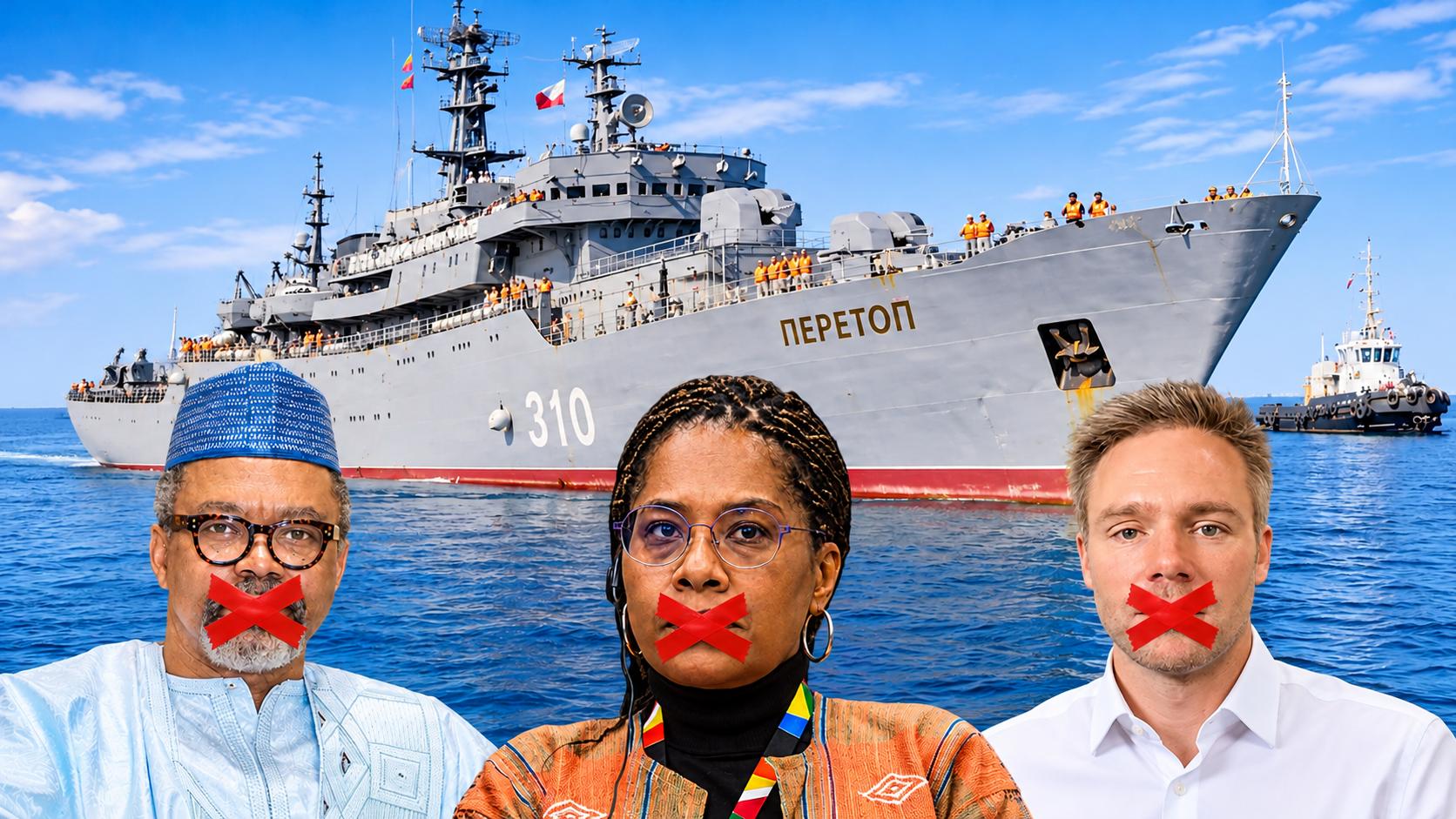
In recent weeks, the arrival of a Russian vessel in Cotonou’s port has raised a striking contrast with the earlier reactions to a French ship’s docking in Benin. The question now emerges: why did the previous stopover attract sharp criticism and insinuations, while the Russian presence has gone largely unchallenged by the same voices?
From French to Russian ships: a stark shift in media narratives
The docking of the French vessel in Beninese waters sparked a wave of commentary and disinformation from certain media outlets aligned with the Alliance of Sahel States (AES). Articles and social media posts framed the stopover as suspicious, alleging ulterior motives behind France’s presence and questioning Benin’s sovereignty. The country was subjected to accusations and narratives that tarnished its image, despite a lack of clarity on the true nature of the visit.
Fast forward to today, when the tables have turned. Another vessel, this time Russian, has arrived in Cotonou. Yet, the response has been notably muted. The same platforms that once clamored for explanations now remain conspicuously silent. Where are the demands for transparency? Where are the protests over sovereignty? The disparity invites skepticism.
Where are the critics now?
Prominent figures like Nathalie Yamb, Antoine 2Moscou, and Franklin Nyamsi, who were vocal in their criticism of the French ship’s arrival, have yet to address the Russian vessel’s presence with equal fervor. Their platforms, often aligned with AES-aligned discourse, had previously framed France’s cooperation as an affront to Benin’s independence. Yet, when a Russian ship docks, the narrative shifts or perhaps, the critics choose discretion over debate.
Sovereignty: a principle or a political tool?
The disparity in reactions raises a critical question: Should Benin’s sovereignty be defended only when Western powers are involved? If so, does this imply that partnerships with non-Western nations are exempt from scrutiny? A maritime stopover should not be judged based on the flag it bears but on its legitimacy, transparency, and alignment with national interests.
Sovereignty cannot be a selective concept. Benin, as an independent state, reserves the right to engage with partners of its choosing, provided these relationships serve its national objectives. Cooperation with France should not automatically invite suspicion, nor should cooperation with Russia warrant automatic indulgence. The standard for accountability must remain consistent, regardless of the partner’s origin.
The deeper issue: geopolitical bias in regional discourse
This inconsistency points to a larger problem within parts of the regional media landscape. When facts involve Western allies, skepticism is amplified; when they involve Russia, the same outlets often downplay or ignore the issue altogether. The result is a fragmented and biased information ecosystem where narratives are shaped more by geopolitical alliances than by factual reporting.
Benin does not owe its partnership choices to the political sensitivities of external commentators. Its government must evaluate alliances based on national interest, while the media’s role is to report events with impartiality. The arrival of a Russian vessel, like that of a French one, should be assessed on its merits not on the flag it carries.
A call for equitable scrutiny
The principle of sovereignty demands consistency. Information should never serve as a tool for advancing one geopolitical agenda over another. Benin’s waters are not a battleground for foreign narratives; they are a sovereign space where transparency and fairness must prevail. The media’s duty is to uphold these values, ensuring that no partnership escapes scrutiny based on the interests of those reporting or remaining silent on the matter.
By AMINA SALEY — Journalist