The ambitious Yaoundé bypass project in Cameroon has drawn the attention of Ashoka Buildcon Limited, an Indian infrastructure giant, which has submitted a comprehensive bid valued at over 1.26 trillion FCFA (excluding taxes). The proposal, unveiled on June 9 at the Ministry of Housing and Urban Development, outlines an integrated approach covering design, construction, and financial structuring. The meeting was attended by Vinit Chitale, the company’s global business development head, who emphasized the group’s readiness to facilitate funding mobilization—a critical factor given the incomplete financing structure of the project.
Revolutionizing Yaoundé’s traffic with a 90-kilometer bypass
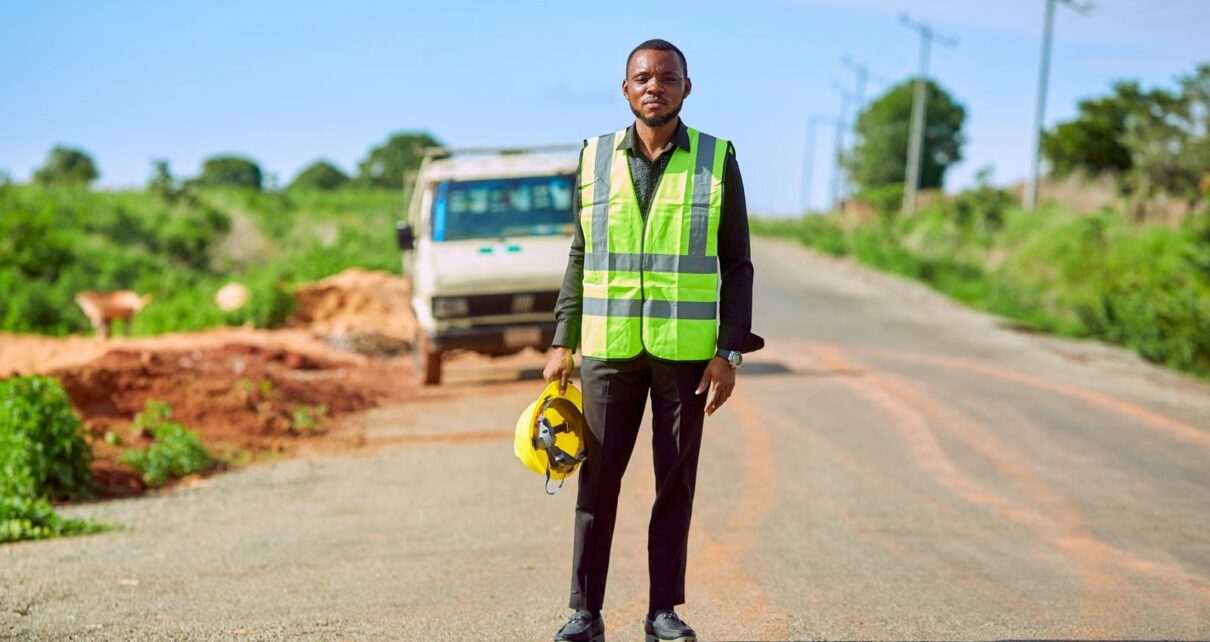
Spanning 90.54 kilometers with a dual two-lane configuration, the bypass will traverse key departments including Mfoundi, Lékié, Mefou-et-Afamba, and Mefou-et-Akono. Its expansive design is intended to accommodate future upgrades, such as an expressway or dedicated public transport corridors. The route is divided into four segments: from Mbankomo to Nkolméyang, extending to Nkozoa, Minkoameyos, and looping back to Mbankomo. The infrastructure will feature 16 interchanges, multiple bridges, and hydraulic installations to enhance safety along the corridor.
Financial estimates indicate that the core road infrastructure alone will cost approximately 794.7 billion FCFA (excluding taxes). An additional 469 billion FCFA is earmarked for urban development poles in Mbankomo, Mfou, Soa, and Okola, bringing the total project cost to around 1.26 trillion FCFA. On a per-kilometer basis, this translates to nearly 8.8 billion FCFA for the roadway alone, or roughly 14 billion FCFA when including associated urban poles—one of the most substantial investments in Central Africa’s recent history.
T3 section: a test case for European backers
With the government prioritizing phased execution, the 22.8-kilometer T3 segment—linking Nkozoa on National Road 1 to Minkoameyos at the Yaoundé-Douala highway exit—has become the project’s flagship component. This section is vital as it is expected to divert a significant portion of transit traffic away from Yaoundé’s congested core. European lenders, including the European Union and the European Investment Bank (EIB), have expressed strong interest in funding this segment, though their involvement hinges on meeting strict technical, environmental, and social prerequisites such as compensation settlements, impact assessments, and resettlement action plans.
The void left by these pending conditions presents an opportunity for Ashoka Buildcon’s offer, which could broaden the scope of solutions for Yaoundé’s infrastructure challenges. However, key questions remain unanswered, including the exact legal framework of the proposed contract, financial terms, potential state guarantees, and how the Indian firm’s proposal aligns with existing European financing for the T3 segment. A hybrid model combining concessional European funds with Indian contributions for other sections remains a plausible pathway.
Ashoka Buildcon: India’s versatile infrastructure powerhouse
Ashoka Buildcon Limited stands as one of India’s leading road infrastructure developers, with a diversified portfolio spanning EPC (Engineering, Procurement, and Construction), public-private partnerships, Build-Operate-Transfer (BOT) models, and the Hybrid Annuity Model—a financing structure where the government covers part of the investment while the operator repays the balance through annuities. Beyond roads, the group operates in energy, railways, and construction sectors.
For Cameroonian authorities, the Indian firm’s appeal lies in its ability to merge technical execution with financial structuring under a single proposal. Yet, no decision has been made regarding the project’s award. The current phase resembles a show of interest for a technically mature project still awaiting financial closure. The true test for Yaoundé will be transforming years of planning into tangible progress. The Indian group’s bid arrives as the search for partners continues unabated.