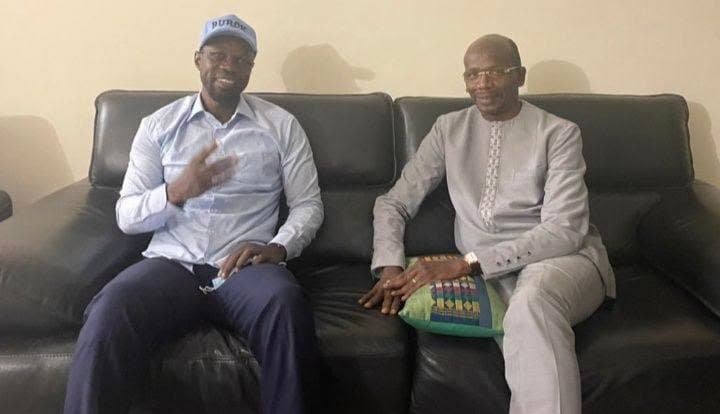
Lansana Gagny Sakho, Chairman of the Board of Directors of APIX, has made his position clear on the political landscape of Senegal. Speaking recently, he addressed his break with Ousmane Sonko and emphasized his unwavering commitment to the country’s republican institutions.
During his appearance, Sakho recounted his initial alignment with the Pastef movement, driven by admiration for its key figures rather than its political program. He explained that after Senegal’s political transition, he declined a high-ranking appointment in the water and sanitation sector to uphold his principles. « I prioritized my values over positions. This decision allowed me to walk away without hesitation. From the start, I chose the Republic, » he stated firmly.
Contrasting visions of leadership
Sakho’s remarks took a critical turn when he addressed Sonko’s public statements, which he believes undermined state authority. He pointed to an incident where Sonko criticized the government’s leadership while President Faye was abroad, calling it an embarrassment for the head of state. « Ousmane Sonko never embraced the Republic’s values, » he asserted, highlighting a fundamental disagreement over governance.
The former ally of Pastef also reflected on the challenges faced during the transition, acknowledging obstacles on both sides. Yet, he praised significant progress in the justice sector, a domain where reforms have been particularly notable. Sakho dismissed claims that judicial independence was compromised, citing the resilience of magistrates against political interference. « Judges are not puppets—those who think otherwise misunderstand the realities of power, » he remarked.
A wave of departures reshapes political alliances
Sakho’s statements come amid a wave of resignations within Pastef, with several party members shifting allegiance to the presidential camp ahead of the launch of the Kiiraay party. His vocal support for President Diomaye Faye underscores a broader trend of institutional continuity, as key figures prioritize stability over partisan loyalty.