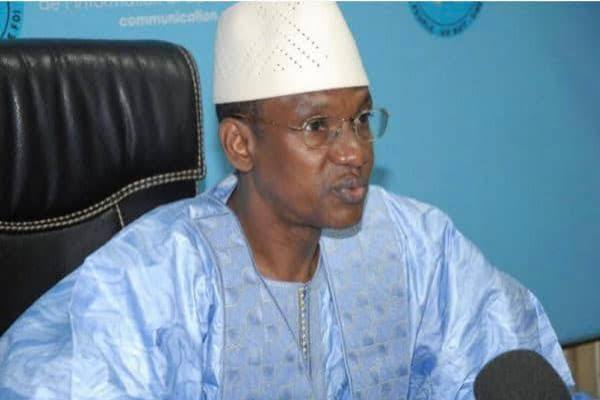
The numbers speak volumes: 440 days. That is how long Choguel Kokalla Maïga has spent in pretrial detention in Bamako. Fourteen months behind bars, isolated from the world, for a man who once shaped the voice of Mali’s military leadership. His detention isn’t just a legal milestone—it’s a strategic turning point that exposes the fragility of loyalty in Bamako’s corridors of power.
Once the architect of the junta’s ideological defense, the former Prime Minister was the public face of Mali’s “reclaimed sovereignty,” challenging international powers with bold rhetoric at the United Nations. He wasn’t just a figurehead; he was the bridge between civilian rhetoric and military authority. But power in transition has no memory for loyalty—only for control.
When Maïga’s voice began to stray from the official script, the system reacted with brutal efficiency. His rapid fall from grace and indefinite detention reveal a harsh truth: in today’s Mali, dissent isn’t debated—it’s erased. The courts no longer serve justice; they serve as tools of exclusion, stretched to their breaking point to silence those who once shaped the system.
From architect to prisoner: how the system turns its own against itself
The irony cuts deep. Maïga, who once championed the military’s vision of reform and accountability, now finds himself entangled in the very machinery he helped build. His detention exposes three unsettling realities of Mali’s transition:
- Justice as a weapon: While officials proclaim institutional renewal, prolonged detentions without trial reveal a justice system weaponized not to protect rights, but to eliminate perceived threats.
- The architect’s downfall: The man who once mobilized political and military alliances now stands as a cautionary tale—his fate a stark reminder that no past service guarantees immunity.
- A warning to political elites: His incarceration sends a chilling message: in Mali’s corridors of power, crossing the red line isn’t just risky—it’s a one-way path to oblivion.
The cost of silencing debate: what 440 days of detention reveal
Mali’s leadership isn’t just detaining a former Prime Minister—it’s burying the possibility of open political debate. By extending Maïga’s detention indefinitely, Bamako signals a dangerous precedent: consensus is not just preferred—it’s enforced. The silence of prison is preferred over the unpredictability of public discourse.
These 440 days are more than a legal anomaly. They are a reflection of a regime caught in a cycle of self-destruction, eliminating its own architects to preserve the illusion of unchallenged authority. The message is clear: loyalty is temporary, and power tolerates no rivals—not even those who once built it.
A system designed for control, not reform
Maïga’s case lays bare the contradictions of Mali’s transition. The junta came to power promising stability and renewal, yet its methods reveal a deeper aim: the consolidation of absolute control. Detaining a former leader without trial doesn’t strengthen institutions—it exposes their fragility. It doesn’t deter dissent—it broadcasts it.
When the machinery of justice is twisted into an instrument of exclusion, the regime doesn’t just silence one voice—it undermines its own legitimacy. The question now lingers: how long until the system consumes itself entirely, leaving only the echoes of its own rhetoric?