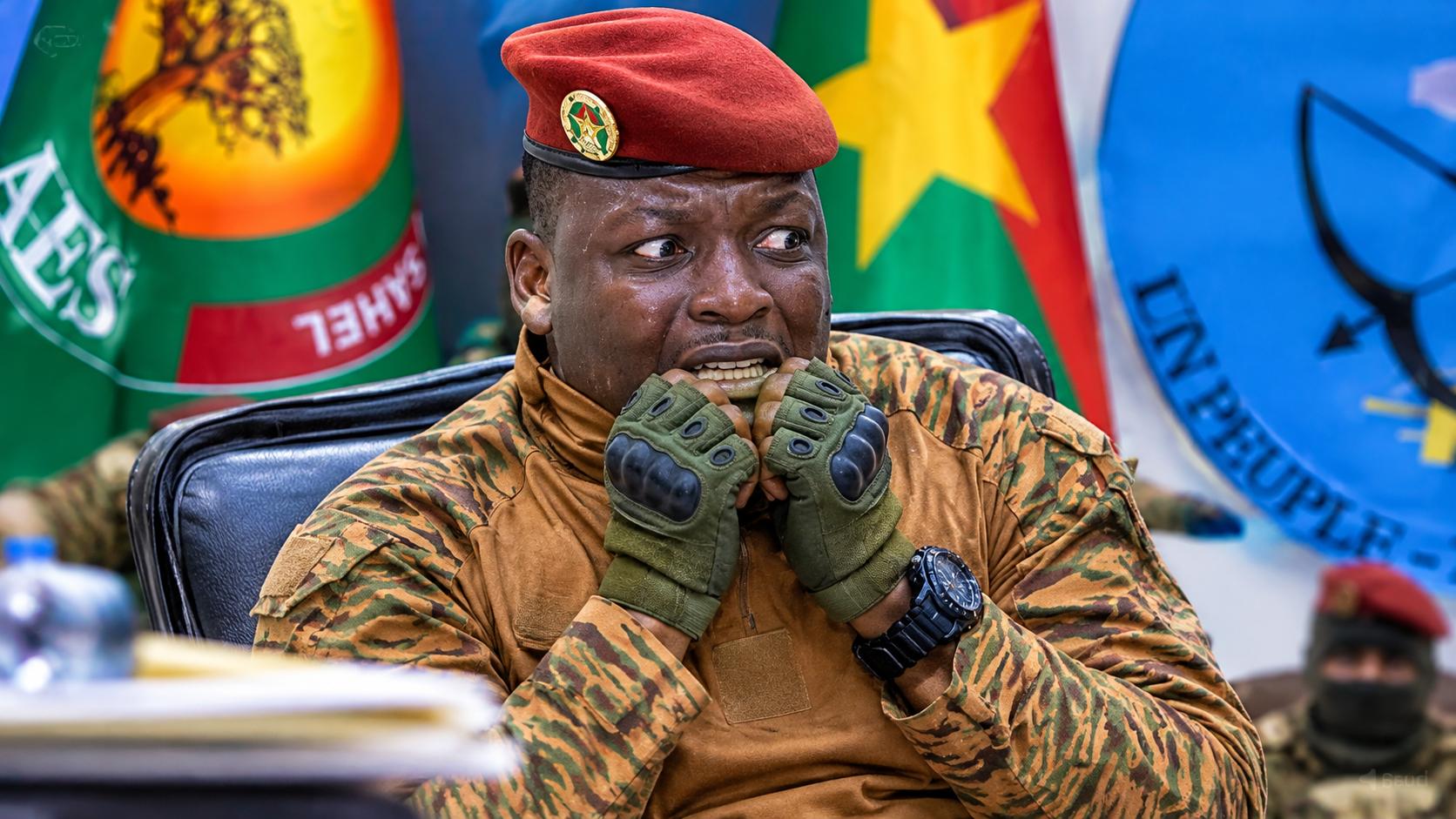
Why the Burkina Faso leader’s presence at the summit is being questioned
The decision of Ibrahim Traoré, Burkina Faso’s transitional leader, to skip the Russia-Africa summit raises a critical question: is his absence merely a diplomatic choice, or does it reveal deeper instability within his own ranks? For years, Traoré has cultivated an image of a resolute statesman, pivoting his country away from traditional allies toward new strategic partnerships. Yet, now that this summit approaches, could the very alliances he has built be turned against him?
From strategic partnership to a test of loyalty
The bond between Traoré and Moscow has been more than a diplomatic maneuver it has been a cornerstone of his political narrative. By positioning Russia as a key ally, he has reinforced his image as a leader committed to Burkina Faso’s sovereignty, appealing to a base that values resistance to foreign influence and national reassertion. But such a strategy carries risks: when power relies heavily on external validation, how resilient is it when internal doubts emerge?
Reports suggesting Traoré’s absence stems from concerns about a potential threat within his inner circle introduce a new layer to this geopolitical strategy. If true, it would imply that the very alliances meant to bolster his authority could now be sources of vulnerability. The question is no longer just about Burkina Faso’s place on the world stage but about the durability of its leadership.
Propaganda vs. reality: the fragile foundation of a leadership image
Traoré’s political communications have consistently emphasized sovereignty, national pride, and defiance against external pressures. These themes, amplified across platforms like social media, have shaped a public perception of a leader in control. Yet, critics argue that this carefully curated image masks persistent challenges security threats, humanitarian crises, and governance deficits that the government struggles to address.
When a regime invests heavily in shaping its narrative, the stakes of underperformance become higher. Disillusionment is not limited to the public; it can spread within the ranks of those who once stood by the leader. Could the decision to avoid an international forum reflect not just caution, but an acknowledgment of fragility at home?
Internal fractures: the unspoken risk behind every coup d’état
Transitional governments born from military coups often depend on fragile coalitions. The alliances that bring leaders to power do not always endure. As time passes, divergent agendas, competition for influence, and shifting loyalties can erode cohesion. In such environments, the personal loyalty once taken for granted becomes negotiable and trust becomes conditional.
If Traoré’s absence is indeed driven by fears of betrayal or insurrection within his inner circle, it would signal a critical juncture. Not all internal tensions lead to coups but they can weaken a leader’s grip on power long before any overt challenge arises. The absence at the summit could, in this light, be more than a symbolic gesture; it could be a tactical retreat prompted by real, if unconfirmed, threats.
Diplomacy in the shadow of uncertainty
An international summit is not merely a stage for political theater. It is also a moment where a leader’s absence or presence can be interpreted as a barometer of stability. If Traoré’s decision to stay away is indeed precautionary, it suggests that the fragility of his position may now outweigh the diplomatic benefits of attendance.
Yet, without official explanations or corroborated evidence, any conclusion remains speculative. Is this absence a sign of insecurity? A calculated move to avoid overshadowing the summit’s agenda? Or simply an administrative decision unrelated to domestic politics? The answers matter not only for Burkina Faso’s foreign relations but for the very legitimacy of its transitional authority.
What is really unfolding in Ouagadougou?
The unfolding events in Burkina Faso’s capital raise broader questions about leadership in times of transition. A leader who has positioned himself as a unifier and defender of the nation now faces an invisible but potentially decisive test: the loyalty of those closest to him. If the information hinted at in diplomatic circles holds any truth, it may be the first crack in what was once portrayed as solid leadership.
The stakes are high. The summit’s optics are one thing; the survival of a leadership narrative is another. Ibrahim Traoré’s ability to maintain control not just over a nation’s foreign policy, but over the confidence of his own supporters may now be the most consequential calculation of his tenure.
By AMINA SALEY — Journalist