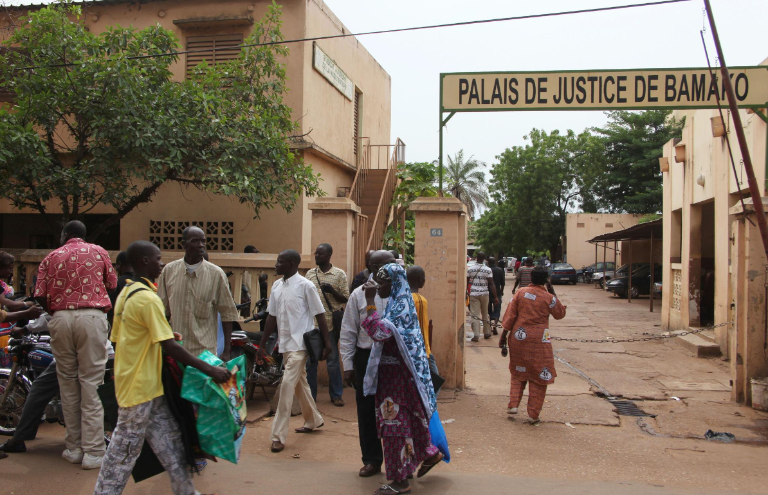
Why Adama Sangaré’s ten-year sentence raises urgent questions
The shocking ten-year prison term handed down to Adama Sangaré, former mayor of Bamako’s district, has ignited a fierce debate over whether elected leaders can sidestep accountability for contentious land allocations near Senegal International Airport. While the court ruled against him, legal experts and municipal officials alike are now questioning whether procedural oversights—or deeper political maneuvering—have skewed justice in this high-stakes case.
Key arguments in the defense’s appeal strategy
Criminal accusations against Sangaré hinge on allegations of land subdivision and allocation in a zone claimed as state-controlled. Yet his legal team mounted a multi-pronged challenge aimed at dismantling the prosecution’s case. Three core strategies underscored their argument:
- Contesting the criminal nature of administrative actions: Defense lawyers insisted that parceling decisions made during Sangaré’s tenure fall under municipal governance, not penal law. They argued that even if irregularities existed, they do not automatically constitute criminal offenses such as forgery or embezzlement.
- Challenging the court’s jurisdiction: The defense filed motions arguing that matters of local land management should be resolved through administrative courts, not criminal chambers. These pleas were ultimately rejected, yet they set the stage for what may become a landmark appeal.
- Introducing political context: Sangaré claimed he acted on direct instructions from former president Ibrahim Boubacar Keïta, who reportedly sought to facilitate resettlement for northern Malians. While intriguing, such assertions raise further questions about the boundaries between executive orders and individual accountability.
Financial claims overshadow the land dispute
Beyond spatial allocations, the prosecution emphasized massive financial irregularities. Authorities allege that 49.39 million West African CFA francs in edility fees were irregularly waived, while total state losses reached 483.964 million CFA francs due to unauthorized demolitions and clearance operations. Sangaré countered that fee exemptions were within his authority as mayor and that he played no role in managing demolition funds—responsibility he insists lay with national state services.
Despite these counterarguments, the tribunal ordered joint liability for repayment of demolition costs plus 50 million CFA francs in damages to the state. This financial penalty underscores the severity with which the judiciary views systematic deviations from procurement and accounting norms.
Who else was convicted in the Bamako-Sénou land scandal?
This sprawling case ensnared multiple officials. Former sub-prefects Daha Keïta and Ibrahim Koïta received identical ten-year sentences. Adam Aïché Traoré, Fatouma Samassékou, and Bourama Komagara were also handed ten-year terms—five of which were suspended. In a striking development, Souleymane Dagnon, former mayor of Bamako’s Commune VI, was sentenced to twenty years in absentia and now faces an arrest warrant. Only Sékou Keïta escaped conviction entirely.
The prosecution had initially sought fifteen years for Sangaré, Daha Keïta, and Ibrahim Koïta, and twenty years for Dagnon—illustrating the gravity with which authorities view land mismanagement in a politically sensitive zone.
The appeal’s pivotal role in clarifying land governance rules
As the defense prepares its appeal, the case moves toward a critical juncture. The appellate stage will weigh whether the first-instance verdict upheld due process or misapplied criminal law to what are fundamentally administrative decisions. Legal observers note that the outcome could redefine the balance between municipal autonomy and state oversight in land use across Mali.
Equally significant is the potential precedent for future prosecutions of local leaders. Does a ten-year sentence for contested parceling set a benchmark for deterrence, or does it risk conflating regulatory failure with criminal intent? The appeals court’s reasoning will likely influence how similar cases are adjudicated in the coming years.
Lessons learned—or yet to be learned—from Bamako’s land disputes
This landmark case exposes systemic vulnerabilities in Mali’s land administration. It highlights how blurred lines between executive directives, municipal prerogatives, and statutory compliance can create fertile ground for disputes. Above all, it reminds citizens and officials alike that transparent governance—backed by clear documentation and independent oversight—remains the only reliable shield against both corruption allegations and miscarriages of justice.