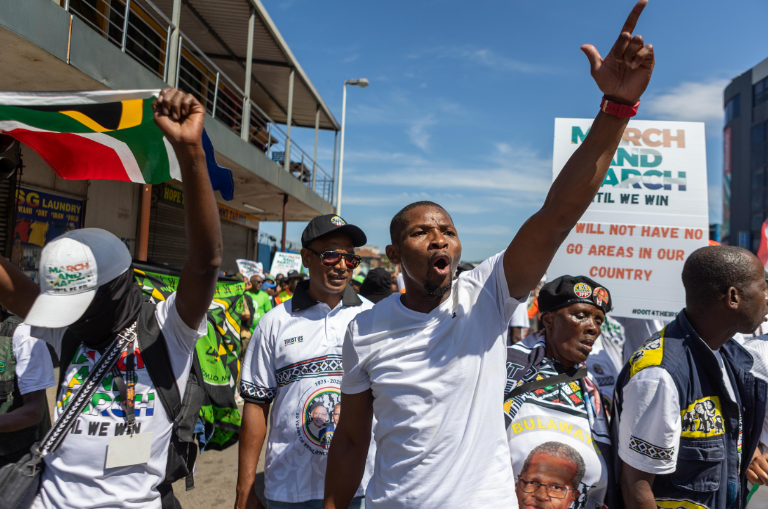
South Africa now stands at a crossroads: can it dismantle the brutal cycle of mob violence against foreigners or will the streets become judge, jury and executioner?
The African Commission on Human and Peoples’ Rights has issued a stark warning after a foreign national was beaten to death by a vigilante mob in Durban. With the possibility of crimes against humanity being invoked, Pretoria faces unprecedented pressure to place the fight against xenophobic violence at the very top of the national agenda.
On October 22, 2026, in the heart of Durban’s central business district, a man in his thirties or early forties was surrounded by approximately fifty people. Caught in a frenzy of aggression, he suffered fatal injuries on the spot. Authorities confirmed the attack occurred near a main thoroughfare, but the victim’s nationality remains undisclosed, and the precise motives behind the assault continue to be investigated.
From outrage to legal alert: when does a murder become a crime against humanity?
The African Commission’s statement, issued the very next day, did not mince words. It condemned the murder in the strongest terms possible and suggested that recorded circumstances could meet the threshold for a crime against humanity. This is a legally serious allegation that demands clarity: how does a single act escalate into a systematic assault on human dignity?
Under international law, a crime against humanity requires evidence of a widespread or systematic attack directed against any civilian population. While the Durban killing is undeniably heinous, linking it directly to such a grave classification remains a legal argument, not a foregone conclusion. Yet the warning is unambiguous: authorities must act quickly to prevent normalization of mob justice.
Durban as a pressure cooker: how migration debates turned violent
Durban, South Africa’s third-largest city, has become a focal point of rising anti-immigration sentiment. Over recent months, protest movements have gained momentum, led by groups demanding the expulsion of undocumented migrants. Protesters allege foreign nationals exacerbate unemployment, fuel crime and drain public services. These frustrations, while understandable in a country struggling with deep economic divides, cannot justify vigilante violence, intimidation or extralegal executions.
The cycle of protest and retaliation has already produced devastating consequences: businesses looted, property destroyed, and entire communities terrorized. What began as vocal opposition to migration policy now risks spiraling into organized violence—one in which the identity of the victim matters less than the perceived guilt of being “foreign.”
The state’s dual dilemma: control borders or protect lives?
South Africa’s government faces a delicate balancing act. On one hand, there is legitimate concern about irregular migration and border security. On the other, the Constitution guarantees the right to life and human dignity for all persons within the territory—regardless of nationality or immigration status. The South African Human Rights Commission has echoed this principle, affirming that no individual or group has the authority to punish, hunt or execute those deemed undesirable.
Pretoria’s response to the Durban tragedy will be scrutinized not only domestically but across the continent. Citizens of neighboring African nations—many of whom once stood in solidarity during South Africa’s fight against apartheid—now find themselves targets of violence and fear. This erosion of continental trust threatens the very foundation of African unity and regional integration.
Justice as the litmus test: will perpetrators be held to account?
The credibility of South Africa’s legal system is now on trial. A swift, impartial and transparent investigation must identify the attackers and bring them before a court of law. Failure to do so risks entrenching a culture of impunity where mob violence becomes an accepted form of “justice.” Conversely, decisive legal action could send a clear signal: South Africa will not tolerate extrajudicial killings, no matter how inflammatory the public mood.
The African Commission’s call transcends condemnation. It is a moral summons to all sectors of society: to dismantle hate speech, protect vulnerable communities and uphold the rule of law. Durban’s streets witnessed a life violently taken. To ensure this tragedy does not become a precursor to further bloodshed, South Africa must convert moral outrage into institutional action—before the next mob forms, and the next innocent becomes a target.
Key takeaways for South Africans and observers alike
- Xenophobic violence is not an abstract issue—it is a growing threat to social cohesion and human rights across South Africa.
- Crimes against humanity are a legal threshold, not a rhetorical device, and require careful evidence under international law.
- Public frustration over migration must not be met with private violence—mob justice corrodes democracy.
- The state’s credibility depends on protecting all residents, regardless of origin, and delivering justice without delay.
- Solidarity within Africa is at risk if South Africa fails to protect foreign Africans from mob attacks.