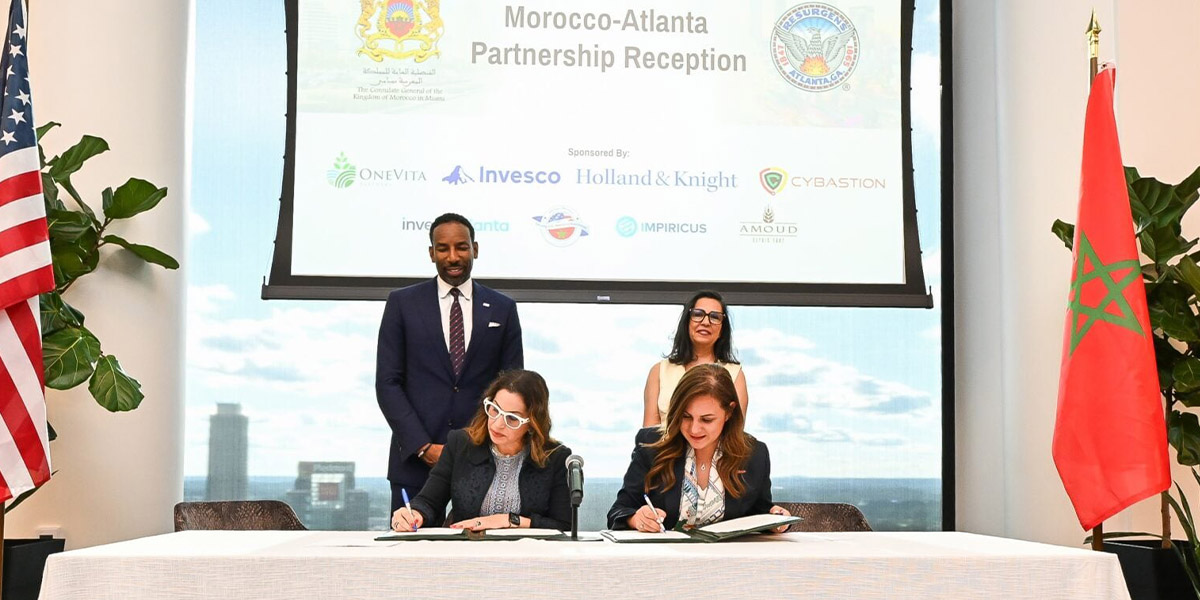
The buzz of the World Cup has done more than captivate global audiences—it has acted as a catalyst for fresh economic alliances. In the heart of this international spectacle, Atlanta and Morocco have taken a decisive step to deepen their financial and industrial collaboration through a newly signed agreement.
This landmark protocol was formalized between the Economic Development Agency of Atlanta and Morocco’s Agence Marocaine de Développement des Investissements et des Exportations (AMDIE). The partnership spans critical sectors including investment flows, cross-border trade, logistics infrastructure, and professional knowledge exchange.
Delegates from both regions emphasized how the World Cup served as a global stage to spotlight their territories as strategic gateways into their respective markets. Atlanta, a major logistics hub in the United States, and Morocco, a gateway to Africa, are positioning themselves as pivotal connectors in international commerce.
a framework for shared growth
The signed agreement outlines a roadmap for sustained economic synergy. Key areas of focus include:
- Investment facilitation: Streamlining procedures to attract more Moroccan businesses to Atlanta and vice versa, creating new revenue streams for entrepreneurs on both sides of the Atlantic.
- Trade expansion: Identifying high-potential sectors where bilateral commerce can thrive, from agribusiness to technology.
- Logistics optimization: Enhancing supply chain connectivity to reduce costs and accelerate delivery times between the two regions.
- Expertise exchange: Fostering professional training programs and knowledge-sharing initiatives to strengthen human capital in key industries.
why this partnership matters now
The timing of this collaboration is strategic. As Morocco continues to solidify its role as an African trade leader—and Atlanta reinforces its position as a business gateway in the southeastern United States—this partnership creates a powerful bridge between continents. The agreement not only benefits large corporations but also opens doors for small and medium-sized enterprises seeking to scale regionally and globally.