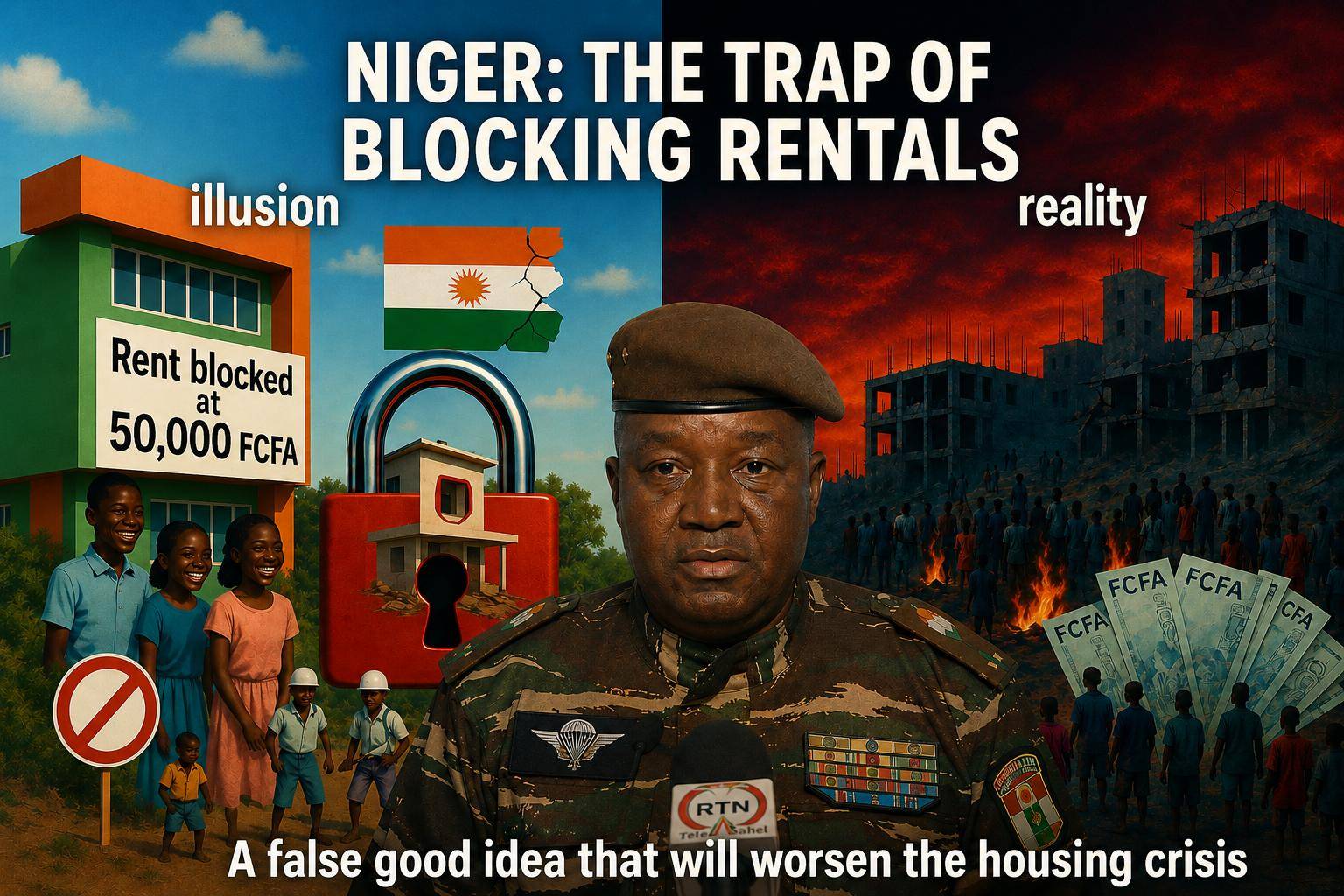
The Nigerien transitional government has recently implemented a decree to cap residential rents in Niamey, setting maximum prices between 15,000 and 80,000 West African CFA francs. While the policy aims to address affordability concerns for low-income households, economists warn it may inadvertently deepen the housing crisis by disrupting market dynamics.
How price controls could backfire on Niamey’s housing market
The government’s stated goal—combating speculative pricing and ensuring affordable housing—is understandable. However, historical evidence shows that state-imposed price controls rarely achieve their objectives. Instead of resolving the scarcity of housing units, this measure risks creating new and more severe challenges for Niger’s real estate sector.
The three unintended consequences of rent caps
Under the new decree, the maximum rent for social housing in Niamey is capped at 80,000 FCFA. While intended to benefit tenants, this policy introduces several structural problems:
- Investment freeze: With profits capped, property developers and investors lose financial incentives to build new housing. Construction projects become unprofitable, leading to a sharp decline in new residential developments.
- Deferred maintenance: Landlords facing reduced revenue will prioritize cutting costs over property upkeep. Expect a rapid deterioration in the quality of existing housing stock, with neglected repairs, plumbing failures, and structural decay becoming widespread.
- Shadow market emergence: When legal rents are suppressed but demand remains high, informal arrangements flourish. Prospective tenants may resort to under-the-table payments to secure housing, undermining official policies and fostering corruption.
Why the state cannot fill the gap
The government’s ability to counter these effects is severely limited. To offset the withdrawal of private investors, the state would need to fund large-scale social housing projects. Yet, Niger’s public finances are already strained by political instability and reduced international aid, making such an initiative financially unviable.
Moreover, the decree sends negative signals to local banks, which are likely to reduce financing for real estate ventures. The ripple effect would extend beyond construction firms, impacting suppliers, laborers, and ancillary businesses—ultimately slowing broader economic activity.
A short-term political move with long-term costs
While the policy may bolster public approval among urban residents during a transitional period, its economic repercussions could prove counterproductive. Price controls do not resolve housing shortages; they merely distort market signals. By discouraging investment and accelerating property decay, the decree risks transforming an affordability crisis into a full-blown housing emergency—one where securing decent accommodation in Niamey becomes even more elusive for ordinary citizens.