Eighteen months after the Niger coup of July 26, 2023, which ousted democratically elected President Mohamed Bazoum, the military-led National Council for the Safeguard of the Homeland (CNSP) has tightened its grip on power. Forced arrests, arbitrary detentions, media crackdowns, political party bans, and ignored court rulings—these are the documented abuses highlighted in a recent Amnesty International report, Niger: Threatened and Silenced – Human Rights and Civic Space Under Pressure.
The report, covering violations from July 2023 to January 2025, reveals a sharp decline in civil and political rights. Critics, former officials, and opposition figures face systematic repression as the junta weakens civic engagement and deepens societal divisions. Despite promising to uphold the rule of law, the CNSP has abandoned these commitments, citing sovereignty and security concerns while silencing dissent under the guise of national stability.
Military juntas reshape the Sahel’s political landscape
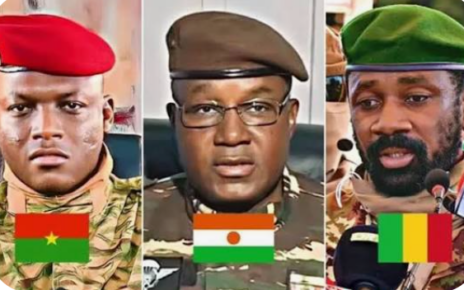
The Niger coup followed a wave of military takeovers across the Sahel: Mali (2020, 2021), Burkina Faso (January and September 2022), and Niger (July 2023). Facing economic sanctions and the threat of military intervention by the Economic Community of West African States (ECOWAS), the juntas of Niger, Burkina Faso, and Mali formed the Alliance of Sahel States (AES) in September 2023. They later withdrew from ECOWAS and severed ties with France and the European Union, signaling a shift in regional alliances and strategic priorities.
In March 2025, the three countries announced their exit from the International Organisation of La Francophonie (OIF), a move that further isolates them diplomatically. The OIF, like ECOWAS, had demanded the release of former President Bazoum, underscoring the growing rift between the juntas and international institutions.
Erosion of the rule of law and democratic institutions
When General Abdourahamane Tiani seized power, he vowed to uphold human rights and civil liberties in line with Niger’s international obligations. Yet within 18 months, the reality has proven starkly different. Amnesty International warns that despite official assurances, human rights have been systematically violated both in law and practice. “The new authorities have failed to honor their commitments. The legislative framework has been rolled back, and fundamental freedoms are under siege,” states Marceau Sivieude, Amnesty International’s interim regional director for West and Central Africa.
Upon taking control, the junta suspended the 2010 Constitution and dismantled key institutions, including the National Human Rights Commission. Replacement structures have stalled, leaving the CNSP with unchecked executive and legislative power. Governance now relies on restrictive decrees, including the reinstatement of the 2019 cybercrime law, which criminalizes defamation, insults, and the spread of “disruptive” content—terms vague enough to target opponents.
An August 2024 decree further expanded the definition of terrorism, enabling the state to blacklist individuals and groups. Those listed face asset freezes and, in some cases, the revocation of citizenship. As of October 2024, 21 people, including former Bazoum ministers, have been stripped of their nationality. “I only have Nigerien citizenship. This provisional revocation could leave me stateless. I won’t contest it because there is no rule of law left in Niger,” stated Hamid Ngadé, a former presidential advisor. Amnesty International condemns the move, calling it “a blatant violation of citizens’ rights based on political dissent.”
Political pluralism has all but vanished. Since the coup, political parties have been suspended, eliminating institutional checks and balances. The junta’s crackdown extends to civil society, where dissent is equated with treason and critics are labeled “stateless.” “We live under a state of exception. Civil society organizations face immense pressure. People are afraid to speak or organize,” shared a Niamey-based activist.
Crackdown on civil society and independent media
The military regime has intensified repression against civil society and the press, using national sovereignty as a pretext to justify censorship. The General Directorate of State Security (DGSE) stands accused of forced disappearances, arbitrary arrests, and prolonged detentions, despite official denials.
Moussa Tchangari, a prominent civil society leader, was violently arrested at his home on December 3, 2024, and held incommunicado for days before being charged with terrorism, state security violations, and criminal association. He faces up to 10 years in prison. Journalists and activists endure similar fates. Ousmane Toudou, a former advisor to Mohamed Bazoum, and Soumana Maïga, a newspaper editor, were arrested in April 2024 for social media posts and tried in a military court—a clear violation of civilian rights. While Maïga was granted provisional release, Toudou remains detained. Blogger and activist Samira Sabou was forcibly disappeared before being prosecuted under the 2019 cybercrime law.
The crackdown on media freedom is equally severe. The Press House was suspended in January 2024 and replaced by a government-aligned interim committee. International outlets like RFI, France 24, and the BBC have faced suspensions, while local journalists operate under constant surveillance. Self-censorship is rampant. “Now, when you write, you have to weigh every word. There’s no one left to defend the press,” confided a journalist to Amnesty International.
Ousmane Diallo, a Sahel researcher, warns: “Freedom of expression, dissent, and press freedom are essential to accountability and the protection of other rights. Niger stands at a critical crossroads.”
The February 2025 national dialogue recommended a five-year, renewable transition period, potentially allowing current leaders to run in future elections. This proposal entrenches military rule and distances Niger further from a return to constitutional governance.