
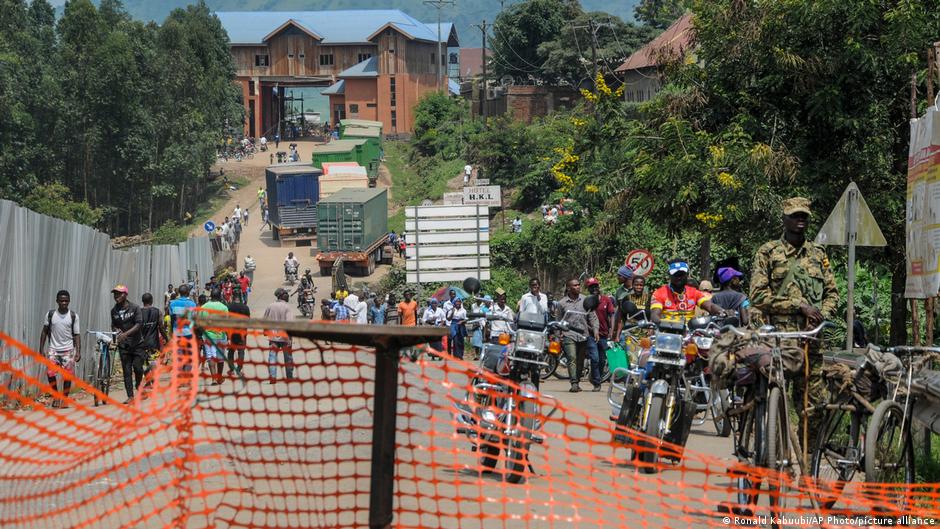
With over 3,000 confirmed cases and nearly 1,500 deaths reported in the latest government update, the Ebola outbreak in the Democratic Republic of Congo (DRC) continues its relentless spread. Health officials warn that the virus is now multiplying at an exponential rate, doubling its cases every 20 days—a pace far outstripping current response efforts.
Julien Harneis, the United Nations’ Ebola Coordinator, emphasized the urgency of the situation, stating that “containment measures must keep pace with the outbreak’s acceleration.”
Maintaining Open Borders
In response to the crisis, multiple nations had imposed travel restrictions or even closed land borders with the DRC. Rwanda, for instance, initially shut its terrestrial borders entirely, barring entry to all travelers who had recently visited the DRC. Though partial reopening occurred by early July, stringent screening protocols—including mandatory handwashing and temperature checks—remained in place.
The Ugandan government also temporarily sealed its cross-border posts with the DRC, though exemptions were granted for humanitarian aid, security personnel, and essential trade. Meanwhile, Canada took more drastic measures by banning entry to foreign nationals who had spent time in the DRC within the past 21 days and suspending certain immigration services for applicants from the DRC, Uganda, and South Sudan.
Yet, the UN has cautioned against such closures. Restricting border crossings risks driving populations toward unmonitored routes, undermining surveillance efforts and complicating the delivery of critical medical supplies. Open borders are essential to facilitate the rapid movement of healthcare teams, ensure uninterrupted supply chains for medical equipment, and enable on-the-ground responders to operate without delays.
Ebola’s Toll on Food Security
The World Food Programme (WFP) has labeled the outbreak a “crisis layered atop another crisis.” The Ituri region, the epicenter of the Ebola surge, is among the hardest-hit areas, with 1.9 million people now in need of food assistance.
Butoto Bigiri Naum, head of the community development NGO UGEAFI—which collaborates with German aid group Help in DRC’s Ebola response—highlighted the ripple effects of border restrictions on local food systems. “Patients often rely on family members for care, but those caregivers struggle to access seeds, tools, and other agricultural supplies due to disrupted supply chains.”
According to WFP data, over 2.65 million people in Ebola-affected health zones now face acute food insecurity, including more than 628,000 in emergency conditions. Women, children, and expectant mothers are disproportionately affected, as rising food prices and scarce market availability make it nearly impossible for households to meet basic nutritional needs.
The epidemic’s secondary impacts extend to agriculture itself. Farmers, fearful of infection or labor shortages, are abandoning their fields, threatening long-term food production. The WFP is providing emergency rations not only to patients and their contacts but also to frontline workers and vulnerable households to mitigate these risks.
This lifeline serves a dual purpose: it eases pressure on families struggling to afford food while reducing unnecessary travel in search of sustenance. By stabilizing local communities, the aid also fosters an environment where health interventions can be carried out more effectively.