The Government of Bénin has launched an innovative malaria vector control program blending artificial intelligence, geospatial mapping, and drone-based larvicide spraying. Funded by Japan to the tune of $2.3 million with support from UNICEF, the initiative targets six key municipalities where malaria remains a persistent health and economic burden. This groundbreaking approach marks a shift from reactive measures to a proactive, precision-driven strategy.
Launching a tech-powered offensive against malaria
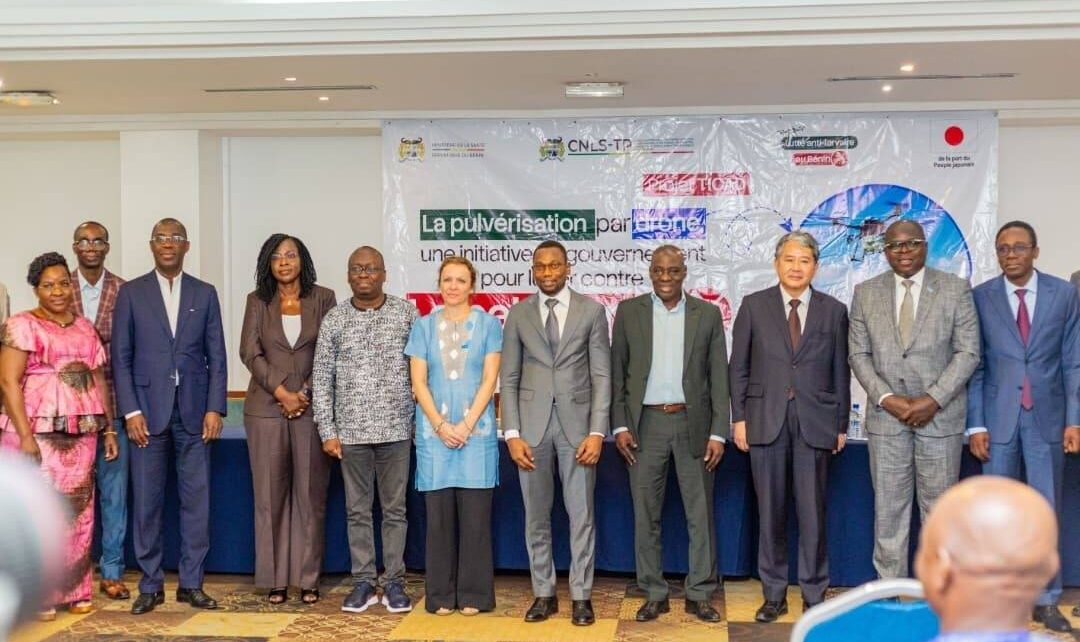
The program was unveiled in Cotonou, where Health Minister Professor Benjamin Hounkpatin emphasized its potential to transform the fight against malaria. For decades, control efforts relied on insecticide-treated bed nets, clinical treatments, and public awareness campaigns. This initiative, however, introduces a preventive and surgical approach by targeting mosquito breeding sites directly.
The technology stack includes advanced geospatial mapping and AI systems that analyze topography and weather patterns to pinpoint high-risk zones with meter-level accuracy. Once identified, drones equipped with WHO-approved larvicides are deployed to neutralize mosquito larvae before they mature. This method ensures faster, more precise, and safer interventions, even in hard-to-reach areas.
Six municipalities leading the charge
The pilot phase focuses on six municipalities—Copargo, Djougou, Tchaourou, Ouidah, Abomey-Calavi, and Cotonou—each presenting unique ecological and demographic challenges. From densely populated urban centers to remote rural settlements, the drones will cover a diverse range of environments. The $2.3 million funding from Japan underscores the project’s alignment with national and international health resilience goals, including the TICAD9 framework.
Economic relief for families and communities
Malaria is not just a health crisis; it is an economic one, particularly for low-income households. Families often face crippling medical expenses, lost workdays, and disrupted livelihoods during peak transmission seasons. Amavi, a market vendor in Abomey-Calavi and mother of four, shared her experience: “Every rainy season brings fear. Last year, my two youngest children were hospitalized twice. The costs added up to over $100, wiping out a month’s earnings. And when I’m at the hospital, I can’t sell my fabrics. If these drones can eliminate mosquitoes in the swamps near us, our family’s finances—and our health—will finally breathe easier.”
The benefits extend beyond healthcare. Small business owners, farmers, and artisans in Tchaourou and Cotonou face similar financial strain during malaria outbreaks. By reducing morbidity in these pilot areas, the project aims to boost productivity, savings, and economic stability for the informal sector, which sustains the majority of Bénin’s population.
Youth engagement: the human backbone of the project
Technology alone cannot sustain long-term change. Recognizing this, the initiative integrates a robust youth engagement component. Young residents from the pilot municipalities are trained as community health advocates, supporting ground operations, raising awareness, and promoting environmental hygiene practices to prevent breeding site regeneration.
This grassroots involvement ensures that the project’s impact extends beyond immediate interventions, fostering a culture of collective responsibility. As the project’s designers emphasize, “The fusion of cutting-edge technology and community mobilization is the key to lasting success.”
Paving the way for a malaria-free future
By combining drone technology with vaccination drives and citizen vigilance, Bénin is pioneering a new model in public health. If the pilot phase proves successful, the approach could be scaled nationwide and serve as a template for other West African nations grappling with malaria. As the first drones take flight over Bénin’s landscapes, they carry not just larvicides, but the promise of a healthier, more prosperous future.