Amid persistent vulnerabilities in their energy supply chains, Bénin and Togo are deepening political and economic ties to secure their industrial growth. Recent disruptions in regional power grids have exposed the fragility of relying on external suppliers, prompting both nations to pursue collaborative solutions for sustainable and independent electricity access.
The shutdown of Ghana’s Akosombo substation on 23 April, which cut off 1,000 megawatts from the regional network, served as a stark reminder of this dependency. The incident led to immediate power rationing in Togo and Bénin, reinforcing a harsh reality: during crises, nations prioritize domestic consumption over cross-border commitments. Earlier this year, disruptions in the West African Gas Pipeline forced Togo to allocate 31 billion FCFA in emergency funds to offset the shortfall in Nigerian gas supplies, further highlighting structural weaknesses in regional energy cooperation.
These recurring challenges underscore the limitations of the Communauté Électrique du Bénin (CEB), established in 1968 as a regional power-sharing initiative but lacking independent production capacity. The time has come to move beyond mere coordination and build a resilient, self-sufficient energy framework.
Adjarala Dam: a cornerstone for regional energy autonomy
The Adjarala Dam project on the Mono River stands as a transformative solution to the energy crisis gripping Bénin and Togo. With an estimated investment of 266 billion FCFA and a capacity of 147 megawatts, this hydroelectric venture promises a stable 30-year power supply while also irrigating 14,700 hectares of farmland in Togo. For industrial zones like Glo-Djigbé in Bénin—a hub valued at over $1 billion dedicated to cotton and cashew processing—and Adétikopé in Togo, energy predictability is no longer negotiable. A unified market approach will enhance their bargaining power with investors and reduce reliance on external energy partners.
Leveraging local savings to fuel energy sovereignty
With international lenders increasingly distancing themselves from fossil fuel financing, Bénin and Togo are turning to domestic financial resources. Their strategy involves tapping into long-term savings from national social security funds (CNSS) and insurance companies, which currently park their reserves in short-term government securities. By issuing joint energy bonds backed by both states, policymakers aim to channel this social savings into large-scale infrastructure projects. Experts view this as a game-changing move to accelerate regional energy independence.
A landmark political alignment
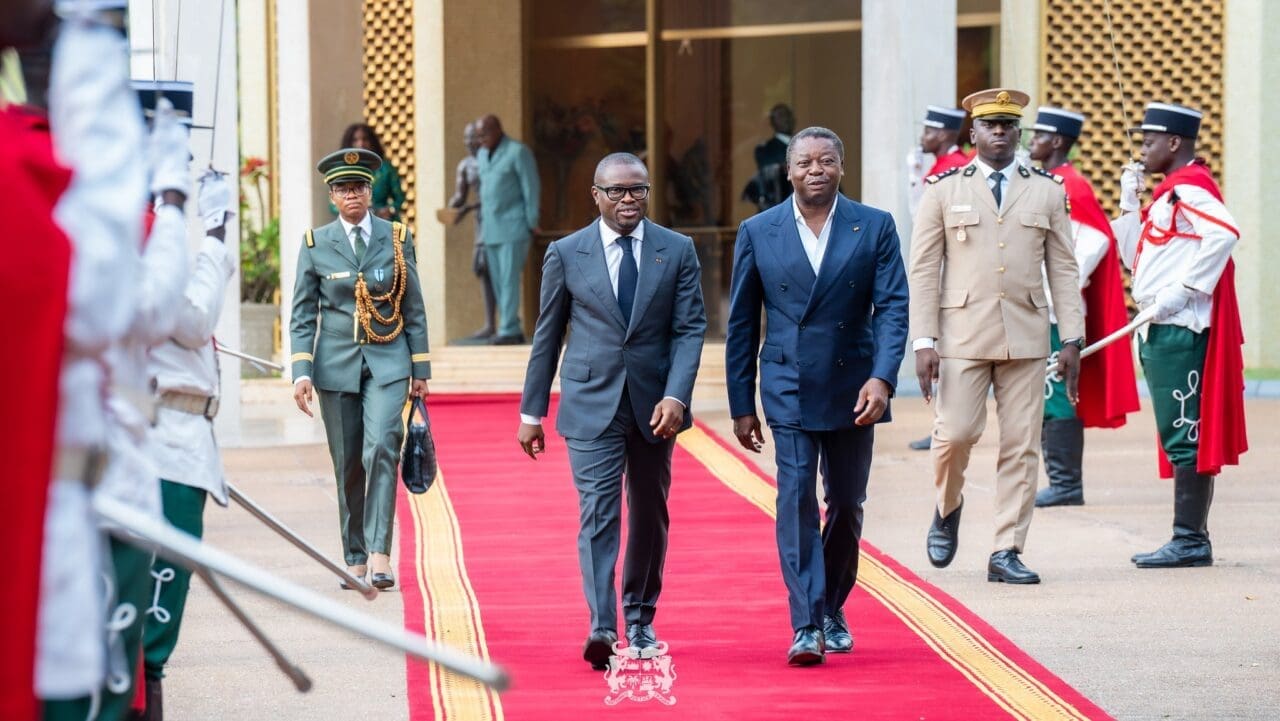
The official visit of Bénin’s new president, Romuald Wadagni, to Lomé on 3 June 2026, marked a pivotal moment in bilateral relations. The joint statement laid the groundwork for deeper economic integration and interconnected infrastructure projects. Both nations have set ambitious targets: Bénin plans to inject 100 megawatts into the grid every two years, while Togo aims for universal electricity access by 2030. This synchronized vision presents an unprecedented opportunity to finally achieve energy self-sufficiency and reduce reliance on external suppliers.