As chronic supply disruptions from external partners threaten their stability, Cotonou and Lomé are forging an unprecedented political and economic alliance. The urgency to secure sustainable energy for their burgeoning industrial zones has pushed both nations to pool resources and strategic investments, aiming to achieve true electrical sovereignty.
Last April 23, a devastating fire at Ghana’s Akosombo substation abruptly cut off 1,000 megawatts from the regional grid, halting power exports to Togo and Bénin the very next day. This recurring vulnerability underscores a harsh truth: during crises, every country prioritizes its own needs first.
Even earlier in 2024, failures along the West African Gas Pipeline forced Togo to release 31 billion West African CFA francs in emergency funds to offset the shortfall in Nigerian gas supplies. This shared fragility exposes the persistent shortcomings of the Communauté Électrique du Bénin (CEB)—established in 1968 as a regional electricity transporter with no production capacity of its own.
Adjarala Dam: the cornerstone of a new energy era
The crisis is no longer just technical—it has become a matter of national survival. The solution lies in the Adjarala Dam project on the Mono River. With an estimated cost of 266 billion West African CFA francs and a capacity of 147 megawatts, this facility promises three decades of stable electricity while also irrigating 14,700 hectares of farmland in Togo. For Bénin and Togo, this investment is not optional—it is essential to sustain their industrial momentum.
Consider Bénin’s Glo-Djigbé Special Economic Zone, where over $1 billion has been poured into local cotton and cashew processing. Or Togo’s Adétikopé industrial platform. Neither can afford to rely on the fluctuating goodwill of neighboring energy providers. A unified energy market would empower both nations to negotiate from a position of strength with international investors.
Tapping into domestic savings to fund the future
With international lenders increasingly shying away from fossil fuel financing, Cotonou and Lomé are rethinking their financial strategies. They are turning to domestic long-term savings pools—namely the National Social Security Funds and insurance companies, which hold substantial reserves currently parked in short-term government securities. By issuing joint energy bonds backed by both governments, experts believe these institutions could unlock a powerful engine for regional infrastructure development.
A historic political convergence
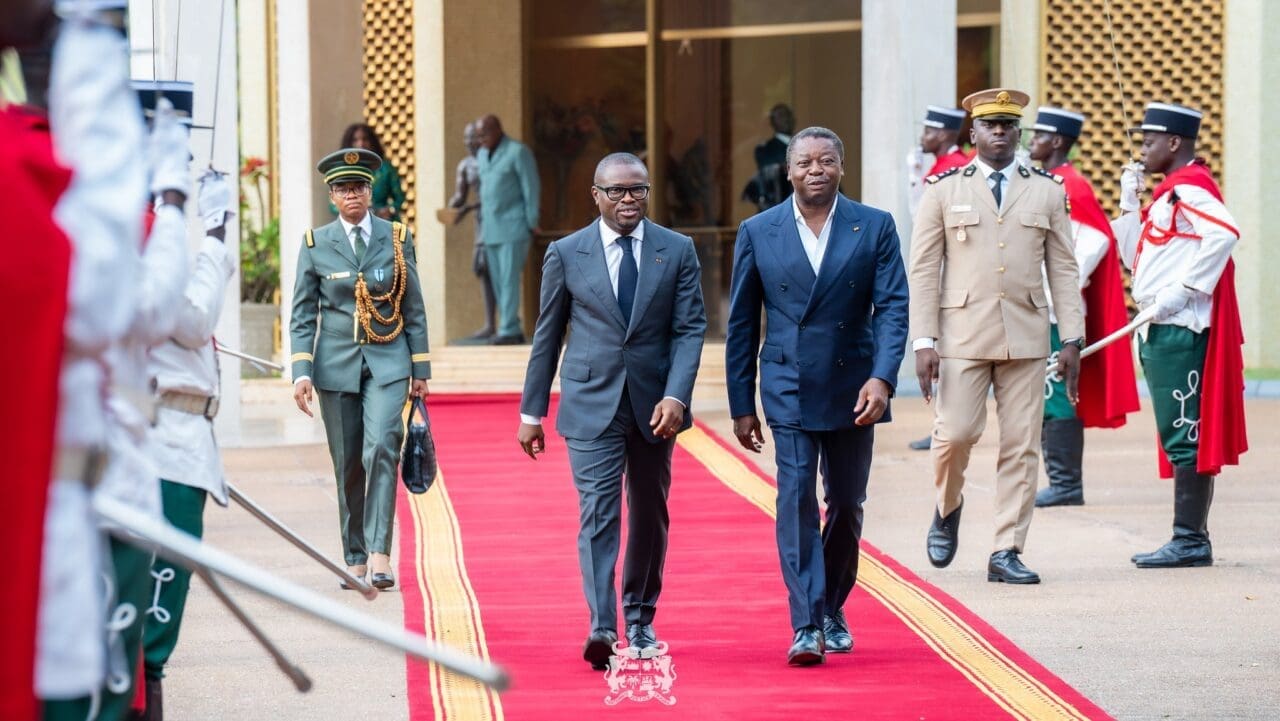
The landmark state visit to Lomé by Bénin’s President Romuald Wadagni on June 3, 2026, signals a definitive shift. The joint statement lays the groundwork for deepened economic ties, cross-border infrastructure integration, and shared energy goals. Both leaders have set ambitious targets: Bénin plans to inject 100 additional megawatts into the grid every two years, while Togo aims for universal electricity access by 2030. This political alignment presents an unprecedented opportunity to finally achieve lasting energy independence for both nations.