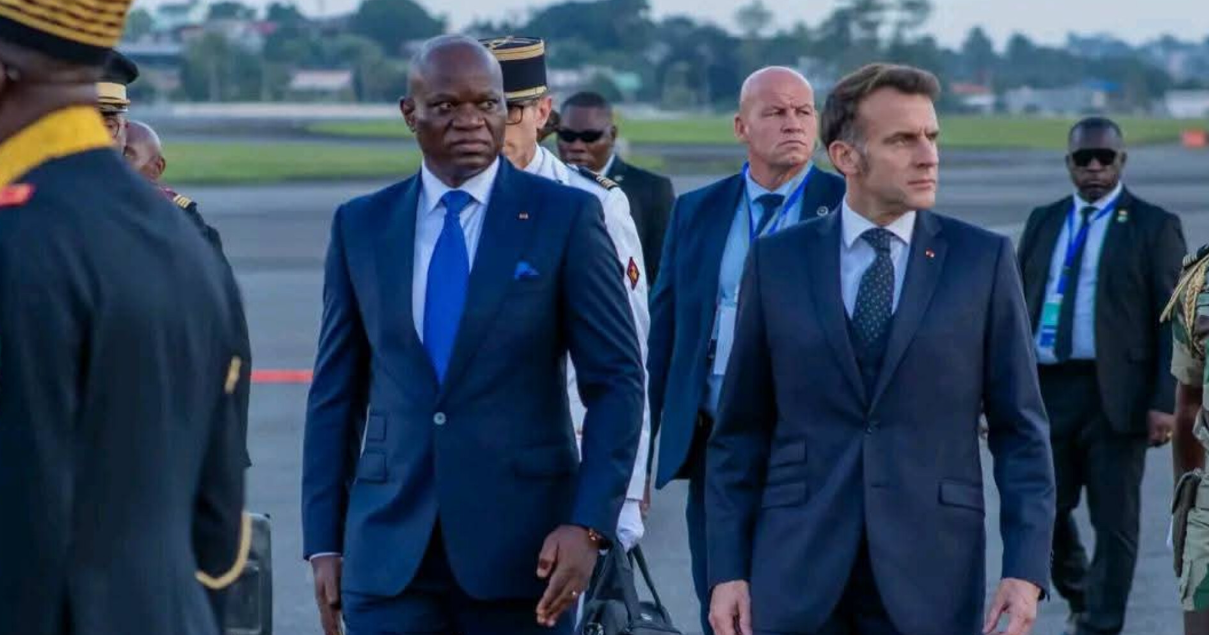
Gabon’s president redefines military and economic ties with France during Paris visit
The President of Gabon, General Brice Clotaire Oligui Nguema, concluded a three-day state visit to France with a clear agenda: rebalance the partnership with Paris without resorting to the confrontational tactics seen elsewhere in Africa. At the center of talks with French President Emmanuel Macron were two pivotal issues—revising the role of the Camp de Gaulle military base and accelerating Gabon’s industrial shift in manganese processing.
From military presence to mutual training: Gabon charts a new course
The Camp de Gaulle, home to France’s Gabonese military units, has long symbolized France’s enduring influence in Central Africa. Yet Gabon now seeks to redefine this presence. While France has already reduced troop numbers as part of a broader regional redeployment, Libreville is not pushing for a sudden withdrawal. Instead, it is negotiating a phased transformation: converting the base into a joint training hub or limiting French involvement to technical cooperation and Gulf of Guinea anti-piracy support.
For Gabon’s leadership, this is a delicate balancing act—reasserting national sovereignty in defense matters while preserving critical security ties. For France, the challenge is to adapt its military footprint without alienating a key regional ally, especially after recent setbacks in neighboring countries.
Manganese transformation: Gabon demands shared value, not raw exports
Gabon, the world’s second-largest manganese producer, is determined to break free from its colonial-era role as a mere exporter of raw materials. During meetings in Paris, President Oligui Nguema made it clear to French industrialists and Eramet subsidiary Comilog that future cooperation hinges on local processing. The demand is non-negotiable: equitable profit-sharing, job creation for Gabonese youth, and financial and technical support to build high-value processing plants.
The shift reflects Gabon’s ambition to capitalize on the global energy transition, where manganese is a key input for electric vehicle batteries. By insisting on in-country transformation, Libreville aims to anchor its economy in higher-value industries and reduce reliance on foreign markets.
A pragmatic path: Gabon’s alternative to Sahel-style confrontations
This visit underscores Gabon’s distinct diplomatic approach. While military juntas in Bamako, Niamey, and Ouagadougou have embraced loud anti-Western rhetoric and abrupt partnerships shifts, Gabon pursues a more measured course. President Oligui Nguema’s strategy rejects the false dichotomy between blind dependence and reckless rupture. Rather than isolating itself economically or embracing destabilizing isolationism, Gabon is diversifying partnerships with partners like China, Turkey, and India—all while maintaining a firm but constructive dialogue with France.
This pragmatic realism challenges the simplistic narrative that African sovereignty must come at the cost of diplomatic collapse or wholesale rejection of Western partners.
Internal tensions: Free speech vs. digital control in Gabon
Despite Gabon’s outward diplomatic confidence, concerns persist over internal freedoms. Repeated internet shutdowns and social media restrictions, justified by the government as measures to curb “false information” and preserve public order, have drawn criticism from civil society and opposition groups. These actions risk undermining the credibility of Gabon’s commitment to openness, despite its efforts to project a modern, reformist image on the global stage.Observers note that France raised the issue discreetly during talks, emphasizing the importance of free expression and fundamental liberties. For President Oligui Nguema, the challenge is clear: maintain domestic stability without compromising the international credibility he has worked to build.
What’s next: Diplomacy in action
As the state visit concludes, the real test begins: turning agreements into reality. Gabon’s ability to redefine its relationship with France—on its own terms—will depend not only on the outcome of negotiations but on its willingness to foster genuine internal openness. The success of this transition will be measured not just in diplomatic communiqués, but in the freedoms and opportunities extended to Gabonese citizens.