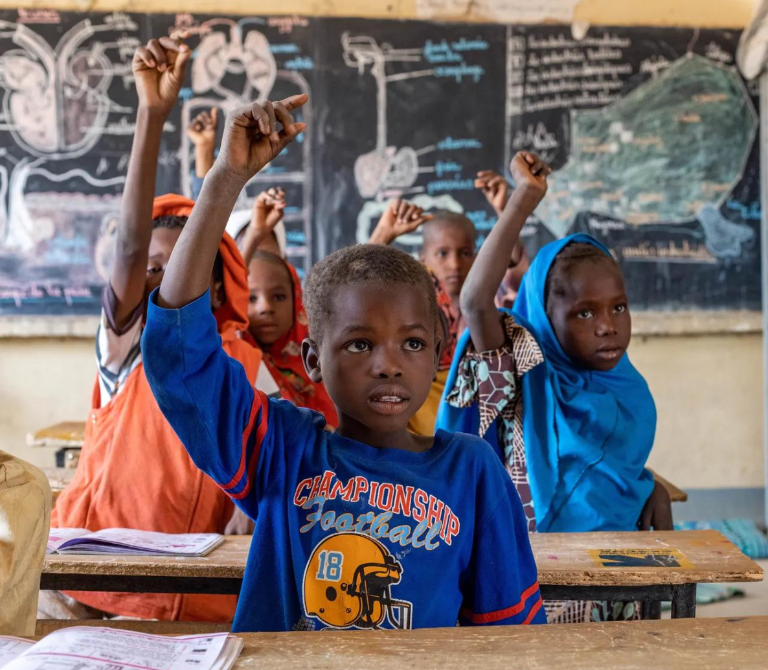
In Diffa, the reopening of schools to all communities without exception raises a fundamental question: when security imperatives clash with the right to education, which takes precedence—and what are the long-term consequences for a generation of at-risk children?
Education under pressure: a region caught between safety and inclusion
The Niger region of Diffa has been scarred by years of violence linked to Boko Haram, leaving schools, health centers and public services in a fragile state. In response, authorities at times restricted access to education and key infrastructure under the banner of security.
Yet recent reports of blanket restrictions—particularly affecting the Mohamid community—have sparked intense debate. Schools and water wells were allegedly closed, teachers reassigned, and access to healthcare and civil documents limited. Was this a legitimate security measure, or a disproportionate response that penalized entire families without due cause?
From exclusion to opportunity: what the new school policy means
On October 2026, authorities reversed course and reopened schools across Diffa to all communities. The move signals a shift from blanket restrictions to targeted responses—a recognition that security cannot be used to justify collective punishment.
But does reopening guarantee inclusion? The answer depends on implementation. Will teachers return? Are classrooms safe? Have supplies been restored? For many families, the fear of new restrictions looms large. Without lasting access to education, children risk falling behind, widening inequality and deepening social fractures in a region already struggling with displacement and poverty.
Are blanket restrictions ever justified under international law?
International conventions, including the Convention on the Rights of the Child, make it clear: education is a fundamental right. Any restriction must be necessary, proportionate and non-discriminatory. Yet blanket measures targeting communities based on suspicion alone fail every test—especially when applied to children, who bear no responsibility for adult conflicts.
Critics argue that such policies do more harm than good. By reinforcing exclusion, they undermine social trust, fuel resentment and risk radicalizing isolated groups. Instead of protecting citizens, they may inadvertently increase instability.
Beyond the classroom: rebuilding trust in public services
The decision to reopen schools is a step toward restoring access—but a true turning point requires deeper reform. Authorities must clarify the legal basis for previous restrictions and ensure future decisions are transparent, evidence-based and aligned with human rights standards.
This is not just about education. It’s about the state’s ability to protect all citizens equally—regardless of origin, ethnicity or community. In Diffa, where generations have been scarred by conflict, school is more than a place to learn. It’s a cornerstone of peace, unity and hope for the future.
What comes next? Ensuring lasting inclusion
- Sustained access: Permanent school reopening must include teacher reinstatement and classroom safety.
- Clear criteria: Any future restrictions must be individually justified and appealable—never applied to entire groups.
- Community engagement: Dialogue between authorities and affected families can prevent misunderstandings and build trust.
- Monitoring and accountability: Independent oversight can ensure policies uphold human rights while addressing legitimate security concerns.
A generation’s future at stake
In Diffa, the question is no longer whether schools should reopen—it’s how to make that reopening mean something real. For the children who have waited too long for classrooms, the answer will shape not just their education, but the region’s stability and identity for years to come.