Bénin launches new senate to strengthen political stability
30 July 2026
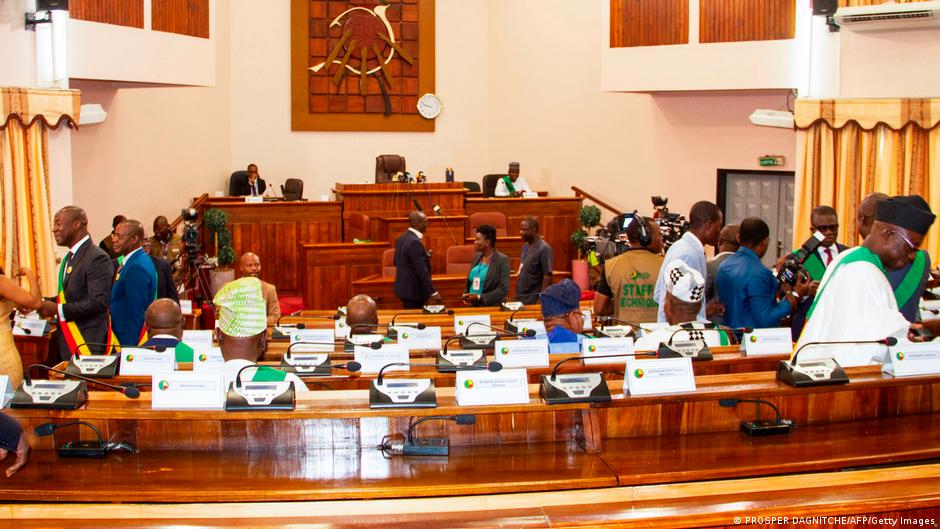
The Senate officially convenes today with its 25 members, including former presidents of the Republic. Designed as a chamber of regulation and a council of elders to uphold social peace, this new institution has sparked both high expectations and cautious optimism.
Established through the 2025 constitutional revision, the Senate will initially meet at the National Assembly building until its permanent facilities are completed.
On Friday in Cotonou, under the leadership of Maître Robert Dossou, former president of the Constitutional Court, senators held a closed-door meeting to organize their work. Beyond protocol, the Senate’s primary mission lies in its potential to defuse political tensions. Comprising ex-officio members and appointees, Béninese citizens anticipate a council of wisdom capable of preventing political disputes.
Joël Atayi-Guèdègbé, a governance expert, remarks, “I sincerely expect this upper house to embody true wisdom, functioning as a council of elders given the wealth of experience among its members. This assembly, entrusted with immense responsibility, cannot afford to repeat past political conflicts.”
An institutional regulator for national harmony
The Senate includes former presidents Patrice Talon, Boni Yayi, and Nicéphore Soglo—figures who have not always shared political views. In a climate still marked by past political tensions, citizens and analysts view this institution as a vital regulatory body for social cohesion.
“We see this institution as a guide toward peace, considering our nation’s history of political strife. Moving forward, we anticipate a more regulated and calm Béninese political ecosystem, without stifling dissenting voices,” notes political analyst Eugène Allossoukpo.
Financial implications for taxpayers
A central debate surrounds the Senate’s financial burden on the national budget. The government has allocated 100 million West African francs for the inauguration ceremony alone.
Joël Atayi-Guèdègbé observes, “There will inevitably be increased costs. Though the Senate is a compact body, it will generate additional expenses… We hope it will not require excessive extraordinary sessions. Despite the high compensation for its members, we trust the institution will maintain fiscal responsibility. Democracy, alas, comes with a price.”
All eyes now turn to the Senate presidency. Will former president Patrice Talon assume the role? The 25 inaugural senators face a pivotal challenge: demonstrating that national stability justifies this democratic investment.