A joint expert committee has reignited hopes of resolving the prolonged Niger–Bénin border crisis, a conflict that has stifled trade and strained relations for over three years. The panel’s findings suggest a potential breakthrough, with agreements reached on security protocols, transit regulations, and key legal and economic frameworks—though Niamey’s three “non-negotiable” demands may yet delay final political approval.
The border closure has wreaked havoc on both nations, particularly Niger, a landlocked country heavily reliant on Bénin for commercial access to the Atlantic. Nearly 70% of Niger’s imports pass through this route, making the blockade a critical economic chokehold. The suspension of oil flows through the Niger–Bénin pipeline—designed to export 90,000 barrels daily—has further drained revenues, with losses estimated in the millions per blocked shipment.
Niamey’s hardline conditions for reopening
Niger’s military leadership has outlined three prerequisites for a lasting border reopening, all framed as non-negotiable:
- Formal defense pact: A mutual non-aggression treaty must be signed, explicitly barring either nation from using the other’s territory as a launchpad for destabilization efforts. While analysts argue this should be standard, the recent history of tensions makes its formalization a symbolic yet urgent step.
- Enhanced intelligence collaboration: A joint intelligence-sharing unit would monitor cross-border threats, including terrorism and illicit trafficking, ensuring real-time data exchange to preempt risks.
- Transparency on foreign military presence: Niger demands full disclosure of any foreign military deployments or partnerships in Bénin, particularly near the border. This demand touches on sovereignty concerns, with Niger wary of external alliances that could undermine its security.
Régis Hounkpè, executive director of InterGlobe Conseils, underscores the pragmatic necessity of these terms: “The core issue isn’t ideology—it’s survival. Both nations must prioritize economic stability, logistical continuity, and counterterrorism cooperation. A closed border benefits no one in the long run.”
Economic fallout: a shared crisis
The blockade has crippled Bénin’s port of Cotonou, once a regional trade hub. Congested routes and diverted shipments have slashed transit revenues by up to 60% in key sectors, including customs duties and logistics. Meanwhile, Niger faces a 30–50% spike in logistics costs, with essential goods like rice and fuel now rerouted through riskier, costlier paths. The suspended oil pipeline alone represents a daily hemorrhage of millions in lost revenue.
The crisis has also eroded livelihoods. Markets in Malanville (Bénin) and Gaya (Niger) report a 50% drop in foot traffic, while closed businesses and soaring transport costs have pushed communities into precarity. Families separated by the closed border endure heightened risks, as dangerous pirogue crossings replace safer land routes, and smuggling networks exploit the void.
Diplomatic thaw: a new chapter?
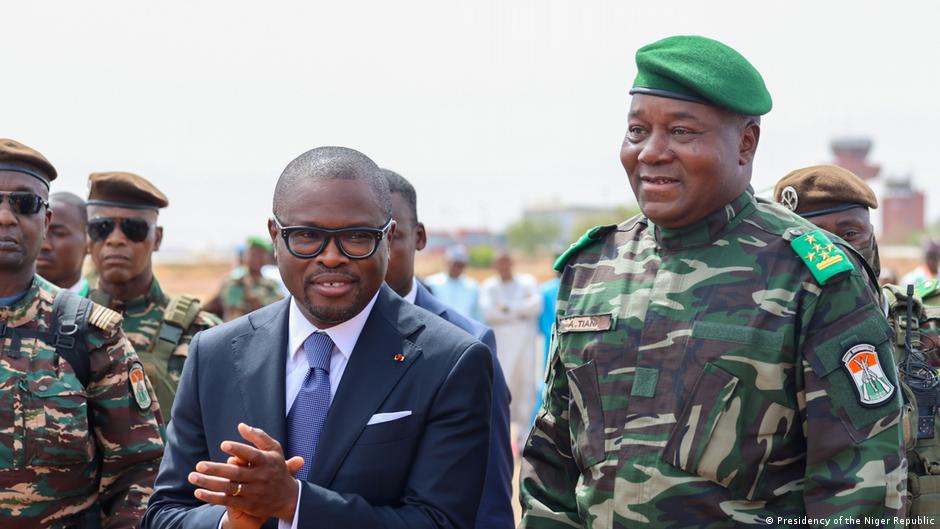
The impasse began to thaw with Bénin’s presidential transition. Romuald Wadagni, inaugurated in June 2026, swiftly revived dialogue during a landmark visit to Niamey. The joint expert committee’s progress reflects this renewed momentum, though political ratification hinges on Niger’s demands.
Hounkpè remains optimistic: “Geopolitics must yield to geography. These presidents are not just leaders—they are neighbors bound by economic interdependence. The choice is clear: cooperate or face continued decline.”
If negotiations succeed, a phased border reopening could prioritize critical goods under stricter controls. Such a resolution might even serve as a model for broader regional cooperation, inspiring similar détentes within the Economic Community of West African States (ECOWAS) and the Alliance of Sahel States (AES).