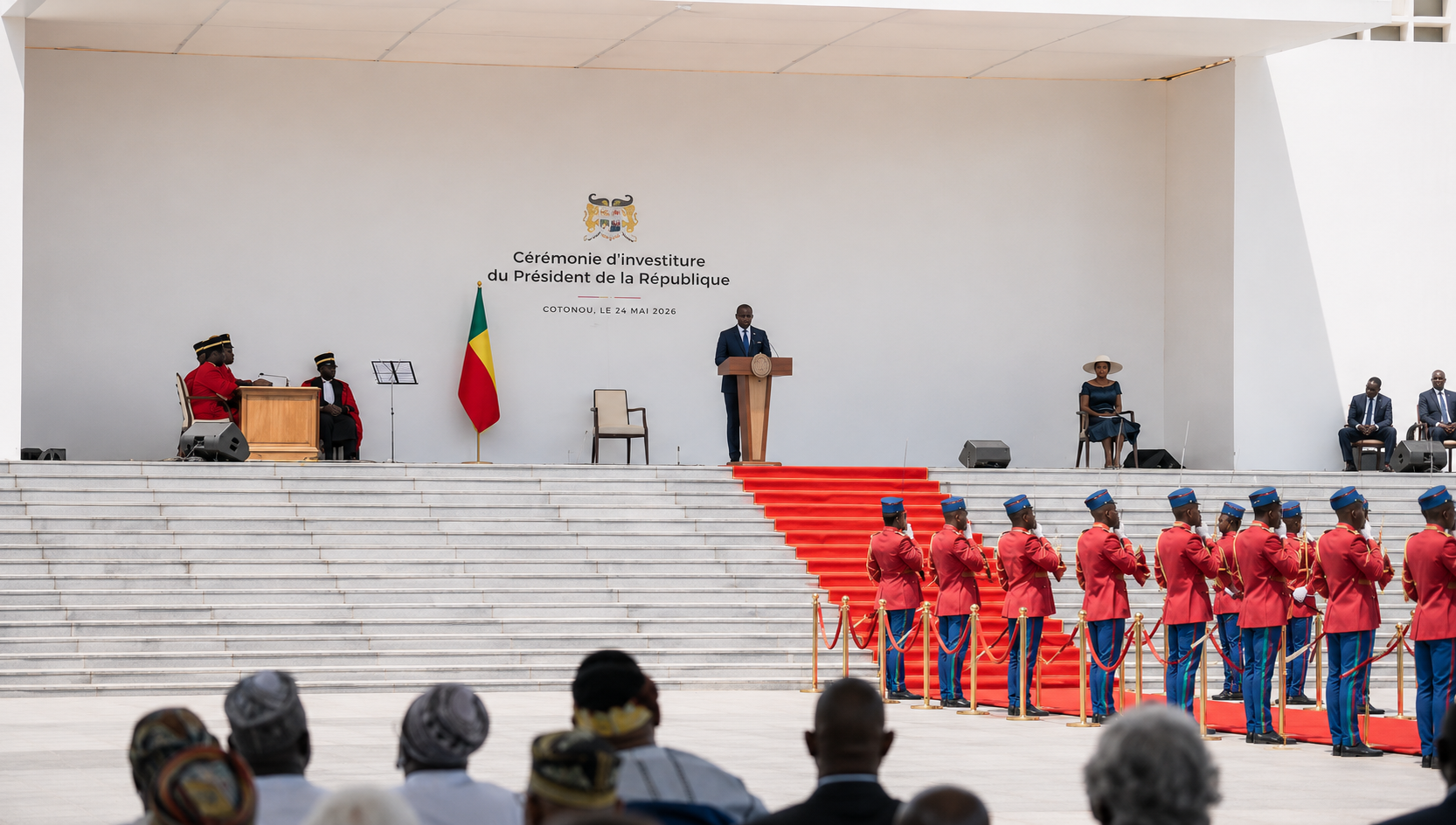
On a bright Sunday morning in Cotonou, Romuald Wadagni took the oath of office as President of the Republic of Bénin, marking the start of a seven-year mandate in a political landscape reshaped by constitutional changes and electoral restrictions. The ceremony, held at the Palais des Congrès, drew over 6,000 guests, including former heads of state and regional delegations, though notably absent were key opposition figures barred from the April 2026 presidential ballot.
From finance minister to head of state: continuity in leadership
At 49, Wadagni steps into the role following a decade in government, most recently as Finance Minister under outgoing President Patrice Talon. His rise reflects a deliberate alignment with the outgoing administration’s economic policies, which prioritized fiscal discipline and international market access—including multiple sovereign bond issuances that preserved Bénin’s credit rating. The new president’s background as a former Deloitte consultant and architect of Talon’s financial strategy positions him as a continuity candidate, despite the constitutional shift extending presidential terms to seven years.
The April 2026 election saw Wadagni secure more than 94% of the vote in a two-candidate race against Paul Hounkpè of the Forces Cauris pour un Bénin Émergent (FCBE). The victory was formalized by the Constitutional Court, which validated the results after the main opposition party, Les Démocrates—led by former president Thomas Boni Yayi—was disqualified for failing to meet signature requirements. The party’s ticket was invalidated in October 2025 after a parliamentary sponsor withdrew support, leaving the opposition with no parliamentary representation following January 2026 legislative elections.
A tightly controlled political environment
The tightening of electoral rules has significantly narrowed the space for political dissent. High candidacy fees, bureaucratic compliance hurdles, and a 20% vote threshold per constituency introduced in 2025 have drastically reduced opposition presence in parliament. Critics point to the 2021 conviction of opposition leader Reckya Madougou on terrorism charges and the 2023 sentencing of academic Joël Aïvo to a decade in prison as emblematic of a broader crackdown. Several opposition figures now live in exile, while the Court for the Repression of Economic and Terrorist Offenses (CRIET)—established in 2016—remains a contentious tool against political adversaries.
Diplomatic overtures to the Sahel: a shift in tone
The inauguration sent an unmistakable signal about Bénin’s evolving regional posture. While foreign heads of state were traditionally absent from such ceremonies, delegations from across West Africa—including Mali, Burkina Faso, and Niger—were present. The attendance of the Nigerien Prime Minister Ali Mahaman Lamine Zeine drew sustained applause, a marked contrast to the diplomatic chill between Cotonou and Niamey since the 2023 coup in Niger. The border between the two countries, critical for Niger’s oil exports via the Beninese pipeline, has seen repeated closures, yet Wadagni’s speech signaled a willingness to re-engage with the military-led governments of the Alliance of Sahel States (AES).
The president’s address also emphasized domestic priorities, vowing to translate economic growth into tangible benefits for families, with a particular focus on youth, rural communities, and women. His vice-president, Mariam Chabi Talata, occupies a prominent role in the new administration, underscoring the government’s stated commitment to gender representation. The speech’s recurring refrain—“to you, I want to say”—structured commitments to diverse constituencies, from the diaspora to descendants of the transatlantic slave trade, whom Wadagni described as returning to their “ancestral home.”
What to watch in the coming weeks
The composition of Wadagni’s cabinet, expected in the days following the inauguration, will reveal whether he broadens his team beyond Talon’s inner circle. The fate of imprisoned opposition figures, including calls for amnesty, could serve as an early test of political openness. Equally significant will be the trajectory of Bénin’s relations with the AES, beginning with potential high-level visits to Niamey, Bamako, or Ouagadougou. These gestures would signal a tangible shift from the Bénin’s previous firm stance against the region’s military regimes.
The new president inherits an institutional framework reshaped by his predecessor, raising questions not about stability but about pluralism. With an economy praised by international donors and a political system that leaves little room for dissent, the challenge ahead lies in balancing continuity with the need for inclusive governance in a rapidly changing Sahel.