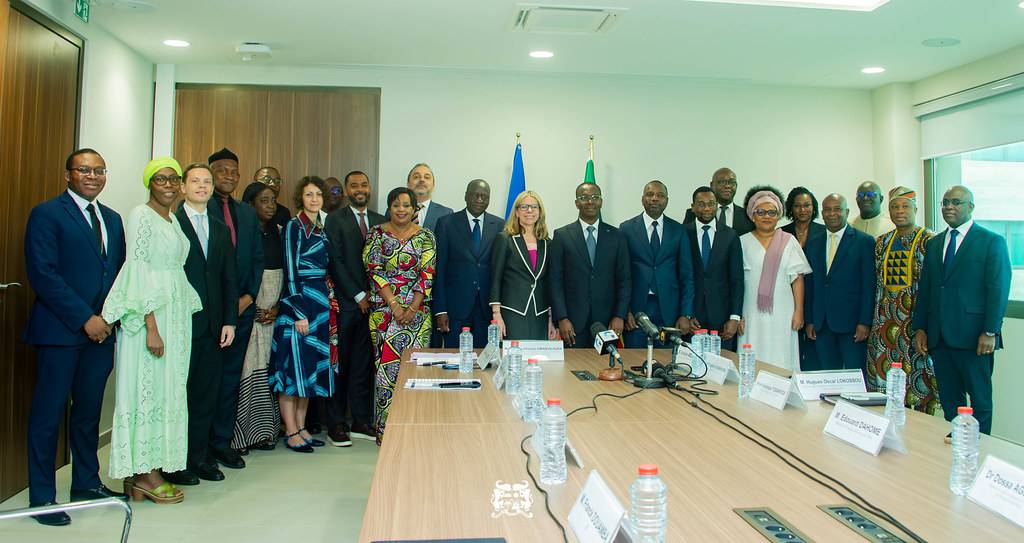
Cotonou is advancing its structural transformation with two landmark financial agreements totaling $320 million. These deals, finalized on July 17, 2026, showcase a bold strategy combining energy sovereignty, agricultural revival, and human capital development—key pillars for sustainable growth and social progress in Benin.
Energy and agriculture converge at the Dogo-Bis dam project
The first agreement, worth $150 million, fully funds the Dogo-Bis multipurpose hydro dam in the Ouémé Valley—a strategic infrastructure designed to energize both the power grid and the local economy. By boosting national electricity generation, the dam will significantly reduce Benin’s reliance on imported energy, a long-standing structural weakness curbing industrial competitiveness.
Minister of Energy, Water, and Mines Édouard Dahome emphasized the project’s dual role: “This dam will anchor a stable, cost-effective power supply in the Ouémé Valley, unlocking year-round agricultural productivity and attracting private investment in food processing.” The dam’s irrigation capabilities will stabilize crop yields across seasons, transforming the region into a thriving agro-industrial hub.
ALAFIA I: investing in a healthier future for Benin’s children
The second $170 million agreement launches Programme ALAFIA I, a nationwide initiative focused on early childhood nutrition, maternal health, and public health services. By prioritizing preventive care and integrated social services, the program aims to build a resilient, productive future workforce.
Economic research confirms that investments in early childhood yield the highest returns in public policy. A well-nourished and healthy population translates into lower healthcare costs, higher school enrollment rates, and increased long-term productivity. ALAFIA I is more than a social program—it’s a strategic bet on Benin’s demographic dividend.
A synergy designed to multiply impact
What sets these agreements apart is their intentional complementarity. As Hugues Oscar Lokossou, Minister Delegate for External Resource Mobilization, noted, the projects are designed to reinforce each other: improved nutrition fuels a healthier workforce, while expanded energy access and agricultural output strengthen food security and industrial growth.
Together, these initiatives create a virtuous cycle: surplus agricultural production from the Ouémé Valley reduces food import dependency, while enhanced public health supports industrial expansion. Improved regional connectivity ensures that economic gains are distributed across Benin, fostering inclusive development.
A sustainable model for West Africa?
With this $320 million injection, the World Bank reaffirms its confidence in Benin’s economic governance and stability—a signal welcomed in a subregion often plagued by volatility. The country is positioning itself as a magnet for international investors by pursuing a dual agenda: diversifying its economy beyond transit and subsistence agriculture, and embedding resilience and sustainability in its growth model.
By integrating energy infrastructure, agro-industrial development, and human capital investment, Benin is not just building dams and clinics—it’s laying the foundation for a future where growth is tangible, inclusive, and enduring. The real test now lies in flawless execution, a challenge keenly observed by citizens and analysts alike.