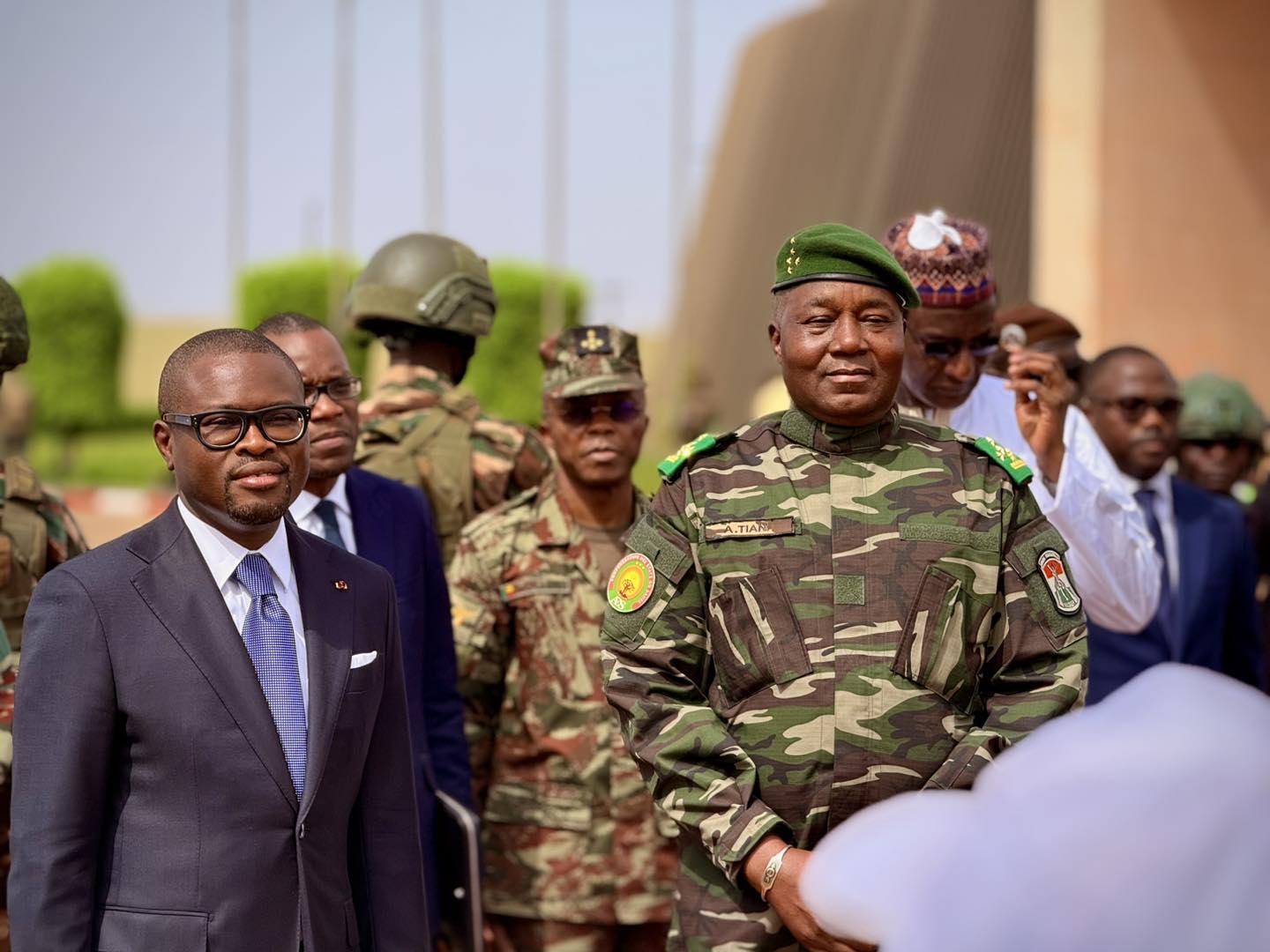
Cotonou has embarked on a significant diplomatic reorientation. Immediately following his inauguration as Bénin’s head of state, President Romuald Wadagni commenced a crucial regional tour, making his initial stops in Niamey and Ouagadougou. The primary objective is to de-escalate tensions with the nations forming the Alliance of Sahel States (AES) and to re-establish Bénin’s pivotal role as an indispensable partner within the sub-region.
This series of official visits, particularly its swift execution, surprised many observers. President Wadagni, freshly invested, traveled to Niamey on June 2nd for discussions with his counterpart, General Abdourahamane Tiani, before proceeding to Ouagadougou to meet Captain Ibrahim Traoré. Further engagements are scheduled by the end of this week, including visits to Lomé, Abidjan, and Accra. These rapid diplomatic overtures signal a distinct shift after years marked by tumultuous relations with several neighboring countries.
Economic pragmatism driving peace efforts
By selecting Niger and Burkina Faso as the initial destinations for his neighborhood diplomacy, the successor to Patrice Talon has made a powerful statement. Relations between Cotonou and the capitals of the AES had considerably deteriorated in recent years. This period was characterized by border closures, the blockade of Nigerien crude oil transiting via the Sèmè-Kpodji pipeline, and reciprocal accusations concerning regional destabilization.
Romuald Wadagni, a former Minister of Economy and Finance, approaches this complex situation with his characteristic pragmatism. For Bénin, the effective reopening of the Nigerien border and the streamlining of the transport corridor towards the Sahel are paramount economic necessities, crucial for the operational vitality of the Autonomous Port of Cotonou.
Key Takeaway: According to the official communiqué from the Béninese State Protocol, discussions will prioritize “regional security matters, prospects for economic and commercial cooperation, and strategies to strengthen solidarity among peoples.”
Cotonou’s three-pronged diplomatic agenda
This diplomatic offensive addresses pressing challenges that are fundamental to the success of the new head of state’s mandate:
- Transborder Security: Confronting the persistent jihadist threat impacting northern Bénin, particularly along its borders with Burkina Faso and Niger, military cooperation and intelligence sharing are deemed vital by military command structures.
- Commercial Rapprochement: Rebuilding trust with Niamey is essential to normalize the export of Nigerien crude and revitalize the transit of goods.
- Regional Equilibrium: Following his engagements in the Sahel, the Béninese president will meet with his ECOWAS partners (Togo, Côte d’Ivoire, Ghana) to position Bénin as a facilitator and avert a definitive schism between West African blocs.
Navigating a new diplomatic chapter
While this initiative has been widely applauded by business circles and regional observers as a welcome revitalization of Béninese diplomacy, the path to compromise remains fraught with obstacles. Resolving the accumulated disputes of the past two years will undoubtedly require more than symbolic gestures.
Nevertheless, by taking proactive steps in the nascent days of his presidency, Romuald Wadagni is clearly asserting his diplomatic signature: one characterized by an uninhibited approach, firmly rooted in dialogue and economic realism, which is indispensable for stabilizing a rapidly evolving West African landscape.